Aug. 14: Sindhi Viewpoint
After 60 years of independence Pakistan is still searching for an appropriate balance of power between its four provinces and an equitable political structure in the country. Somehow the nation is still looking for a fair relationship between provinces and the federal government
There are very few ideologues in Pakistan, who despite having an academic background, have been very successful as a political leader. Dr. Rajab Ali Memon is one of those political leaders who came with a successful career in higher education, an ideological and value based political philosophy and a conscientious mind, rare traits in our politicians these days.
I met him at the Iowa State University in Ames Iowa, US, where he was completing his Ph.D. in Agriculture and I was doing my master’s. We became friends based on our common ideological line and progressive views. He wanted to go back to Pakistan and work for his people after his doctoral studies in the U.S. In the back of his mind, he always had a passion to be involved in politics and that’s what he did when he went back to his country.
He had a long career in higher education as a researcher, professor, dean and university administrator in Pakistan. After retiring from the top academic position as Vice Chancellor of the Sindh Agricultural University in Tando Jam, he finally accomplished his passion by joining politics in his Sindh province.
As Secretary General of the Sindh Taraqqi Pasand Party, STP (Sindh Progressive Party) he has been very active in developing progressive policies and strategies in his party to identify burning issues of rural development, tenants, women and the disadvantaged poor. Earlier in March STP issued a 23-point resolution as its political manifesto on political issues in Sindh and Pakistan.
The resolution, a product of political far sightedness and pluralistic thinking of STP, is a comprehensive document on major issues in Sindh and Pakistan. It became a living document on the party’s position on provincial autonomy, languages, irrigation, water allocation to provinces, flood management, forestry, terrorism, law and order, jobs, new settlements in Sindh, immigrants in Karachi, devolution of power, local democracies, rural development, women’s status, the disadvantaged tenants, price hikes, and census issues.
After 60 years of independence Pakistan is still searching for an appropriate balance of power between its four provinces and an equitable political structure in the country. Somehow the nation is still looking for a fair relationship between provinces and the federal government. STP’s position on the issue of provincial autonomy is very clear. It endorses the 1940 Lahore resolution which provides autonomy to all provinces within a democratic structure.
STP believes, “That, the federation of Pakistan may be organized constitutionally by adopting the Lahore Resolution of 1940 in true letter and spirit; whereby all constituent nation states/provinces of Pakistan must be recognized as sovereign and fully autonomous both financially and administratively.”
This also means that all the provinces should have complete geographic jurisdiction and power within their territories including natural resources, economy and administration. The party also demands acceptance of Sindhi, Balochi, Punjabi, Pushto and Seraiki languages as national languages.
Distribution of water has been a vital issue for the Sindh province and STP calls for an unconditional hold on building new dams without mentioning the infamous Kalabagh Dam.
The resolution pronounces, “That, any further cuts and dams must not be allowed on Indus River; and, the rights of lower riparian provinces must be protected in accordance with international conventions and national agreements. A new Indus Water Treaty may be negotiated with India and the share of all stakeholders in the western as well as eastern rivers may be specified keeping in view the emerging needs and the changing hydrological regimes.”
The last year’s flood has been devastative for the province that uprooted people from their villages to camps where they are still residing. A long term solution to the issue has been discussed but there is no agreement.
To the party, flood rehabilitation should be part of a long term planning as stated in article 15 of the resolution, “That, a comprehensive flood disaster rehabilitation & reconstruction plan be implemented whereby all affected families must be given Wattan Cards, residential plots, agricultural and livestock loans, and jobs as promised. In this connection, it is emphasized that high quality roads, protective bunds and irrigation infrastructure may be built to avert any future disaster risks.”
Rural development in Sindh has been discussed with several approaches but STP’s stand on the issue indicates its commitment to the rural poor, not as a political slogan but as a specific and practical strategy ready to be implemented.
The PPP’s government in power has recently given some powers to the four provinces as promised by the 1973 constitution. STP demands to revoke the local bodies system introduced by the former dictator General Pervez Musharraf and introduce a new devolution structure with a modified local government system in the province.
Article 16 calls for a high priority rural development package for rural and backward districts of Sindh that should be implemented in 2 years. The proposed package should include “social development infrastructure, farm to market roads, rural markets, transport & communication networks and modern productive innovations may be provided expeditiously; and, technical job skills as well as other capacity building support may be managed through institutional development and quality training.”
It also calls for immediate implementation of the Sindh Goth Abad program to give land to landless peasants, tenants and the disadvantaged women of the province.
While very few political parties take stand on having an equal status for women, STP demands providing professional and economic protection of women to remove “financial hardships, discrimination in pay and employment, domestic violence, honor killings and other social atrocities.”
Karachi as a large city faces a huge inflow of immigrants from other provinces and abroad which poses deep concerns for Sindhis. The party does not shy away from this sensitive issue. The resolution declares the previous population census as “distraction to hide bad governance and corruption of the PPP-led coalition.” It demands that “the Government must ensure that illegal aliens and non-resident economic migrants are neither issued CNICs nor counted among the population of Sindh. Furthermore, the Sindh Government must ensure that its coalition partners including the MQM and the ANP are not left unchecked to manage an upper bias in the counting of urban ethnic groups to the detriment of Sindhi people.”
Despite this controversial posturing on the issue of population migration in Sindh, the STP resolution is a bold document endorsing social, cultural and political transformations and challenging the current status quo. Although it reflects progressive and forward looking thinking of its leadership, the resolution surprisingly missed the important issue of education at school and higher levels.
So far, Dr. Rajab’s academic background and political wisdom has been helpful in giving a new bold face to provincial politics of Sindh. We have to wait and see, however, what it really means for the marginalized and disadvantaged poor of Sindh!
¤¤¤
(Article written by Dr. Qaisar Abbas)
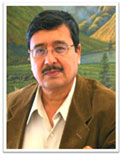 |
Dr. Qaisar Abbas, a U.S. based free lance journalist, grant writing consultant and a published Urdu poet, frequently writes on media, literature and society. With a Master's degree in Journalism from Punjab University, Lahore, he worked as Public Relations Officer for the provincial government of Punjab. Later he joined Pakistan Television as News Producer before moving to the United States where he did Ph.D. from University of Wisconsin-Madison in Mass Communication. After working on administrative and teaching positions at several universities in the U.S., he is currently working as Assistant Dean at the University of North Texas. He can be reached at
|