Meet Viewpoint’s cartoonist!
A nightmarish experience of my life was to draw a cartoon on (in)famous Lal Mosque operation in 2007
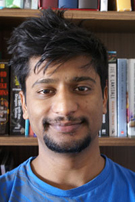
Sabir Nazar’s cartoons for the Viewpoint [online] ever since its launching on May 22, two years ago, have been winning a lot of appreciation from Viewpoint readers as well as Sabir’s countless fans in the blogospehere. A leading cartoonist known for his excellent strokes with his brush, Sabir is also famous for his sharp wit.
He has worked with the Daily Times, The Friday Times, daily Aajkal, and daily Pakistan Today.
His weekly cartoons, for the Viewpoint, have become an identity mark and promotional fare for the Viewpoint. As we post Viewpoint’s 100th online issue, member of Viewpoint’s Redaktion Riaz ul Hassan interviews Sabir Nazar. Read on:
Tell us about yourself. Many Viewpoint readers want to know about you?
One of my communication teachers at the National College of Arts (NCA) once said that I was lucky to be born into a family where my father was not a religious person while my mother was a dominating, strict but a loving personality. At least I was her favourite. It was my mother’s story-telling that also shaped the method of my painting. I don't remember much from my childhood days. I spent most of my time as child at my maternal grandparents’ place, with my maternal aunts and uncles. My father was a government servant and was regularly posted to different cities. Therefore, I had to stay in Kohat, my ancestral city, so that my studies don’t suffer.
However, I remember when I started going to school, my first teacher asked me what was my caste. As my family hailed from the Punjab, we had long ‘forgotten’ the caste. I drew a blank. The teacher kept insisting to know my caste. I could sense his amusement and his veiled sarcasm. He wanted to point out that I was not a local but an outsider, the ‘other’. I believe that very moment coloured my life. It created an identity crisis. At an early age, I began to wonder: ‘Who am I? Do I belong to this land or am I an outsider?’
How was the NCA-experience?
The 1980s proved a tumultuous period in Pakistan’s chequered political history. Country’s first elected and a popular Prime Minister, Zulfiqar Ali Bhutto, had been hanged by a military dictator, Gen. Zia ul Haq in 1979. It was traumatising. The so-called ‘Afghan Jihad’ had began to transform the political and cultural landscape of the country but Khyber Pakhtoonkhwa province, in particular.
Campuses in Peshawar witnessed killings of students at the hands of Afghan mujahideen for the first time. Religious fanaticism began to raise its head while local people were wary of Afghan refugees arriving in millions and roaming the city streets. It was during that time I went to Lahore and was enrolled at Architecture department at the National College of Arts.
During my first year at the NCA, there was a major strike against a religious student body. Members of that puritan outfit had attacked a student for drawing a cartoon. Those days, campuses were highly politicised while public hanging and floggings were common place. The military regime was busy squashing the struggle for democracy.
The first strike at college was followed by another. Again, the same confessional student outfit manhandled yet more students, destroyed certain sculptures and set a few paintings on fire. This strike inspired me. I was at the forefront of the strike this time. It, in fact, was a struggle to shield the NCA against fanatics playing second fiddle to the Zia regime. Gradually, me and my fellow NCA students became involved in active politics for the restoration of democracy. Meantime, Zulfiqar Ali Bhutto’s daughter Benazir Bhutto returned to Pakistan ending her self-imposed exile.
I was in my third year at the NCA when I developed a sense of vocation about my work as artist. I quit architecture to join the Fine Arts. My father was indeed upset at my decision. The head of Architecture Department was also very disappointed with my decision. He considered me a great student, another Nayyar Ali Dada in the making. Painting at that time was considered an ‘insecure’ profession, lacking any benefits.
I got involved with students active in theatre, music, poetry and painting to revive the indigenous culture as a struggle against religious fundamentalism. We believed that fanaticism was undermining country’s liberal and cultural identity. I did my dissertation on ‘Glimpses of Indigenous Art’.
In Pakistan, a lot of historical data relies on oral tradition. Therefore, the history of painting tradition is pretty. In case of art, religious edict against iconography aggravates the situation. It was under the British colonial administration that craft-preserving schools were established which later developed into art schools. The process helped revive the art of painting in Pakistan. However, artists were painting in European style and were deriving images from European myths like Europa and Bull.
I was convinced that revival of images, myths and symbols from local heritage would infuse new life into the art of painting. I thought people could identify with such images. I adapted myths and images from mystic tradition of the Indian sub-continent. These myths and images symbolise unity of being, equality regardless of one’s religion, colour and caste. These myths and images negate fundamentalist approach. That is how I got interested in comparative mythology and symbolism of not only South Asia but all major civilizations of the world.
Who indeed inspired you to become a cartoonist?
After my graduation, I started working for a landscape architect for few months when one of my friends who was working for The Friday Times, went on leave. He asked me to work in his place for a month. That is how I got into journalism and cartooning.
Since I was active in politics and had a good command of drawing, I jumped into this profession. Fish had reached the water. I was the first cartoonist who made watercolour cartoons for the front page and was greatly appreciated. Cartooning was difficult medium and with all my skills, it took me a decade to draw like a professional cartoonist. R K Laxman and Mario Miranda inspired me and in Pakistan I like the work of Javed Iqbal and Zahoor.
I kept on working on my paintings and did my first solo show of paintings in 1995. In 1996, I did a monument of three horses that is also a landmark as the display of sculpture in public was considered a taboo in our society.
You are known for your bold and courageous work in a country fraught with dangers and threats to journalists. Have you faced any threats?
A nightmarish experience of my life was to draw a cartoon on (in)famous Lal Mosque operation in 2007. I drew a cartoon on the woman administrating Madrassa Hifsa at the Lal Mosque. She was telling madrassa girls how to kidnap Chinese women [as they did in Islamabad]. My cartoon triggered a volley of ‘protests’ from the Lal Mosque and Waziristan. Countless mails and fax messages arrived the offices of Daily Times and daily Aajkal, where I was working. Fortunately, the liberal section of press resisted the pressure and lent me its support. The threat died down after a few weeks.
At the Friday Times, the editor was often threatened and pressurised to fire me, ironically, often during the democratic stints this country intermittently experiences.
Has your work been appreciated at any official level? Also, how has been your experience as a worker in the mainstream?
No, my work has not been appreciated at any official level. In fact, I always avoid official circles. Cartooning is a young profession in Pakistan and only a few dailies consider cartoon as an integral part of a newspaper. In Urdu journalism, cartoon is used as filler, and only a few English dailies run cartoons on their op-ed pages.
 |
Riaz ul Hassan has been actively involved in Social Media studies since 2006. He has held diverse editorial positions in different literary magazines including Ravi and Patras. Currently studying in Sweden and plans to pursue his PhD in the field of Social Media. Riaz graduated from Government College Lahore and has worked at the same institute for about one year as lecturer. He has keen interest and involvement in arts, theater and Social Media studies. |