NGOs' careerism disorients activism Featured
Imran Khan types get mileage out of NGO bashing but are silent on madrassahs, Islamic charities or faith based development
‘Left feminists do not accept simplistic binaries that suggest NGOs-equals-imperialism,’
Afia Sheharbano Zia tells Viewpoint. Author of several books, Afia is a leading Pakistani feminist.
She points out: ‘LUMS and Beacon House university are not NGOs but conduct heavily funded donor-assisted projects and recommend policy for Pakistan. What’s a private university's role in this relationship and what makes them legitimate and not imperialist?’ Read on:
The left by and large views NGOs as Trojan Horse of imperialism. How fair is that assessment?
'The Left' is not some homogenous block that sees everything from a singular and reductive lens - at least, I hope not and I know that left feminists do not accept simplistic binaries that suggest NGOs-equals-imperialism. I also think lots of other forms of development can be imperialist regardless of whether NGOs are conduits or not. What about humanitarian assistance? Is that imperialist too? Earthquake and flood relief aid - imperialist? Faith-based development siphoned through religious groups/charities - imperialist?
In Pakistan, the left has largely viewed NGOs as one of the reasons holding progressive politics back. India, Bangladesh and Nepal got perhaps world's largest NGO networks. How come the NGOs could not thwart the left in these countries?
I find it interesting when the critique shifts from the state to NGOs - Does this mean we've given up on the state as the actor of progress and development? Yes, NGOs may have fragmented the kind of collective action that characterised political movements in Pakistan but I think as the question points out, the comparison to other South Asian examples is simplistic. There was also the compelling factor of a non-democratic environment or opportunities in Pakistan for NGOs to graduate from the margins into mainstream politics. Lots of activists then found refuge in NGOs and continued to stay there - it became a career.
I think there is a danger in large NGOs in Bangladesh such as BRAC which despite their excellent work, can become substitutes for governments. So the comparison should be tempered. The left weakened here for many reasons that had nothing to do necessarily with NGO development.
What do you think happens when activism becomes a career? We have seen 'feminists', 'trade unionists', 'environmentalists' making career in the name of good causes. Same goes true for certain organisations [Like Greenpeace]. Your comments.
I would think women's rights, labour rights and human rights would qualify as a commitment rather than just a cause. If career means paid activism then yes, we have seen that has increasingly changed the direction of activism in Pakistan. Because then projects and funds decide the priority of activism rather than responding to the need of the moment. At the same time, I think the Lawyers' Movement in Pakistan trumped all NGO activism as it morphed into something so big and significant. In that case, legal careers were abandoned for a larger cause - a reverse....
Its also interesting how younger generations are moving away from NGO activism. They prefer to act as independent consultants or members of foreign think-tanks, even part of Western academia. Yet NGOs remain demonised for not delivering, breaking up collective action and compromising the development agenda etc. How about those practitioners who are not a part of NGOs - what about their role in diluting the politics of collectives?
Also institutions such as LUMS and Beacon House university are not NGOs but conduct heavily funded donor-assisted projects and recommend policy for Pakistan. What’s a private university's role in this relationship and what makes them legitimate and not imperialist? NGOs are just easy targets and should be tracked but not exclusively nor unfairly.
One may claim that the NGOisation of trade unions, in Pakistan, has brought problems like financial corruption, leadership's priorities oriented towards donors, leadership's refusal to engage in grassroots organisation. Can we say the same about feminist movement?
I'm not sure about financial corruption or the extent of it. I do agree however, on the nexus of donors and NGO leaders which has become a club where membership depends on personal relations and give-and-take rather than merit or inclusivity. Islamabad and Lahore dominate the attention of donors which is why the devolution process troubled donors so much. Sometimes, donors become the impediment rather than facilitators of democracy or grass-root development. NGO-donor nexus is Punjab dominated...
Its time to return the gaze on donors and their roles; to do social audits of them too. This should include corruption, undue influence and lack of transparency for them too.
Despite a lot of criticism on NGOs one may say that they have highlighted issues that the old left ignored: climate, children and women rights, human rights. Also, certain NGOs have either done great work or have supported good causes. For instance, HRCP in Pakistan or number of other NGOs have advocated the rights for persecuted minorities. Your comments.
HRCP is the single organisation that I respect and refer to. I don't know about admin and internal issues but I do know that the work and HR work they have done spells out a principle that I. A. Rehman and others have not compromised on. I also am able to rely on their historical political stands when countering the accusation against HR discourses and anti-universalist postmodernists' attack on whether HR are 'appropriate' or universalism is relevant for Pakistan. Such ivory tower critiques are only possible by those who do not study nor are involved in the nitty-gritty daily interventions of HR staff and members.
I've been with HRCP when they've intervened in tense situations when Ahmedi children have been targeted and imprisoned in Lahore as well as coercion and targeting of Christians in Haripur as well as Karachi HRCP which visits women whose children have been killed in ethnic cleansings.
I also know HRCP has tracked victims in counter-insurgency operations (regardless of whether they are terrorist suspects) and upheld the rights of terrorists to due process and fair trials. From bonded labour to Baluch disappearances and despite being challenged by detractors that HR should redirect its framework to a 'Muslim HR' (whatever that is) at UN levels as well as locally, HRCP continues to have committed membership and lends assistance to those who live in the margins and precariously. Rehman Sahib also is a man ahead of his time. He advocated against the death penalty long before there was any space for this discussion and no reception for it. If he's pro-imperialism then there's nothing left to say on the subject.
That is not to say all NGOs are worthy of such respect - just that I believe there is an intuitive understanding of 'worthy' vs dubious NGOs amongst communities.
Islamists have presented NGOs as western agent. Islamists themselves get petro-dollars and run huge charity networks. Why NGOs, funded by the West are perceived as alien but not Islamist charities playing the same role?
I've been asking the same question, particularly of the Imran Khan types who get mileage out of NGO bashing but are silent on madrassahs, Islamic charities or faith based development. But here's the complication....mainstream western donors are now funding the latter initiatives as 'culturally appropriate' for Muslim contexts. USAID has been the leading donor on this front. Its what I call, donor-driven Islam. Why aren't the critics of NGOs-as-imperialist launching similar attacks on Islamist outfits on this count?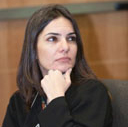 |
The writer is a sociologist based in Karachi. She has a background in women's studies and has authored and edited several books on women's issues. Email: This email address is being protected from spambots. You need JavaScript enabled to view it. |