When readers selectively quote Hamid Mir
Only weeks ago, after Salman Taseer was gunned down by his own bodyguard, Mr Mir was telling a posh audience at London School of Economics: ‘Pakistan is no more a most dangerous place in the world because terrorist incidents and suicide attacks are on decrease’
In his column for the Jang (May 23), anchorperson and columnist Hamid Mir has narrated a moving account about a resident of Peshawar, Fazal Badi, who has finally left Pakistan to join his doctor son in Malaysia.
According to Mr. Mir, Fazal Badi penned a letter to Mir before leaving Pakistan. In his letter, Badi cited a recent suicide attack on FC Centre conducted by Taliban to avenge Osama’s killing, as the reason behind his decision to move abroad. In this attack, two sons of a poor mother whom Badi had been supporting financially for their education, one now a soldier and another a driver, died together.
Though attack was conducted by Taliban yet Fazal Badi thinks: “The enemy (the US) has filled us with so much hatred against one another that we are killing each other indiscriminately.” Hadi says that the Taliban and Al-Qaeda are not enemies; it is only America that is the enemy.
Building upon Hadi’s letter, which of course is full of praises for Hamid Mir, our columnist has lavishly blamed Pervez Musharraf for creating the mess Pakistan is presently facing. However, not a word about the ISI or the GHQ. What Pervez Musharraf did was decided by the GHQ. Osama was hunted right below Gen Kayani’s nose. But easy solution: blame the USA, India, Israel and a general who has fallen from grace. Gen. Yahya Khan is blamed for 1971. Gen. Musharraf is held responsible for the present mess. Amid all the ongoing blame game, our columnists and anchorpersons keep concocting new theories to explain away every new tragedy though the gist remains the same: find a justification for every Taliban brutality. Even when shrines are bombed, they blame it on Washington. This writer has no desire to defend the US foreign policies or ‘war on terror’. What is striking about Hamid Mir’s column is its summation: blaming the USA for what is pretty much Made-in-Pakistan problem. Even if Taliban were fathered by the CIA, the Doctrine of StrategicDeath is indeed a Khaki brainchild.
Hamid Mir further asserts, through Hadi’s letter, that the worthy columnist was predicting ten years ago about Washington ‘deceiving Pakistan yet again’ (Amreeka humain dhoka day ga). If anything, this time around, Osama’s tenancy at Abbottabad’s infamous compound, however, shows that deception has been employed by the party claiming victimhood.
In a subtle way, Mr. Mir has also defended---through his interlocutor Mr. Hadi---Taliban attack on FC Headquarters at Shab Qadar. Mr Hadi raises the question: Why attack the FC Centre for Osama’s assassination in Abbottabad? He resolves the dilemma unproblematically: ‘Taliban might have thought these FC recruits would in future be handed down US arms to eliminate Taliban, hence, better finish them off now.’
Mr Hadi, and it seems his sons as well, keenly read Hamid Mir’s column about Taliban (and Mr. Mir is even available on phone when Mr Hadi’s son gives him a ring from Malaysia). However, Hadi family suffers from amnesia when it comes to Hamid Mir’s optimistic analysis of law and order situation in Pakistan. Only weeks ago, after Salman Taseer was gunned down by his own bodyguard, Mr Mir was telling a posh audience at London School of Economics: ‘Pakistan is no more a most dangerous place in the world because terrorist incidents and suicide attacks are on decrease’ (The News Feb 26). In his lecture, Mr Mir noted: ‘There were 3,393 terrorist incidents in 2010 as compared to 3,816 terror incidents in 2009 which is 11% decrease. Suicide attacks were also decreased 22%. There were 68 suicide attacks in 2010 as compared to 87 suicide attacks in 2009.’ It seems Mr. Hadi himself is a US agent who selectively reads and quotes Mr. Mir. In his innocence, Mr. Mir also publishes Fazal Hadi’s anti-Pakistan letter presenting a dismal picture.
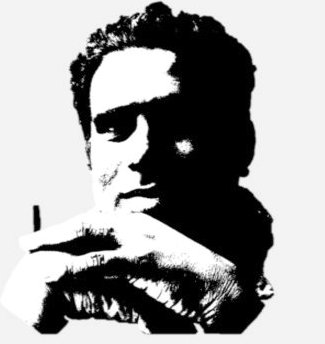 |
Adnan Farooq did his Masters in Political Science and has worked with daily The Nation, Lahore and daily Jang, Lahore. He has also volunteered for Milieudefensie, Amsterdam. Friends of the earth, Europe, on environmental issues. He has been working with ON FILE, an Amsterdam-based publication run by journalists from all around the world. He studied Conflict Resolution at University of Amsterdam and is living in Paris. He is the editor. |