AZO's struggle indeed was aimed at toppling a brutal and reactionary military dictatorship, but by no means was it being waged for the restoration of democracy. It was analyzing the situation through the eyes of radical Marxism
‘Al-Zulfiqar Organisation’s aims might have been noble but its acts became increasingly bizarre. By the mid-80s its men were fighting one another,’ says Nadeem Farooq Piracha.
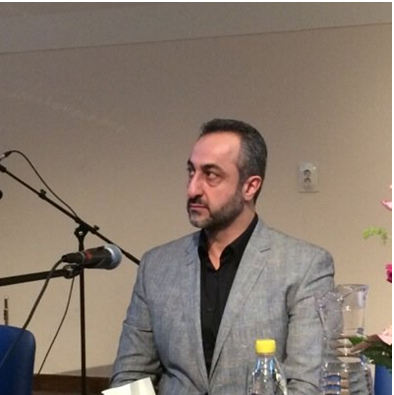
In an interview with Viewpoint, noted cultural critic and political commentator, Nadeem Farooq Paracha discusses the history and role of Al-Zulfiqar Organisation (AZO). Read on:
What circumstances in your view led to the formation of Al Zulfiqar Organization (AZO)? What was your attitude/viewpoint towards AZO in the 1980s?
Well, the apparent circumstances, of course, were the Bhutto brothers' anger and despair over the tragic execution of their father by General Zia through a sham trial.
Both were young men at the time and a product of the trend of the leftist radicalism that, ever since the late 1960s, had cut across the world among many young men and women.
Various leftist urban guerrilla outfits had emerged in places like the United States, Italy, Greece, West Germany, France and Japan - outfits such as the Weather Underground, the Red Army Faction, the Red Brigade, etc.
Though many of them eventually began being eliminated by the late 1970s, there was still some belief left among the radical theorists of the New Left that urban guerrilla warfare was the most effective way to topple right-wing dictatorships and capitalist democracies.
A number of such outfits were also backed and funded by radical Arab regimes that were in the Soviet camp, even though the Soviet Union itself wasn't all that enthusiastic about backing what it thought were renegade young adventurers.
That's why when Murtaza Bhutto first conceived the formation of the AZO - that initially appeared as the Pakistan Liberation Army - he first approached Libya's Col. Qaddafi for funds.
Murtaza was also successful in making the PLO agree to supply him with Soviet-made guns and missile launchers.
But the interesting bit is that the PLA first received its most encouraging support from a UAE Sultan who was good friends with Z A. Bhutto.
However, the Sultan pulled back his support and the money that he had promised when Murtaza set base in Soviet-held Kabul and declared AZO to be a Marxist guerrilla organization.
Contrary to popular belief, the Soviets did not directly fund or support the AZO, even though it allowed the Soviet-backed Afghan regime to let AZO set up shop in Kabul.
Much of AZO's funding came from the bank heists it committed inside Pakistan. It also got some funds from Libya and Syria and arms from the PLO, even though most of these were captured by the Israelis before reaching Murtaza and his men.
Another source of funds and training was the Afghan intelligence agency, the KHAD.
However, Indian PM, Indira Gandhi, when she was approached by Murtaza for funds, gave him the runaround, though between 1984 and 1986, the Indian government did provide some AZO men with training. But by then the organization was withering away.
As a student activist in the 1980s and member of the PPP's student-wing, the PSF, I followed party Chairperson Benazir Bhutto's lead in the matter. She was against AZO's tactics and urged her brothers to join her in the many democratic movements that she was to lead against Zia in Pakistan.
However, I remember, AZO men like Salamullah Tipu, did become a kind of a hero among leftist students but he lost much of his fame when he shot dead an innocent passenger during the 1981 hijacking of a PIA plane that Tipu and some of his men undertook.
Despite the fact that eventually most progressive student groups began to criticize AZO tactics, we were continuously harassed by the authorities who labeled us as Soviet agents and AZO operatives.
How would you characterize AZO: a terrorist organisation? Or a guerrilla outfit?
Its modus-operandi certainly was of a modern urban guerrilla organization: Committing bank heists to raise funds, assassinating members of the state and government, hijacking planes to secure the release of their imprisoned comrades, etc.
But when Tipu shot dead an innocent man during the 1981 hijacking, that was an act of terrorism. One should remember that, though, civilians also got killed during attacks conducted by leftist guerrilla outfits of the 1960s and 1970s, most of these organizations avoided attacking civilians, quite unlike today's militant Islamist groups.
So, if ever and whenever an innocent civilian was purposefully killed by a leftist group, that did not go down very well with their supporters and sympathizers.
But despite the fact that I constantly disagreed with AZO's tactics and, like BB, was of the view that its actions were only giving Zia the excuse he needed to conduct his infamous crackdowns against his opponents, I would not call AZO a terrorist organization. Heck, compared to outfits like TTP and Al-Qaeda, AZO now seem to actually be nothing more than an angry NGO!
One may disagree with the AZO methods. However, AZO was fighting for the restoration of democracy and an overthrow of military dictatorship by what may be described by its sympathizers as revolutionary violence. Do you think the democratic forces in the country should disown AZO? Or should democratic forces own their struggle while distancing from AZO methods?
I disagree. Yes, AZO's struggle indeed was aimed at toppling a brutal and reactionary military dictatorship, but by no means was it being waged for the restoration of democracy.
AZO was analyzing the situation through the eyes of radical Marxism. I'm not quite sure what its analysis or plans were regarding the situation after Zia was to be eliminated, but the reason even the most progressive politicians of the time eventually ended up being critical of AZO was because some of its actions actually harmed the democratic movements that were raging within Pakistan.
For example, the PPP-led MRD had Zia on the ropes in 1981, but the tide turned towards Zia's favor after the 1981 hijacking and the killing of a passenger by Tipu.
AZO was a misguided adventure. Its aims might have been noble but its acts became increasingly bizarre. By the mid-80s its men were fighting one another. A power struggle within the group emerged between Murtaza and Tipu. Then Murtaza incited Tipu to murder an Afghan on Afghan territory. This was something KHAD could not let go and Tipu was executed.
What explains AZO’s failure to win a mass base in Pakistan?
Murtaza never interacted with the people of Pakistan the way BB did. They could not understand him. Then he went on to alienate a lot of his supporters in the Punjab and the KPK.
A majority of Sindhis were committed to supporting BB and the PPP. Also, the bulk of AZO's membership in the beginning was made up of young Punjabi, Pushtun and Mohajir boys. But after the power struggle between Tipu and Murtaza, the latter eventually turned AZO into a militant Sindhi nationalist group. Murtaza had no clue what he was up to.
Could one reason be AZO’s imagined or real links with India? Also, do you think AZO was really seeking Indian help? Or was it Zia dictatorship’s propaganda to discredit AZO?
Yes, AZO's links with India were largely imagined. As I said before, in 1980, Murtaza did travel to Delhi to look for Indian help but he was ignored. In 1985-86, after AZO had a falling-out with KHAD, it was given some training camps on the India-Pakistan border near Sindh. But that didn't last very long.
AZO's Indian connection was highly exaggerated by the Zia regime. The organization was far closer to radical Muslim regimes in Libya and Syria. In fact it was in Libya where many former AZO men settled, before moving to other countries. Some were said to be still there when Qaddafi was toppled in 2011.
Do you think PPP-Shaheed Bhutto is an ideological successor to AZO even if the former [PPP-SB] is engaged in peaceful democratic struggles?
It would be tempting to say yes, but this is not the case. Right at the beginning though, when PPP-SB was first conceived in 1993, Murtaza did have some former AZO men in it, but most of these men were not part of the original AZO. Most of them had joined the group after 1985.
There is no ideological commonalities between the original AZO and PPP-SB.
The PPP-SB has not managed to win any considerable political space. It remains a marginal political player. Does it owe to the fact that it is seen as a continuation of AZO?
Like I said, Murtaza was outside of Pakistan when his sister was waging her struggle against Zia in the country. She was in jail in Pakistan when Murtaza was in Kabul. She was sent into exile but she returned to Pakistan again in 1986 when Murtaza had moved to Damascus in Syria.
People accepted her to be a continuation of her father's legacy. Murtaza, when he finally did return to Pakistan in 1993, was an unknown entity. People had heard about him, but that's all. They never saw him struggle and suffer the way his sister did during the Zia dictatorship. And he was naive to believe that he would at once be accepted by the masses as Bhutto's natural successor once he returned.
Pakistan's society maybe patriarchal, but it respects a woman who can put up a good fight, especially in the political arena.
| Nadeem F. Paracha is a cultural critic and senior columnist |