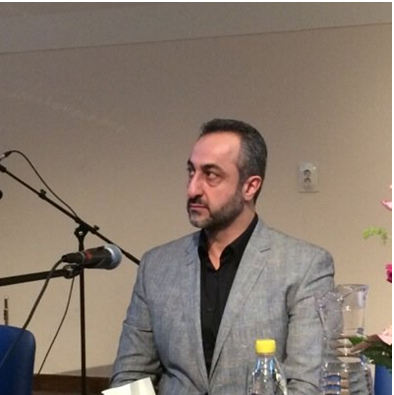
Karachi-based researcher and a Viewpoint contributor, Mohammad Nafees, has prepared a report on the Balochistan situation. The report was commissioned by the Center for Research and Security Studies (CRSS:www.crss.pk). The Viewpoint is serializing this report with author’s and CRSS’s permission
Political Situation
A weak coalition government came into power as a result of the 2008 general election when none of the leading mainstream political parties could bag a simple majority to form their government in Balochistan (Refer to Table 2). Pakistan Muslim League (Q) was the only party to emerge as the leading political party of the province but its split into two factions deprived it the chance of forming the provincial government. Resultantly, the second largest party, Pakistan Peoples' Party, took the advantage of the situation and managed to form the government by offering lucrative departments to JUI (F), Balochistan National Party (Awami) and the independent group because of their support to Nawab Muhammad Aslam Khan Raisani to form the government in Balochistan.
Other than the mainstream political parties, there are a number of other regional political parties functioning under different names in Balochistan (Refer Table 3). However, with the exception of a few regional parties, most of them never attained an electoral recognition. During the election of 2008, most of these regional and mainstream political parties boycotted election for various reasons that, according to some analysts, helped other parties to emerge as the winner of the election. Only Balochistan National Party, Awami contested the election in 2008 and secured seven seats in the parliament. Some of the known local nationalist political parties are:
Baloch Liberation MovementsNationalist parties [1]
- Balochistan National Party, Mengal (BNP),
- Baloch National Movement (BNM),
- Baloch Republican Party (BRP)
- Balochistan Liberation Army (BLA)
- Balochistan Student Organization (BSO-NA)
- Balochistan Student Organization (Awami)
- Sepah-e-Shohada-e-Balochistan (The Army of the Martyrs of Balochistan),
- The Ba loch Liberation Tigers (no website)
- Balochistan Students Organization
- Baloch Republican Students Organization (Bramdagh Bugti Group)
- Balochistan National Congress
- Balochistan National Democratic Party
- Balochistan National Movement
- Jamhoori Wattan Party
- Hazara Qaumi Mahaz
- Pakhtunkhwa Milli Awami Party
- Hazara Democratic Party
- Balochistan Peoples Party
- Kalat State National Party
- Baloch National Voice (BNV)
- National Party
- Baloch National Front
Table 2: Results of Provincial Election 2008
Source: Wikipedia.
Insurgency and SectarianismSince the creation of Pakistan in 1947, the history of Balochistan is replete with events of conflicts and insurgencies. Soon after Pakistan's independence, an army action was taken to force Khanate of Kalat to join Pakistan. The resultant effects of this move caused dissension and a fierce reaction from the local rulers and the populace that later turned into a kind of insurgency. During 1960's, the separatist movement went to its height and it continued until the fall of Ayub Khan's regime. After a brief spell of calmness, another political disorder erupted that led the government to carry out military operation in the province in 1973, when the country was ruled by the democratic government of Zulfiqar Ali Bhutto. After the imposition of martial law in 1977, a policy change took place and some attention was paid to the development of Balochistan.
The separatist movement in the province remained dormant or less active until the assassination of Nawab Akbar Bugti on 26 August 2006. Soon after the incident, the reaction to it gradually turned into insurgency involving several separatist groups whose demands ranged from the demand of freedom to greater Balochistan. It also fuelled an already simmering law and order situation in the region that was set off after the 9/11 when the militants from the neighbouring Afghanistan moved down to the bordering districts of Balochistan. These districts are inhabited overwhelmingly by ethnic Pashtun tribes. Soon after the arrival of Afghan Pashtuns in the region, sectarian violence surfaced in Balochistan and in 2003, the province witnessed as many as 58 deaths of Shia Muslims in Quetta resulting from two different terrorist attacks.
If we look at the data on terrorism-related incidents in Pakistan during the period October 2001 to December 2003, the percentage of victims were: Civilians 79 percent, Foreigners 13 percent, Government Officials 7 percent, and Religious Leaders 4 percent. Of the total civilian victims, Shia Muslims were 50 percent and Christians 26 percent. Balochistan, Sindh, Punjab, and Islamabad were the places that experienced acts of terrorism during this period and the only region that remained safe from this menace till that time was KPK and FATA but it was a very short lived safety for them. During the next three years (2004-2006), KPK and FATA also started experiencing terrorism related deaths in its region too but Balochistan was still the highest target of the terrorists (Refer to Table 3).
Table 3: Deaths due to acts of terrorismSource: Wikipedia
http://en.wikipedia.org/wiki/Chronolo gy_of_terrorist_incidents_in_ Pakistan
While acts of sectarianism were slowly gaining ground in Balochistan, the assassination of Nawab Akbar Bugti on 26 August 2006 added more fuel to the volatile situation of the region. Separatists found the martyrdom of Bugti as an effective excuse to re-energize their political plans while the religious extremists used it to create an anti military feelings among the people. Nationalist extremism got mixed up with the religious extremism and it became difficult to draw a line between the two extremes. From 126 deaths of terrorism in 2005, the number of deaths went up to 264 in 2006 and Balochistan was again on top of all other provinces in bearing the brunt of this ongoing wave of terrorism in the country. However, after a sudden surge in violent acts that claimed 97 deaths in 2006 a noticeable decline in the number of violence was observed in Balochistan after 2006. From 97 deaths in 2006 the number declined to 36 in 2007, 10 in 2008, and 11 in 2009. In 2010, it went up again and touched the number of 207 deaths.
This upward trend in terrorism related deaths is still prevailing and the data from 1 January 2011 to 5 September 2011 shows that there were 485 deaths in Balochistan due to target killings and sectarianism during this period.
Another nature of violence that became prominent in Balochistan after 2006 is related with abductions and target killings of nationalist activits and settlers. To make things easier for better comprehension, this report will address target killings and sectarian violence separately.
Notes:
[1]Brief history of all nationalist parties is given in the annexure “A”