You can curb freedom of expression; you can never control freedom to think freely!
Every citizen shall have the right to have access to information in all matters of public importance subject to regulation and reasonable restrictions imposed by law.
Constitutionof Pakistan, 18th Amendment, Article 19-A, 2010.
Pakistanis have recently acquired new rights to seek government information as part of the 18th Amendment to the Constitution of Pakistan.The journey to get to this point in the history of freedom of expression, however, has been quite a struggle for journalists and writers.
In a country,where reporting still remains a matter of life and death and journalism is a dangerous profession, these new rights to getgovernment information for the public good, is a positive development, but we should always remember the struggle our valiant journalists went through to come this far.
We might have crossed the legal barrier to freedom of expression, in practice this freedom is still a farfetched fantasy for those who are in trenches. The recent report of the Human Rights Commission of Pakistan “State of Human Rights in 2010”revealsthat although the legal environment of professional journalistic work has been relaxed, real working conditions have hardly changed.
The following stunning summary of this report, for example, indicates that journalism is still a dangerous profession in Pakistan:
- →The international media watchdog, Committee for Protection of Journalists (CPJ), called Pakistan as the deadliest country in the world for journalists in 2010
- →Reporters without Borders, the international nongovernment organization, identified Pakistan at the bottom of the 178 countries with the least form of freedom of journalism
- →Twenty journalists and media workers lost their lives in attacks and targeted killings last year
- →Security forces harassed journalists through physical attacks, intimidation and arbitrary detention in 2010
- →Extremists and criminals hired by private individualsharassed a number of journalists last year.
What has really changed is the addition of more challenges to the journalists’ right to report objectively. Previously it was only the government, now it is also extremist groups who are demanding to include only their perspective or be ready for fatal consequences. In a sense it is a more alarming and direct threat than silencing voices through government regulations, laws and ordinances.
Comparatively, General Ziaul Haq’s regime was the darkestperiod of Pakistan’s history for professional journalists and media workers. Freedom of expression was intentionally curbed and restricted through several legal and illegal means during this period.
The Martial Law Regulation 49 was the most lethal weapon the establishment everinvented to terrorize journalists. Ostensibly, this draconian regulation was meant to curb freedom of expression to protectIslamic ideology, state sovereignty, national unity, security, law and order and public moralityas the regulation claimed. The regulation gave the government a free hand to impose pre-censorship and severe restrictions on editors, printers, publishers, media owners and writers. The journalists found guilty under the regulation were subjected to 10 years of rigorous imprisonment, fines or up to 25 lashes publicly.
Additionally, copies of published materials, printing machines and properties were confiscated by the Chief Martial Law Administrator or the Martial Law Administrator of the region under the notorious Press and Publication Ordinance of 1960 and 1963,introduced by another military dictator General Ayub Khan.
Not only the privately owned newspapers and magazines but news contents of the state owned media including Pakistan TV and Radio Pakistan were pre-censored under the new regulations. Working as News Producer for PTV in those days, I still remember teams of Inter Services Public Relations (ISPR)and the Ministry of Information visiting the newsroom daily to check news bulletins randomly taking out paragraphs and pages found to be “objectionable” for broadcasting. Actually this was the second level of censorship in addition to our news editors’“corrections” whowere more loyal to the regimethan the government officials themselves. Althoughwe were used to this internal censorship for which there were no written regulations or even guidelines, for private news media, pre-censorship was a novel invention?
There were several jokes floating around in the journalist communities about the newly authorized military officials who were assigned for censorship with little guidance and experience. The same news sometimes got published in one newspaper while censored for others. As the censorship was a personal and subjective matter depending on the mood of the person, one day it was alright to include a story but another day it was perceived as extremely dangerous for the public.
In addition to the Press and Publication Ordinance, Martial Law Regulation 49, the Pakistan Penal Code and Criminal Procedure Code, other innovative tools were also invariably used to terrorize media reporters and journalists.
Press advice became a daily activity where news media were asked to include, exclude or change news reports, columns and features. The 1860 Law of Libel introduced by the British rulers that protected individuals from defamation was amended altogether to remove these protections. The amended law prohibited publication of any information against anyone, even if it was true, or in the public interest.
To restrain freedom of expression several print media were closed down or suspended including Masawat , Hilal and the weekly Viewpoint. Several journalists were arrested and finedincluding S. G.M. Badar Uddin and Nazir Naji of Masawat, Mahmood Shaam of weekly Mayaar, Altaf Hussain of Urdu Digest, Mohammad Ilyas of Pakistan Times and Asghar Rizvi of Sun.
As the regime became brutal and furious, the struggle for freedom also got momentum and vocal. Four brave journalists, Iqbal Ahmed Jafri, Khawar Naim Hashmi, Masoodullah Khan and Nasir Zaidi, who defied the regime and protested,were arrested and sentenced to flogging by a summary military court in 1978. The regime was trying to humiliate these journalists but actually they were exposing their own insecurities and moral bankruptcies.
The establishment also had a full control on the newsprint supply to magazines and newspapers and those who did not follow the government line were promptly punished by reducing or canceling the newsprint supply. Government advertisements were also a significant tool in those days to mold media in favor of the regime or punish them if they did not pay attention to their demands.
Our PTV Newsroom was an interesting place in those days where some of our bosses went out of the way to please the regime. One of our supervisors, who was nota religious person, allof a sudden became very religious, grew beard and became a frequent visitor to the mosque within the TV compound for prayers, especially with the top bosses from the army and the Ministry of Information. He never missed praying with General Zia or his Information Secretary General Mujibur Rehman during their visits to the TV station.
Once the poor supervisorhad to performthe Maghrebprayers twice, once with the Information Secretary who came to review a news report and then with the CMLA when he unexpectedly arrived at the TV station for a high level meeting. The supervisorwas also known for re-editingfilm reports (it was before the video technology was introduced) of the poorly attended public rallies of the General to show they were well attended. He used to proudly narrate stories of his loyalty to the regime to his colleagues and visitors. Although one of our newscasters became the blue-eyed boy of the CMLA who accompanied the General in most foreign tours, unfortunately, the supervisor did not gain much out of his well demonstrated loyalty!
The reign of terror unleashed by the military dictator General Ziaul Haq was meant to create a psychological environment of fear for smooth sailing of the regime and he was successful in ruling the nation for a long time. In the process, however, he was also able to destroy the political, cultural and economic structure of the society in the name of religion.
To shed the dark shadows of the dreadful regime of a military dictator,who invented all the possible tools to curb freedom of journalism in Pakistan, is quite an achievement but there is a long road ahead to achieve freedom of expression in a real sense. You can curb freedom of expression; you can never control freedom to think freely!
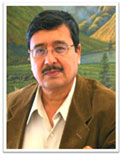 |
Dr. Qaisar Abbas, a U.S. based free lance journalist, grant writing consultant and a published Urdu poet, frequently writes on media, literature and society. With a Master's degree in Journalism from Punjab University, Lahore, he worked as Public Relations Officer for the provincial government of Punjab. Later he joined Pakistan Television as News Producer before moving to the United States where he did Ph.D. from University of Wisconsin-Madison in Mass Communication. After working on administrative and teaching positions at several universities in the U.S., he is currently working as Assistant Dean at the University of North Texas. He can be reached at
|