The plant operators said the Fukushima plant was safe. The Soviets also thought the Chernobyl reactor was safe. The Americans thought their Three Mile Island Reactor was safe
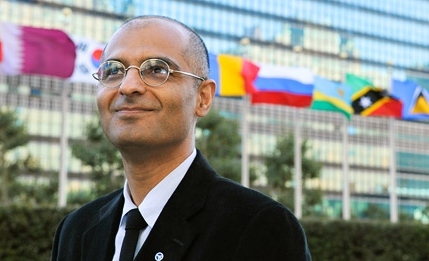 ‘A total of about 30 countries in the world use nuclear energy (most of them have only one or two reactors), while about 160 countries do not rely on nuclear power technology at all. The future does not look bright for nuclear energy,’ says Zia Mian.
He has contributed essays for Confronting the Bomb. He directs the Project on Peace and Security in South Asia, at the Program on Science and Global Security, Princeton University. Previously, he has taught at Yale University and Quaid-i-Azam University, Islamabad. He has worked at the Union of Concerned Scientists, Cambridge (Mass.), and at the Sustainable Development Policy Institute, Islamabad. He is Associate Editor of Science & Global Security, an international journal for peer-reviewed scientific and technical studies relating to arms control, disarmament and nonproliferation policy. In an interview with Viewpoint, he discusses various issues raised in Confronting the Bomb. Read on:
In your essay for Confronting the Bomb, you mention the myth that nuclear energy is considered cheap. Is nuclear energy really cheaper than other means?
Nuclear establishments and their political supporters have long promised that nuclear energy would be cheap, and safe, and would be of great benefit especially for the poor and developing countries. It has become clear however that nuclear power is very expensive, takes a long time to build, is hard to manage, produces dangerous radioactive waste that must be managed for tens of thousands of years, and carries great risks of catastrophic accidents. Against this background, it is hard to see how nuclear energy was ever a sensible choice for any country let alone Pakistan.
The facts now speak for themselves. Today, about 2/3 of all the nuclear power in the world is generated by just five countries. A total of about 30 countries in the world use nuclear energy (most of them have only one or two reactors), while about 160 countries do not rely on nuclear power technology at all. The future does not look bright for nuclear energy. In 2011, four countries with nuclear energy announced that they will end use of nuclear power altogether and at least five countries have abandoned their plans for nuclear programs. (http://www.worldnuclearreport.org/IMG/pdf/2012MSC-WorldNuclearReport-EN-V2.pdf)
The poor economic basis for nuclear energy has been made worse by concerns about safety. To make nuclear power plants safer costs money. After the Fukushima nuclear power plant disaster in Japan, people are seeing the real cost of cleaning up after a nuclear accident. It is estimated that Japan may have to spend as much as $125 billion (and possibly more) to clean up radioactively contaminated land and compensate affected communities. (http://www.nuclearpowerdaily.com/reports/TEPCO_says_Fukushima_clean_up_compensation_may_hit_125_bn_999.html)
What about the economics of nuclear energy in Pakistan?
The economics of nuclear electricity are quite mysterious and kept secret in Pakistan. PAEC does not publish detailed cost estimates for its plans or financial accounts for its operating projects. In 2005, members of the National Assembly asked for details about PAEC staff, salaries, perks and privileges and were informed that even this was "classified" and could not be shared with elected representatives.
PAEC has announced plans for acquiring 8800 MW of nuclear electricity by 2030, an increase of more than ten times the current nuclear capacity. There is no explanation of how much this will cost or how this enormous expansion is to be paid for, other than by taking foreign loans. These loans will have to be from China, the only country that now sells nuclear plants to Pakistan.
Finally, the nuclear energy program overlaps with the nuclear weapons program so some costs are shared and hidden. PAEC, which once was autonomous, is now under the control of the Strategic Plans Division, which manages the nuclear weapons program. The true costs of nuclear electricity in Pakistan may never be known.
What about disposal of nuclear waste in Pakistan?
There are important questions about the public health and environmental impact of Pakistan’s nuclear program that remain unanswered because of the secrecy and lack of accountability.
In 2006, villagers near Dera Ghazi Khan complained about radioactive waste being dumped in the former uranium mining area (http://news.bbc.co.uk/2/hi/south_asia/4954730.stm). A case went to the Supreme Court, where PAEC asked that it be heard behind closed doors – to which the court agreed.
The matter was also taken up by Senator Jamal Khan Leghari, who accused both PAEC and Kahuta Research Laboratories of dumping radioactive material in Baghalchur village, leading to increased rates of cancer, and other health problems among local people as well affecting animals. (http://www.dailytimes.com.pk/default.asp?page=2006\05\25\story_25-5-2006_pg3_1)
The matter was also raised in the National Assembly by Sherry Rehman, who complained about the “serious hazard posed to the health and survival of residents of central Punjab by the shocking levels of toxic uranium waste being dumped in village Baghalchur by the government agencies”. She explained that PAEC was refusing to answer questions and called for a “transparent public inquiry.”There has been no such inquiry.
(http://archives.dawn.com/2006/05/25/nat25.htm)
What about nuclear safety in Pakistan?
Establishing confidence in the safety of nuclear facilities in Pakistan is a big problem. PAEC and the Pakistan Nuclear Regulatory Authority say the facilities are safe. They are not alone. Nuclear establishments everywhere think they can safely manage their own reactors. The Fukushima nuclear plant operators and managers and Japan’s nuclear safety agency all said the Fukushima plant was safe until it had an accident. The Soviets also thought the Chernobyl reactor was safe, until it had an accident. The Americans thought their Three Mile Island Reactor was safe until it had an accident. It is now clear that in all these cases the nuclear industry fundamentally underestimated the risks and consequences of possible accidents.
How safe is the forty year-old Kanupp reactor in Karachi? There an estimated 8 million people who live within 30 kilometres of Kanupp, what is the evacuation plan? What happens if there is an accident at one of the Chinese-built nuclear reactors at Chashma, on the banks of the Indus River? What if radioactivity gets into the River? What will be the long-term effects on people, livelihoods and environment? There are no good answers.
It is these kinds of fears that are behind the massive and determined public struggles in India against the nuclear power plants at Kudankulam and against plans to build reactors at sites in Maharashtra and in West Bengal. India’s Comptroller and Auditor General has investigated and reported on the failings of India’s Department of Atomic Energy and of the Atomic Energy Regulatory Board (http://cndpindia.org/?p=225). No such protests and no such investigations have yet taken place in Pakistan.
If PAEC goes ahead with its plans for a massive expansion of nuclear energy in the next twenty years, it will need to find sites for a large number of new nuclear power plants. These sites will most likely include Karachi, among others. It will be for the communities around these proposed sites to insist on having a voice in the siting decisions.