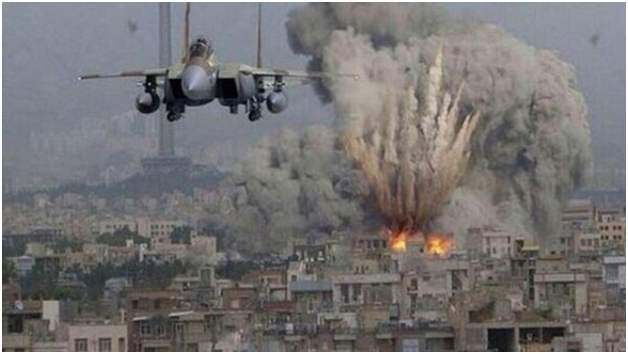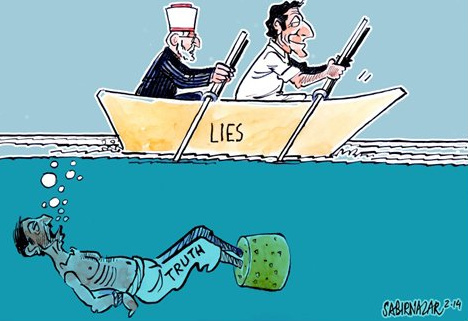
The USA had no problem in recognising a victory of Felipe Calderon in Mexico in 2006 with less than 0.2 per cent of the vote
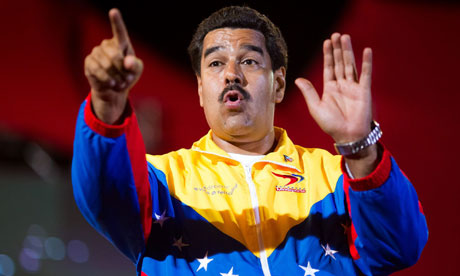 The victory of Nicolas Maduro in presidential election held April 14, with a narrow margin of 1.6 percent, brings to the fore the threats posed to the Venezuelan revolution. But the right-wing opposition candidate Henrique Capriles, a scion of the Venezuelan elite, has refused to recognise the results.
The truth is: Capriles and other opposition leaders supported by domestic and international capitalist media have conducted a relentless campaign for weeks to try to discredit the National Election Commission (CNE). They began to cry foul hours before the results were announced. The Chavistas control the government but the opposition controls wealth as well as most of the media outlets.
The state TV commands only 6 per cent of the total media audience. Similarly, the opposition has a clear advantage in the print medium. Most media empires are owned by the opposition.
Ahead of the polling day, President Maduro had announced that he would recognise the results even if these were against him by one vote. Capriles, on the other hand, had consistently refused to say he would do the same. He refused to sign a document along these lines drafted by the CNE.
As Maduro pointed out in his victory speech, Bush was declared the victor of the 2000 US presidential election even though he got lesser votes than his rival (and there were widespread allegations of fraud which were never investigated). Miguel Tinker Salas a professor of Latin American studies said in an interview with Al Jazeera, “In all elections, there are winners and losers, the US had no problem in recognising a victory of Felipe Calderon in Mexico in 2006 with less than 0.2 per cent of the vote (this election was actually stolen from the left wing candidate Lopez Obrador), so I think it would be extremely foolish on the part of the opposition to try to create conditions of un-governability…”. Even the former US president Jimmy Carter once admitted that the Venezuela’s election process was, “best in the world.”
Alex Main of the Centre for Economic and Policy Research, who is no socialist, was an international observer in these election said, “Its an extraordinary voting process, because not only you have the system of verification, where each electronic voting machine produces a paper receipt which is then duly put into a sealed box which can be audited after the process. But you have many audits throughout the voting process…” The so called “democratic” opposition had no problems when Capriles won the governorship of Miranda by a slender margin or when the opposition won the 2007 constitutional referendum by the narrowest of margins (1.4%). At that time the Bolivarian revolution accepted the democratic results. The pattern is clear, whenever the oligarchs win, they accept the result, but when they lose, they cry fraud.
The Chavismo victory owes to the radical reforms under the Chavez government. An article in the Guardian says, “It was not just the successes of the missions that won Chavismo another seven years of the presidency. There were major improvements in Venezuelans’ living standards during the Chavez years…poverty was reduced by half and extreme poverty by about 70%. Real income per person grew by about 2.5% from 2004 to 2012. Unemployment was 8% in 2012 as opposed to 14.5 % when Chavez took office. These numbers are not in dispute among economists and other experts, nor among international agencies such as the IMF, World Bank or UN. But they are rarely reported in the major western media in their on-going efforts to delegitimise Venezuela’s government…”.
Twenty five thousand doctors and paramedics were brought in from Cuba in exchange for the supply of subsidised oil. This transformed the health sector in Venezuela. These social programmes launched by Chavez provided everything from healthcare, subsidised food and free education at all levels.
The right wing opposition not only used violence against the Chavistas’ but also orchestrated a systemic campaign of economic and political sabotage against the PSUV (United Socialist party of Venezuela). Maduro explained in his speech from the peoples balcony at the Miraflores Palace, “Every state I visited there would be an electricity blackout, only for the power to be restored after I left.” Twenty- three people have been arrested accused of sabotage of the electricity grid. Similarly there was sabotage of food supply chain, with speculation and hoarding. But the stark reality is that it was a narrowest of the victories. The PSUV has shed 680,000 votes since the last election that Chavez had convincingly won on October 7 last year. It is a dire warning for the revolution. The revolution is up against an economic and social war of attrition on the part of the Venezuelan oligarchy supported by US imperialism.
From the point of view of the campaign Maduro basically ceded to the discourse, and the theme set by the opposition, where crime, inflation and issues of shortages were discussed. To enter that terrain of debate was a disadvantage. But the real question is that the Venezuelan bourgeoisie still wields immense economic and financial power. They use it to destabilise and create unrest. There is also an accumulated dissatisfaction over the “Bolivarian” bureaucracy. There is a growing call for a purge within the PSUV. Introspection and self-criticism is needed in the party. But above all the revolution has to be completed with the expropriation of the means of production, banks and financial institutions and the landed estates. The tasks of the revolution are also to take over the assets and wealth of the exploitative multinational conglomerates that have plundered Venezuela. This in itself will allow the revolution to deal with the problems of inflation hoarding and speculation, which are eating away at the base of the support of the revolution amongst the workers and the poor. It is necessary to plan the economy in the interests of the vast majority of the toiling masses. In his victory speech Maduro invoked the legacy of Chavez and promised ‘building a socialist country’. The PSUV will have to match deeds with the words to complete the unfinished tasks of the revolution. Otherwise in the words of Louis de Saint Just, “those who make the revolution half way only dig their own graves.” It is the question of now or never. The revolutionary war has to be fought to the finish.
 |
Lal Khan is the editor of Asian Marxist Review and International Secretary of Pakistan Trade Union Defence Campaign. He can be reached at |