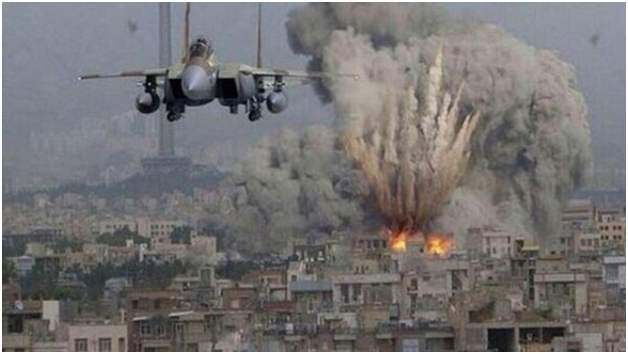
The ceasefire between Israel and Hamas is still holding and Gaza's inhabitants will hopefully sleep undisturbed, at least in the near future. But the memories of the Israeli aggression will not faint any time soon. In the letter below, Marco Espvall describe his everyday life in Ramallah, and tells the story about how war keeps penetrating the everyday life as well as how religion threatens to poison the unity of the Palestinian people.
Ramallah
21 November 2012
Hello!
As I type this, it is day number eight since Israel started its aggression against Gaza.
When I woke up this morning I was yet again confronted with "the dead children-question”: should I put on my TV before the breakfast, see pictures of dead children and almost vomit, but find out if the promised cease-fire was kept or not?
I get crazy when I see the mutilated bodies that are constantly appearing on the Arabic TV channels. But I am also critical of such coverage. Airing images of dead bodies and the habit of calling the victims as "martyrs" is part of a reactionary strategy to mobilise support. Hamas leaders say ‘Mabrouk’ (Congratulations) to the parents who have their children murdered by the missiles fired from F-16s. The ‘martyrs’ will, of course, go directly to heavens. To constantly show the bodies of dead children is a way to appeal to people's religious beliefs, and cultivate emotional reactions rather than promote analysis and reflection. Even Christian Palestinians speak of ‘martyrs’.
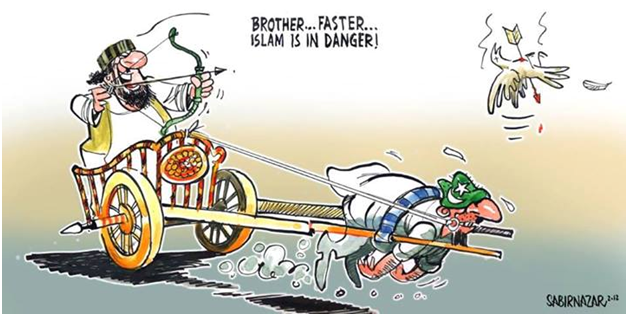
Okay, I have converted to Islam in order to marry the woman I love, but sometimes I find the three monotheistic, patriarchal religions from the Middle East (Judaism, Christianity and Islam) morbid. Stop celebrating death and suffering! No, the suffering does not make the struggle more noble. Why talk about virgins in heavens with the people of Gaza who already live in hell on Earth?
I should perhaps add that religion and fanaticism are just as common on the Israeli side; the only real difference is that they have better weapons.
(‘The dead children’ won at last, and I checked the news on TV: the ceasefire did not last. A total of 139 Palestinians now dead. Two more Israelis died during the night of Hamas rocket firing, so now five people have died on the Israeli side).
But now it strikes me that I did not present myself. My name is Marco, and I am a Swedish journalist, married to a Palestinian documentary film maker. For almost one year, I have lived in Ramallah on the West Bank.
I have to admit one thing. I am not in my senses indeed owing to what is happening in Gaza. I can not sleep at night. I am worried during the daytime. This despite the fact that everything seems to be business-as-usual here in the middle class ghetto of al-Masyoun in Ramallah. The reality in Gaza is constantly invading my daily life too. Like what happened the other day: Me and my wife Wafa gave a phone call to one of her sisters in Gaza to check that everything was okay. It was. Suddenly we hear a BANG in the phone, followed by a series of explosions. Her sister, who is traumatized after “Operation cast led” four years ago (and, of course, was not receiving psychological treatment because she lives in Gaza) starts screaming and crying like a foghorn. It takes Wafa more than 15 minutes on the phone to calm down her sister to a level where at least she is be able to get a few understandable words out of her mouth. Finally, Wafa’s sister struggles to explain what happened during the blast. It was an air strike out of sight, but still close enough to make the whole house shake.
This is my life right now. And there is very little I can do to change the situation or to support my family in Gaza.
But I try. Today I took part in a demonstration in solidarity with Gaza at Manara square in Central Ramallah. It was only Palestinian flags in the demo, no party banners. It was a political statement to try to bridge the split between the various political factions. The Islamists were also there, some with Hamas and Islāmic Jihad flags. Hard words were exchanged but in the end the religious people were allowed to stay. When the rest of the demonstration started chanting slogans against the war, against United States’ support for Israel and the UN's inaction, the bearded men only kept on repeating their mantra: "Allahu Akbar".
Zoraida, one of the organizers, walked right next to me in the demonstration, she was representing WATC (Women's Affairs Technical Committee), a coalition of women's groups in the West Bank. She was annoyed by Hamas attempt to monopolise on the resistance in Gaza:
“Why don't you journalists write about the other political groups that also makes resistance in Gaza? In fact, there are secular people in Gaza and they are suffering and struggles too,” she says.
Zoraida expressed concerns about the fact that the politicians in the Arab world were travelling to Gaza and meet Hamas to win domestic support.
–“Mahmoud Abbas is the president of Gaza as well. But it's his own fault that Hamas now seems to represent all Palestinians, when he doesn´t dare go to Gaza,” Zoraida says and sighs.
Now in the evening when I am penning down this letter, the news reaches me that an agreement on a cease-fire has been concluded. My eyes go foggy while my throat goes salty. When I turn on al-Jazeera, I see the people celebrating on the streets of Gaza City. I am bit relieved. I just realize how tense last eight days have been. But I find it hard to trust the cease-fire. Will the truce hold? And what will be the political consequences, in the longer run?
But I do not wish to think about any of that tonight. Right now I am just happy that my family in Gaza will finally get to sleep safe and undisturbed, without drones, air-strikes and explosions.
Goodnight Gaza, sleep tight!
Marco Espvall
| Marco Espvall is a Swedish Journalist and Social Media Consultant living in Ramallah, occupied Palestine. He has been active in various social movements, and working in media field since 1996. |