A survey conducted by the Delhi-based Centre for the Study of Developing Societies (CSDS) in 1999, just one year after India declared itself a nuclear weapons state, found that an extraordinary 54% -- over half -- of the Indian electorate had not heard of the nuclear tests that preceded this announcement
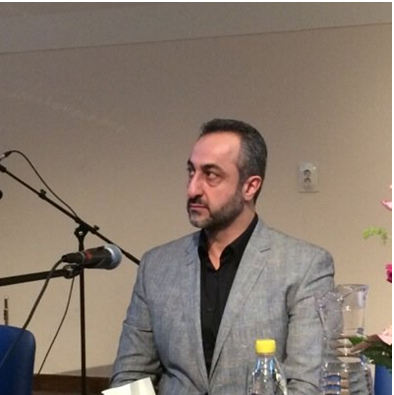
 ‘I don't think of building nuclear weapons as a scientific or technological accomplishment. This is 60 year old technology and the broad principles are well-known,’ says M V Ramana. In an interview with Viewpoint, he discusses his essays in Confronting the Bomb.
He is from southern India and trained as a physicist. He has been working on issues related to nuclear weapons disarmament and nuclear energy, both in south Asia and elsewhere, for close to two decades now. He is currently with the Nuclear Futures Laboratory and the Program on Science and Global Security, both at Princeton University. His most recent book is called "The Power of Promise: Examining Nuclear Energy in India," (Penguin). He is also a member of the Science and Security Board of the Bulletin of the Atomic Scientists and the International Panel on Fissile Materials. Read on:
How does the Indian ruling class reconcile nuclear armament [or any arm build up] with Gandhian ideals of non-violence?
The Indian ruling class, at this point, has no interest in non-violence either as a theoretical idea or as a way to carry on national and international affairs. It may even be argued that these Gandhian ideals were not applied ever since independence in 1947.
In your essay included in Confronting the Bomb, you point out that Canada supplied India’s second research reactor, CIRUS, under the Colombo Plan (page 9-10). Tell us what was this Colombo Plan and what role Cold War expediencies played in Indian nuclear plans?
The Colombo Assistance Plan was an arrangement to provide aid to the developing countries of the British Commonwealth. The Cold War, as is well known involved, among other things, the United States and the Soviet Union battling it out for the minds and hearts of the people of the third world. India, having decided to be non-aligned, was in a good position to benefit from both blocs, and neither the United States nor the Soviet Union wanted it to go over to the other side. I will give one example. In 1953, India exported a small shipment of thorium nitrate to “Communist China”. Just two years prior to that, the United States had passed the Mutual Assistance Control Act that required all U.S. “financial, economic, or military aid to another country automatically be terminated if that country were found to be trading embargoed items to the U.S.S.R., its satellites, and Communist China". Among the list of embargoed items were uranium and thorium. The discovery of the shipment promised to blow up into a diplomatic embarrassment. Eventually, this particular shipment was allowed to go through but the United States had to agree to purchase India’s entire output of thorium nitrate, a material not required by the U.S. Atomic Energy Commission as it already had plentiful supplies with no effective demand, at a rate substantially higher than the global market rate. These purchases were to go on for a period of eighteen months or till 230 tonnes of thorium nitrate were delivered.
In the 1990s, India’s nuclear lobby conducted an aggressive campaign to counter American non-proliferation initiative (page 21). Is it the case that the U.S.’ attitude towards Indian nuclear programme changed after the dissolution of the USSR. Or has the U.S. viewpoint been consistent towards Indian nuclear plans?
United States perception of and policy toward India's nuclear programme, and India in general, has not been consistent. During the period you mention, I think there were several factors at play, the two chief ones being the dissolution of the Soviet Union and the opening up of the Indian economy to multinationals, including U.S. companies. It has changed subsequently as well, due to the rise of China as a major power.
This question is in a way continuation of the previous: in Pakistan like elsewhere one wonders what moral authority does the U.S.A enjoy to lecture others on nukes when the USA herself is armed to teeth with nuclear weapons?
I don't think the United States has any moral standing to lecture other countries on possessing nuclear weapons.
In your essay Homi Bhabb is delineated as some sort of ‘Father of the Indian Bomb’. The way he maneuvers, influences the decision making, and sometimes resorts to blatant lies he resembles very much Pakistan’s A Q Khan. If he is held in great esteem by masses as well?
To me, it is not the similarities, but the differences between Homi Bhabha and A. Q. Khan that stand out. These differences can be seen in their background, personality, training, historical location, relationship with national and international leaders, and focus of work. While both of them had to successfully meld science and technology with politics to succeed in their projects--which may explain some of the similarities in their modus operandi--Bhabha's task was different. A. Q. Khan, at the very outset, was responding to an expressed demand whereas Bhabha had to create a demand for nuclear science and technology, albeit among a political leadership that was favourably pre-disposed toward that technology. As for your question, I would not use the word masses to describe the people that hold him in high esteem. One must remember that the masses in India, and I imagine in Pakistan too, are not keenly following developments in nuclear science and technology. For example, a survey conducted by the Delhi-based Centre for the Study of Developing Societies (CSDS) in 1999, just one year after India declared itself a nuclear weapons state, found that an extraordinary 54% -- over half -- of the Indian electorate had not heard of the nuclear tests that preceded this announcement. What are the chances that they would have heard of Bhabha?
You have criticized the Department of Atomic Energy (DAE) for ‘relatively few notable accomplishments’. One can say the same about the Pakistan Atomic Energy Commission (PAEC). However, in Pakistan the myth makers present the nuclear programme as an epitome of scientific achievement. Lot of pride is attached to nuclear scientists and their ‘achievements’. As a scientist, do you think building nuclear weapons is indeed some miraculous accomplishment?
I don't think of building nuclear weapons as a scientific or technological accomplishment. This is 60 year old technology and the broad principles are well-known.
Has the Indian left opposed nuclear race in the region? What has been the left viewpoint traditionally on nuclear programme in India? Also, did the former USSR lend any help to India in this regard?
I think the left parties have largely opposed the acquisition of nuclear weapons. However, they have also been opposed to U.S. imperialism. Holding these two positions simultaneously has sometimes created conflict for the left because the United States has often demanded, at least before the George W. Bush administration took power, that India give up its nuclear arsenal and join various treaties. Similarly, the left has largely been supportive of nuclear energy, except in specific circumstances, where because of popular pressure, they have had to stop supporting some proposed nuclear reactor project. The USSR hasn't helped much with India's nuclear programme. India did lease nuclear submarines from Russia, after the Soviet Union broke up.
One gets the impression that Indian nuclear plans were conceived with China in mind. However, the way nuclear explosions were celebrated in India, Pakistan dominated the Indian narratives of celebrations. Is China no more an Indian ‘enemy’ in the official discourse?
I don't think one can attribute the Indian nuclear weapons programme to China's acquisition of nuclear weapons entirely. If one looks at the timing of various decisions, they had little to do with developments in China's nuclear posture. There were also strong domestic political determinants, such as the Department of Atomic Energy's lobbying.
‘What is to be done’ in your view to reverse the nuclear madness in this region?
I think that both India and Pakistan should unequivocally decide to dismantle their nuclear arsenals and eliminate the weapons and the fissile materials used to make these weapons. This may take time and so in the meanwhile there are several arms control measures that can be immediately adopted, including agreements to not deploy ballistic missiles and missile defense, stopping the production of fissile materials, and signing the comprehensive test ban treaty.