Published in 1986, ‘Facts are Facts’ by the late Wali Khan was an instant hit. ‘Facts are Facts’ is an attempt to contest text book versions of Pakistan’s history. In a bid to generate debate, the Viewpoint is serializing this text
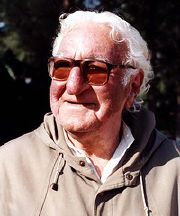 The Diaries of Sir George Cunningham-I:
Since the entire policy of the British was based on Islam, therefore, it is important to record the diaries in detail. This will further inform the people how the British used these so-called devotees of Islam, followers of the Prophet, and inheritors of Namaz to serve their ends. And their entire faith was sold cheap. It pains me to record certain names, because that may cause embarrassment to their heirs. But I consider it my duty to make my people aware of the intrigue in which they were involved to protect the British scepter and crown. I want my people to become aware of the danger that may overtake them anytime. This mistake should never be repeated. Never should they allow themselves to be manipulated in the name of Islam. These traders and hustlers of religion should be publicly stripped naked so that their every layer is recognized by future generations. George Cunningham's diaries are a shocking record of men nurtured at the excellent Islamic school at Deoband, who were busy serving the British. With the Holy Book in their hand and the Tasbih strung around their neck, these pilgrims set out to spread me word of colonialism, British Imperialism, and, for a few pieces of silver, agreed to serve as the custodians of slavery for the Indian people.
Sir George Cunningham's diaries are available at the India Office Library, London. If someone needs proof or wants to investigate further, that is where he should look. I have made official transcripts which are used throughout this book.
The British policy of communalism could not work in the Frontier Province. Here, Muslims were in such an overwhelming majority that they were not afraid of any other community. Secondly, the Pakhtoons were so confident of their own strength that no one could impose any unwanted policy on them.
It became obvious that any people who were ready to tackle a strong, cruel and oppressive race like the British could not be cowed down. Therefore, the British generally sought out the Maulanas; and in the tribal areas and Afghanistan, they especially combined forces with the Maulanas. These religious leaders were expected, to align with the British against Russia. During the Russian Revolution of 1917, the British realized that along with the military strength a new ideology had emerged. Their experienced eye focused on Islam as the only way to confront and confound the ideological strength of the Russians. When faced with a real danger in the person of Amir Amanullah Khan, they used Islam against Muslims. With utmost cunning, Islam was used against a Pakhtoon ruler and the Muslims of Afghanistan. When Hitler's armies darkened European borders, the British, once again, found their boundaries endangered. At that time we witnessed Islam being used in India to further British interest. It served as a useful ideological weapon against the USSR. During turbulent times in the Frontier Province, the British once again used Islam. The Nawabs and Khawaneen were brought under the Muslim League banner. Islam as a political force was strengthened not only in the Frontier Province, but also in the tribal areas and in Afghanistan.
Cunningham wrote that Kuli Khan was being used as the Mullah liaison. He was commissioned to work secretly with the tribal Mullahs and with others who were not prepared to come out in open support. It was a simple case of establishing an Islamic stronghold to combat the Kafirs including the Bolsheviks. The first Mullah recruited by Cunningham was Mullah Marwat. He was formerly connected with the Khaksar movement. Kuli Khan assured him that the only way he could serve Islam was by raising the slogan of Jihad against the enemies of Islam. Through Mullah Marwat, Kuli Khan established relations with the office bearers of the Jamiat-ul- Ulema-e-Sarhad, and their supporters in India.
These Mullahs, many of whom had consistently been anti-British, began to speak and write against the Russians and Germans. Subsidies were paid to all Mullahs through Mullah Marwat.
It was the responsibility of these Mullahs to tell the nation that since the British were believers in the book, Ahl-e- Kitaab, even marriage with them was legal. On the other hand, the Russians were Bolsheviks; not only did they not believe in a revealed book, they did not believe in the existence of God. Therefore, the British and the Muslims were united in their common aspiration to fight this infidel race. They were required to continually remind the Muslims that enlisting in the British Army and fighting along with the British is a service to Islam.
Cunningham records that he persuaded the leaders of the Jamiat-ul-Ulema-e-Sarhad to go to Waziristan and convince Faqir Ipi that since the British were at war against the Germans and Italians, Faqir should not bother them because they were now fighting against an infidel race. Their war, in its own way, was a Jihad, therefore, Faqir's Jehad against them should be called off. The British were conducting this intrigue with utmost secrecy. Their enemies had no suspicion that such documents and letters were being exchanged. Cunningham was happy that Faqir’s deputy, Mohammad Waris' letter written to Jamiat-ul-Ulema-e-Sarhad was friendly in tone. It became evident that Faqir and his companions had no inkling that the Mullahs were accomplices of the British, with explicit instructions from them.
With the outbreak of war in Europe, differences arose between the British and the Congress. Congress Governments in eight provinces were dissolved and events started moving towards confrontation. Since Germany and Italy were their chief adversaries the British decided to soft pedal their anti-Soviet propaganda, and use all of it against Italy and Germany. Cunningham made three groups among the Maulanas. The smaller Mullahs were handed to the local Khans. Those slightly superior in rank reported through the Deputy Commissioners. The senior ones had a direct line to the Governor Cunningham:
I have not been in touch with any of the smaller Mullahs myself. I have done it through me following agents with whom practically all my connections have been verbal, as little is put on paper as possible. Ghulam Haider of Sherpao village…he told me that he thought he could work through about nine or ten Mullahs including those of the following villages: Razzar, Kot, Tarnab, Tongi, Utmanzai and Umarzai later Prang and Charsadda.
Cunningham wrote that he had asked Ghulam Haider of Sherpao village to meet each Mullah on an individual basis, prepare him to serve the true cause of Islam, give him forty- fifty rupees, tell him that he will receive another visit after four months, at which time he should be prepared to brief the authorities about his activities to date. Cunningham asked the Khan Bahadur to hint to the Mullahs that if their work proves satisfactory they could expect a government pension. In return, Khan Bahadur told Cunningham that certain Mullahs were most untrustworthy. Better, if they were called in each month, but they should be well paid. Cunningham said that he had given Ghulam Haider of Sherpao village Rs 600. The list of Mullahs from districts Naushera and Peshawar was handed to the Deputy Commissioner, Iskander Mirza.
The Mullahs of Swat, Buner, Mardan and Rani Zai were the responsibility of the Prime Minister of Swat, Hazrat Ali. Cunningham wrote, "The Wazir-i-Azam [Hazrat Ali of Swat] sent me a list of the Mullahs through whom he is working. He is paying them an average of Rs 15.00 per month."
This was unfair, for the Mullahs of Hashtnagar and Doaba were paid only Rs 10 per month. The Mullahs of Kohat were the responsibility of the Deputy Commissioner of that area. The Mullahs of Bannu were entrusted to Nawab Zafar Khan and Taj Ali. The latter was Khan Bahadur Ghulam Haider's son.
Cunningham had given Rs 600 to the Deputy Commissioner of Dera Ismail Khan, Mohammad Aslam, to pass along to three spiritual leaders of that area, Ama Khel Faqir, Pir Musa, and Pir Zakoori; two hundred rupees a piece. They were given the assurance that if their work was satisfactory they could get a raise!
Regarding Syed Abdul Jabbar of Satana, Cunningham wrote that he was connected with Hyderabad Deccan, and was paid by the Prime Minister, Sir Akbar Hydari. That Hyderabad would pay for the work that was done for the British was perfectly acceptable to Cunningham. He reports that Khan informed him that work was successfully completed at Sawabi, and that he had sent his cousin to look after the affairs of Bajaur. The Afridi Mullahs of Khyber were the responsibility of the political agent, Bacon. Cunningham had a long standing relationship with Maulvi Barkatullah, the leader of the Mujahideen:
My arrangement uptil now with him [Maulvi Barkatullah of Asmos] has been that he comes to see me once or twice a year. Barkatullah said he could also do a good deal through ten or twelve Maulvis in different places throughout Bajaur Mohmand country.... I paid him Rs 1000. I asked him to recruit ten or twelve Maulvis from Bajaur within this amount, and contact me in a couple of months.
Cunningham, then gave a detailed account of the activities of Kuli Khan and the Maulanas. It seems that a lot of work was accomplished through the Jamiat-ul-Ulema-e-Hind. They organized several assemblies, passed a few motions, printed pamphlets and made contacts by touring various areas. In Cunningham's records there is evidence of anti-Congress propaganda along with anti-war statements. "Maulana Mohammad Shuaib toured the Mardan district, condemning Satyagraha. A pamphlet by Maulana Midra ullah condemned war situation and was anti-Congress."
(To be continued)
The book in PDF form can be accessed at: http://www.awaminationalparty.org/books/factsarefacts.pdf