Much before loans for overseas studies, I would like to see such a loan system for students wishing to study at Pakistani universities
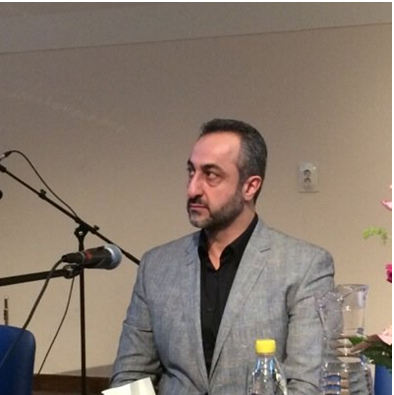
‘No one should pay the slightest attention to HEC university rankings because they are based on absurd criteria. For example, I see that they ranked LUMS below QAU. Having taught at both universities, I can say for sure that it's the other way around – and the difference is large,’ says Pervez Hoodbhoy.
Noted intellectual, physicist, and activist Pervez Hoodbhoy in an interview discusses the working of Higher Education Commission (HEC). Read on:
HEC has spent over Rs 60 billion, according to Viewpoint findings, on sending scholars abroad for higher studies. Do you think this policy has contributed to improving academic standards? Also, why not spend this money to improve our standards locally instead of depending on the West?
In principle it is a good idea to send Pakistani students abroad for higher studies because, with very few exceptions, the graduate level education provided by local institutions is disgracefully bad. I think 60 billion rupees is not a high price to pay for improving the quality of teaching and research in Pakistani universities and colleges – provided that that money is well spent. Compared with our huge defence budget, this is a pittance.
But, from what I see around me, the overseas program has been badly mismanaged and there is little indication of significantimprovement within local universities. Yes, some returnees are likely to contribute in the years ahead. But many of those who have returned from European, Australian, or Chinese universities with PhD degrees seem to have learned little. There are several reasons.
First, the HEC's selection procedure does not properly separate candidates who are academically weak from the strong ones. I know for a fact that some very mediocre students have been sent abroad, including those who were turned down for admission at local universities. Second, Pakistanis often go to those foreign universities which are easy to get into rather than the good ones. Third, once they arrive they attach themselves to some research group rather than carry out independent work. This means that when they return to Pakistan, they are completely lost and have no idea of how to continue their PhD work. Fourth, unlike American universities, other universities do not require students to take graduate level courses. Hence most Pakistani students never get to know of the rigor of their chosen subjects. And, finally, there is a considerable number that has no intention of returning to Pakistan. I was told of HEC awardees driving taxis in Oslo.
Viewpoint findings show that Sindh and Baluchistan [also reported in The News http://www.thenews.com.pk/Todays-News-9-200290-Education-apartheid (www.thenews.com.pk)] are discriminated in the HEC allocations. More HEC funds are allocated for Punjab and KPK while Sindh and Baluchistan areignored. Your comments on the political fallout of such discriminatory policies?
This is a tricky question to which there cannot be a perfect answer. Imagine for a moment that there was some perfect means already in place for ranking students according to their academic ability. Of course, the HEC does a poor job of that but let's suppose that this actually existed. We might then find that students from some provinces are better off academically than those from others. There could be various reasons for this – differential development, historical, cultural, economic, or whatever.
In such a situation the question would then be the following: should we promote a meritocracy by choosing only the top-rankers without looking at their domicile certificates? This means that the academically weaker provinces would have a smaller number of students sent overseas. Or, instead, should we try to promote a quota system? In this case, academically poor students would end up getting something which they do not deserve and education that probably cannot absorb.
My prescription would be to send only the very best students overseas, but to invest massively in the schools and colleges of the less developed provinces. The focus should be on infrastructure, teacher education, textbooks, and learning materials. In time we could eliminate the differences in educational development between provinces.
According to Viewpoint findings, universities run by military or VCs with clout get more funds. When HEC issues its grading of nationaluniversities, the universities getting more funds perform better. For instance, NUST gets most funds and performs better. Don’t you find thisproblematic, a sort of academic corruption?
Firstly, the HEC university rankings are complete nonsense. No one should pay the slightest attention to them because they are based on absurd criteria. For example, I see that they ranked LUMS below QAU. Having taught at both universities, I can say for sure that it's the other way around – and the difference is large. HEC gives huge weightage to so-called "research publications". But the bulk of this published "research" from Pakistani university teachers is garbage, useless to man or beast. Using HEC rankings for apportioning funds has led to all kinds of wastages which I have no time here to discuss.
The other issue you raise – of military-run institutions like NUST having excessive clout with the HEC – is just as serious. Fairness requires that all higher education institutions be treated at the same level and be granted funds depending upon their student enrollment and faculty strength. Particularly influential vice-chancellors should not be allowed to distort the application of rules. Research should be treated separately, and the criteria for awarding research grants need to be drastically changed.
HEC, according to our findings show that HEC has granted money to LUMS and BeaconhouseNational University (BNU). Isn’t it unfair to allot huge sums out of taxpayer money to commercial educational ventures meant for elite?
In the US model of higher education, private universities do not receive state or federal funding and therefore charge large tuitions from students. They may, however, compete for research grants administered by the state or federal governments.
I think this would be a good model for Pakistan as well. Subsidizing rich students at LUMS, NUST, BNU, GIK, etc. is the last thing we should be doing. But supporting research anywhere in Pakistan – with strong evaluation criteria – is fair. I have no figures of the funds given by HEC to private universities, and the purpose behind the grants.
Don’t you think a better system would be to democratize HEC funds? Whoever wants to go for higher education could apply for study loans. Also, loans should be re-paid so HEC does not become a burden. A sort of system that is prevalent in the West?
Much before loans for overseas studies, I would like to see such a loan system for students wishing to study at Pakistani universities. So many of our students live hand-to-mouth existences, and so many cannot afford higher education. For local studies, loan recovery would be a lot easier too. On the other hand, those wanting to study overseas would need much larger loans and the recovery rate is likely to be quite small.
Another bias HEC expresses in granting funds is: scholarships and grants are largely denied to scholars/institutions of social sciences. The emphasis is on sciences. Your comments?
I agree that the priorities are skewed and there ought to be a reasonable balance between various disciplines. This does not appear to be the case presently. Human knowledge and experience have diverse manifestations, each of value but not all having the same value. This is true both within a discipline, as well as between different disciplines. Ideally, for overseas studies, one would like to fund only excellent students who wish to enter intellectually exciting and important fields of study. Of course, this calls for exercising the right judgments and there cannot be just mechanical rules.
 |
Farooq Sulehria is doing his doctorate in media studies at the School of Oriental and African Studies in London. Previously, he worked with Stockholm-based Weekly Internationalen. In Pakistan, he had worked for The Nation, The Frontier Post, The News, and Pakistan. He did his master’s in mass communication from the University of Punjab, Lahore. He also contributes to Znet and various other left-wing publications. |