Zardari has been indicted 14 years ago, you didn’t catch him 14 years ago, and you let all those years pass by — why can’t you wait for a year-and-a-half rather than destabilise the whole democratic process
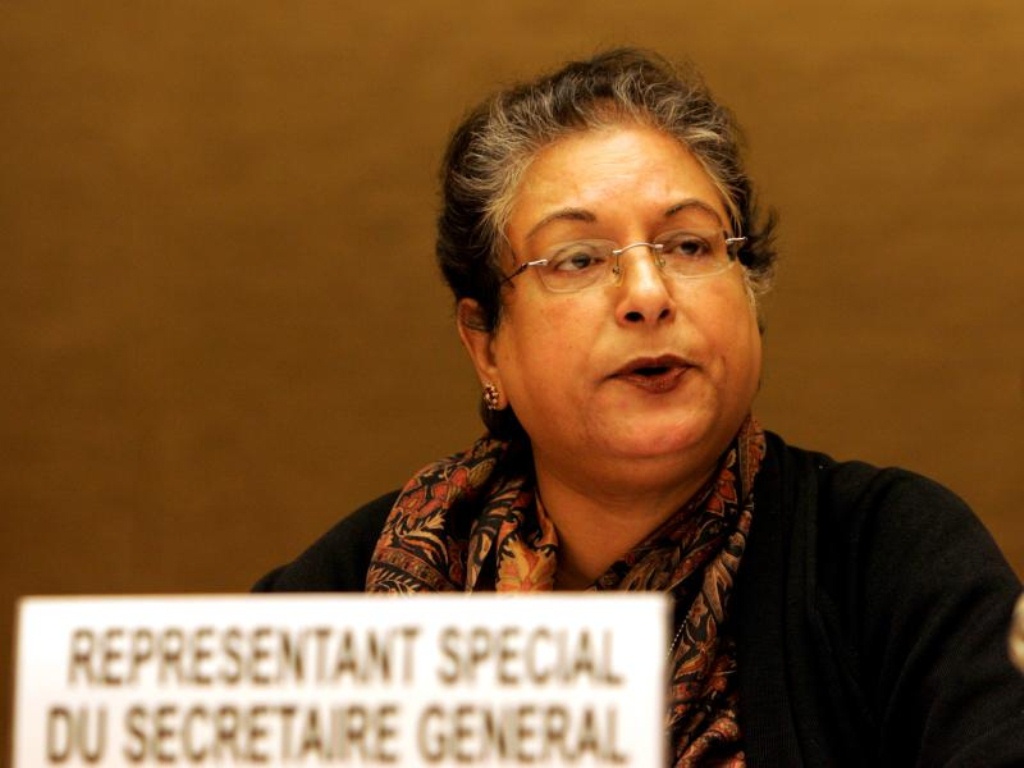 ‘Many of the problems that we face today in terms of the structure of the state, the way it has developed and how the power balance has been disparate, there is a contribution of the judiciary in that as well’ says Hina Jilani in an interview with the Viewpoint.
Hina Jilani is an eminent lawyer and human-rights activist. She along with Asma Jahangir is a cofounder of Pakistan’s first all-female legal practice in 1980. She is also one of the founders of the Human Rights Commission of Pakistan. Hina has been the United Nations Special Representative of the Secretary-General on Human Rights Defenders.
‘I believe in a society like ours where there is disparity between power and influence an activist judiciary does make a difference. Nevertheless, activism in judiciary has to be done with great wisdom to benefit the society,’ she says. Read on:
The case against the Prime Minister, Yusuf Raza Gilani, according to PPP has underlying political motives too. On the other hand, the case in Swiss court against President Zardari is not easy to ignore either. What in your view is a principled position? Should President Zardari not be questioned about his alleged corruption merely because he is elected president and persecuting him would hurt democratic process in Pakistan?
My position has always been that the constitution is very clear on the subject, it does give immunity to the president, any attempt to over-stretch the interpretation would in fact weaken the constitution and I don’t think this should be done. The case of the prime minister and the contempt has divided the bar into halves. This is a controversial issue, even the most senior of the judges and constitutional lawyers don’t agree with one interpretation.
Even though the judiciary ideally must not be politicised but the reality that compass in answering constitutional questions that the judiciary has to answer sometimes hinges on the political side. In that context, the proportionality of the response of the judiciary has to be very carefully constructed and the proportionality in this entire issue is missing.
For instance, the NRO had hundreds of things in it, why all the focus on one particular paragraph of the NRO judgement? And go after a man in whose case there is a big question with regard to immunity, which they themselves have not been able to answer so far. Zardari has been indicted 14 years ago, you didn’t catch him 14 years ago, and you let all those years pass by — why can’t you wait for a year-and-a-half rather than destabilise the whole democratic process.
Do you think that the judiciary creates hype with some cases, for instance the much-talked-about Memogate scandal, or the Asghar Khan case, they start with a lot of fervour but then lose it somewhere in the middle. Is the hype only for a ‘selected few’?
It is difficult for me to say that it’s the judiciary that creates the hype. Judiciary is just one factor in this, those who file motivated petitions in the court do it with a particular agenda. There are people behind them who lead this entire campaign to focus on a particular case and not the other cases. We all know this has happened because of the civil-military relationship in this country, when there is a civil government in place the issues of corruption and incompetence are brought up. There has not been any institution in Pakistan (including the army) that has not indulged in financial dishonesty.
A popular joke goes, ‘wakeel nahi judge kar lo’ (don’t hire a lawyer, hire a judge). Do you think corruption is also rife in our judicial system?
No one can deny that the judiciary is free of all evils. The only question in our minds always is — in order to be able to survive as a society our foreseen justice has to be supreme — therefore we presume that the judiciary will do its work properly.
This particular comment of yours is rather contemptuous [she says rather vehemently] and I do believe it won’t serve our purpose at this time. All institutions of the state must cleanse themselves of corruption and I don’t think that the judiciary is an exception. The superior judiciary must concentrate on this as their first priority.
Through the media lens we know about the privileges enjoyed by the generals and politicians. But narratives about superior judges’ perks and privileges is missing in the public sphere...
More recently such cases have come out though! And I’m glad that it has, as I said earlier about the corruption the same principle applies to accountability. Every institution is accountable and the judiciary must also understand that not only are they accountable they have to be seen to be accountable.
Many people would agree with me that the role of the judiciary and the way that they have conducted themselves over the past few years has not been brilliant. There have been serious concerns with regard to the independence of the judiciary in this country, especially with respect to their particular role in promoting democracy we have seen they have acted to the contrary in the past.
Many of the problems that we face today in terms of the structure of the state, the way it has developed and how the power balance has been disparate, there is a contribution of the judiciary in that as well.
Is the corruption rampant at lower level of the judiciary due to the lack of resources or is the higher judiciary as much guilty?
I’m not one of those people who either believe or are entirely convinced that corruption comes because of need. We have seen many people who are pretty well-to-do, very much braised in corruption so I don’t think that the nexus between need and corruption is a very authentic and sociological phenomenon. There have been times in Pakistan that there have been very upright judges who have worked with average salaries. I don’t think that must matter, everyone’s pay should commensurate to the work that they do. I don’t grudge anyone a penny of what they would get in terms of salaries and perks, but what I expect them to do is deliver justice.
What is your opinion about the efficiency of higher and superior courts? Do you think they are working to the full capacity? We hear every now and then about backlog of cases. Has the situation improved since the restoration of present chief justice?
They won’t work to a full capacity when they don’t have required numbers, that’s the problem in our judicial system all the time. As a lawyer I know that we have deeper problem than most people realise, it’s not a matter of getting rid of the cases the question is do you get justice then? Because a heavily-worked judge will find it very difficult to do justice with the kind of work that is put out for him especially in the superior judiciary when their judgements become precedent and if they are not well-written, clear and suffer from ambiguity and confusion then the law remains ambiguous.
In terms of the situation improving since the reinstatement of the Chief Justice, practically it hasn’t, practicing lawyers will tell you that we suffer from the same problems of delay. In terms of a shocked deficit that we had that may have changed a little bit, but that’s only on the surface. As a lawyer practicing even in the Supreme Court I’m still thirsting for good judgements that would guide the executive, thirsting for judgements that will strengthen democracy, thirsting for judgements that rather than undermining other democratic institutions will promote them.
Unfortunately not much has changed, but one thing has changed — judges have started taking more of an activist stand on social and political issues. In some ways that has disadvantaged the judiciary but I believe in a society like ours where there is disparity between power and influence an activist judiciary does make a difference. Nevertheless, activism in judiciary has to be done with great wisdom to benefit the society.
 |
Naila Inayat is a Lahore-based journalist. She can be reached at www.facebook.com/nailainayat |