Gandhi did not seek high office and Ambedkar stood no chance given the stark realities of the Hindu social system. If a dynasty were to be founded in India it had to be a Nehru dynasty. Elsewhere, either assassinations or judicial murder - Sri Lanka (1959) Bangladesh (1975) and Pakistan (1977) – laid the basis for the so-called dynasties
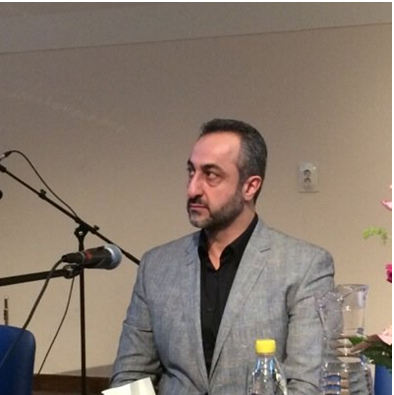
'Family tragedy indeed is the main attraction that continues to draw mass support to the Bhutto dynasty,’ says Dr Ishtiaq Ahmed. A Professor Emeritus of Political Science, Stockholm University. he is also Honorary Senior Fellow of the Institute of South Asian Studies, National University of Singapore. He says he has devoted much of his intellectual and academic life trying to understand the very intricate and complex structure of South Asian society. His forthcoming book, my Magnum Opus, The Punjab Bloodied, Partitioned and Cleansed: Unravelling the 1947 Tragedy through Secret British Reports and First Person Accounts(scheduled for end of May 2011, Oxford University Press, Karachi and Rupa Publications, New Delhi) and recently published , The Politics of Religion in South and Southeast Asia (scheduled for 6 May 2011, Routledge), which he has edited with three chapters, one on India and two on Pakistan, bring out the interplay between modernity and tradition, reason and passion, and other such contradictory pulls. In an interview with Viewpoint, he discusses the phenomenon of political dynasties in South Asia. Read on:What explains a strong trend of political dynasties in the idiomatic Third World?
Just to put the questions posed by you in perspective, I would say that in order to understand the apparent salience of political dynasties (though a traditional dynasty has recently fallen in Nepal), it is important to remember that what we are witnessing are the tensions and contradictions between the modernising state and a traditional order.
The development of democracy in the West was the result of the dialectical interaction between state and society. Political reform and agitation, revolution and class struggle produced a dynamism which tortuously as well as torturously, resulted in an industrial order emerging from the ashes of the feudal order. Democracy expanded gradually as liberals and socialists agitated for the right to vote in the context of economic growth and institution building and consolidation. Such changes were wrought in the backdrop of a largely secular intellectual milieu. Of course, we have to remember all the counter-revolutions and reactionary movements and wars as well. The road to democracy, universal human rights and inclusive citizenship was long. In any event, Western societies changed as a holistic and thorough-going transformation of state, society and institutions.
In sharp contrast in South Asia, as much as for the rest of Asia and Africa, modernity, including ideas of democracy and rights came along with the colonial system based on domination by a foreign ruling class. It was the educated modern elite that took up the question of reform, including democracy and democratic institutions without much of the society being involved in the setting of the social and political agendas for change. It was more or less the role of some powerful leader that set the terms for the direction in which society will move – colonial institutions had to be transformed into democratic institutions. India achieved it more successfully because of the Nehru-Gandhi-Ambedkar combination – an atheist Brahmin, a religious-humanist Baniya, and a human rights and minority rights champion from the historically most disadvantaged group on earth, the Dalits – joined forces to lay the foundations of Indian democracy. Gandhi did not seek high office and Ambedkar stood no chance given the stark realities of the Hindu social system. Nehru was a towering intellectual who turned his back on the worst features of the caste system and under his leadership India began its journey towards democracy. If a dynasty were to be founded in India it had to be a Nehru dynasty. It nearly turned out to be so, but as the Nehru-Gandhi dynasty.
Elsewhere, either assassinations or judicial murder - Sri Lanka (1959) Bangladesh (1975) and Pakistan (1977) – laid the basis for the so-called dynasties that emerged. The spouses or children of slain leaders received sympathy from the people and thus getting elected. In any case, each of the South Asian dynasties carries its peculiar features as well. One thing is absolutely true - the old order was far more resilient than could be imagined. Therefore there was no question of tradition being supplanted by modernity. Rather, synthesis between tradition and modernity was more likely. Political dynasties are a typical manifestation of that type of revisionist modernity. In a way, the South Asian political dynasties represent the forces of modernity while themselves being embedded in the traditional structure of families, tribes and clans that have provided leadership in the past as well as during the colonial period.
Nehru-Gandhis of India, Bhuttos of Pakistan, Bandranaikes of Sri Lanka, Mujibs from Bangladesh are known South Asian political-dynasties. But we also have Abdullah dynasty in Kashmir and Bacha Khan dynasty in Khyber-Pakhtoonkhwa. Is it a South Asian-specific phenomenon? If so, why?
There is no doubt that in South Asia we tend to idolize our heroes, probably more than any other part of the world. Film heroes and heroines and our political idols enjoy a semi-divine status in our lives. I think this must have something to do with our folklore and cult traditions. Our oral tradition is replete with stories about the constant struggle between good and bad, evil and pious, and so on. Founders of nations or mass movements who are killed tend to gain our sympathy, and we are willing to transfer that sympathy to their family because that seems so natural.
In sociological terms, the thing to notice is that in each of the cases you take up the founder, so to say, of the dynasty represents a larger-than-life figure to whom we can render loyalty that transcends the narrower tribal, clan and caste affiliations upon which we are used to building support networks and alliances. Loyalty to ideology and party programme has not taken such deep root; rather the erstwhile founder of the dynasty personifies ideology and our idea of the good and pure. Having said this, if the idol also signifies martyrdom or at least suffering then he enjoys the sympathy of the people in a strong emotive sense. His progeny can draw upon that sympathy more easily rather than the party or party leadership because individuals rather than the party represent the good associated with our idol. The Nehru-Gandhi dynasty did not start with the martyrdom of Jawaharlal Nehru but his daughter Indira Gandhi filled that requirement later.
In any case, in South Asian politics there is scope for the immediate family – wife, daughter or son of the hero to claim the mantle of his father and succeed. However, there are no guarantees that such an attempt would always succeed.
In India, Indira Gandhi became Congress president during Nehru’s life. Did he oppose it? Did he see the consequences especially when he otherwise is known to be democrat and in fact greatly contributed for democratic causes?
You see, Mahatma Gandhi groomed Nehru to take up the key position of prime minister while he himself remained aloof. From the 1940s onwards, Gandhi was progressively alienated from the Congress though he continued to command popular support. When India became independent Gandhi made it a point to be away in Calcutta living among Muslims to see to it that they were not subjected to revenge killings. Moreover, Gandhi was an anarchist or rather the ideologue of the idyllic self-sufficient villages. He fitted in well as a civil society agitator rather than as head of state or head of government. To use the current terminology, he was par excellence a man of the civil society. Gandhi, it seems, was never close to his children and therefore grooming them for some such public role was not a major concern of his.
In contrast, when Nehru became prime minister his daughter Indira Gandhi (no relative of Mahatma Gandhi) moved in with his father taking care of him as her mother had died. Nehru began to involve her closely into politics and gave her a number of important assignments including in 1959 the mission to bring down the first Communist government in Kerala. She had been promoted to the position of a union minister when Nehru died in May 1964. It is not clear if he was preparing her to succeed him and establish the so-called Nehru-Gandhi dynasty. Actually when he died senior minister Gulzari Lal Nanda and then Lal Bahadur Shastri became prime ministers. Indira Gandhi was chosen by the Congress bosses, known as the Syndicate, as prime minister in the hope that she would prove to be a weak head of the government and they would pull the strings from behind. That proved to be a blunder because Indira Gandhi quickly out-manoeuvred them and in due course became an Iron Lady in her own right.
She, however, most certainly began to think in terms of dynastic succession and her younger son, Sanjay Gandhi, was openly promoted as her successor. His death in a plane crash in 1980 put an end to Indira Gandhi’s dynastic ambitions but her assassination in 1984 brought the reluctant elder son, Rajiv Gandhi into power. His assassination catapulted his widow, the Italian Sonia Gandhi, into the leadership role but she wisely decided not to become prime minister. It seems her son Rahul is being groomed as her successor though some think his sister Pryanka is more competent. It remains to be seen if the Indian people will continue to return the Nehru-Gandhi clan to power.
In all other cases, Bandranaike and General Zia-ur-Rahman, their spouses succeeded them because their supporters believed they could win elections more easily on the basis of sympathy rather than ideology and programme. So, partly the dynasty is fostered by the party itself which in term may not have been allowed to develop a range of leaders by the supreme leader.
Benazir was elected in 1988 and again in 1993 because of the mystique that surrounded the death of her father. The case of Bacha Khan is interesting. His son Wali Khan and now his son Asfandyar Wali continue to cash on the great admiration and respect Abdul Ghaffar Khan enjoyed for his indefatigable struggle against British rule. Similarly Sheikh Mujibur Rahman's daughter Sheikh Hasina succeeded her father through elections.
What explains the rise of Bhutto dynasty in Pakistan? Mere family-tragedy? And how do you see the future of this dynasty when it is split between Zardaris and ‘real’ Bhuttos (Fatima+Bhutto Jr.)? Can we compare this split with Manika vs Rajiv Gandhi rip?
Family tragedy indeed is the main attraction that continues to draw mass support to the Bhutto dynasty. Right now the sympathy that Benazir Bhutto gained in her own right after her horrific assassination has helped Zardari come to power. It would be interesting to see if Bilawal Zardari will be able to claim the right to represent the Bhutto clan when he has to compete with Fatima Bhutto. Murtaza Bhutto could not qualify as a martyr notwithstanding his brutal murder because he was associated with terrorism that had caused many innocent deaths. Similarly Sanjay Gandhi was almost universally hated when he died. His branch of the family therefore could not claim popular sympathy. Somehow the person killed must be perceived to have died while he/she was the underdog. For example General Zia’s son Ijazul Haq could not claim popular sympathy when General Zia died in a plane crash because he was perceived to be a cruel man in his own right. It remains to be seen if Bilawal will be remembered as the son of his mother or that of his father. Zardari no doubt is not a popular man although his sycophants do have a sob story to tell of his eleven years in jail without him being proved guilty.
Often Bhuttos and Nehru-Gandhis are criticised for being dynastic. There are dynasties in the making. Every politician in India is grooming a son with an eye on the politics. In Pakistan, Sharifs and Chaudhris have become dynasties. Why emerging dynasties are hardly questioned?
I think the emerging dynasties remain only a possibility till such time that they attain real power and the political process is completed correctly to transfer power from father to son or father to daughter. Indeed dynasticism seems to be emerging as a pattern for political succession but which particular family will succeed in establishing a dynasty depends on which family becomes a success story in this business. We have a dynasty in the making in North Korea, which shows that ideology is a weak factor in Asian societies. In Singapore the son of the founder of that tiny island nation is now the prime minister although there was another man in between.
Do these dynasties negatively impact the democratic culture? If so, how?
Democratic theory presumes that political leadership is claimed on the basis of merit, competence and consent through free and fair elections. In principle there is no logical reason to object the descendants of a great leader proving their competence and political skills through the normal political process and thus legitimately claiming the right to come to power. However, given the strong role of family, it is possible that the incumbent in power exploits his/her position and power to promote his/her children as political successors. Therefore in one sense dynasties tend to impact negatively on the evolution of democratic culture. Perhaps just as in the US constitution it is written that no person can be elected as president for more than two terms one can include a provision in South Asian constitutions that power cannot be passed on directly and continuously from husband to wife, father to son or mother to son and so on. In between there should be incumbents who are not children of the preceding elected ruler. This can still leave scope for competent descendants to make to the highest office on the basis of merit later. I don’t think it is possible to ban forever a family qualifying for the highest executive because then it would be discrimination that cannot reasonably be justified.
Second-generation dynastic politicians often prove corrupt and incompetent still dynastic politics hardly suffer. What explains the popularity of dynastic political rule?
This is true and quite intriguing. Perhaps those who contest for power against them are not any better. However, if there are free and fair elections, or almost free and fair, then dynasties have to gain the popular vote. Indira Gandhi was voted out of office in 1977, but voted back into power in 1980. Benazir Bhutto, Mrs Bandranaike and her daughter, Sheikh Hasina and Begum Zia - all have had to compete for power and face the prospect of being voted out of power. So, political dynasties are somehow still part of the democratic political process. That is why they are called political dynasties and not hereditary dynasties.
 |
Farooq Sulehria is working with Stockholm-based Weekly Internationalen (www.internationalen.se). Before joining Internationalen, he worked for one year,2006-07 at daily The News, Rawalpindi. Also, in Pakistan, he has worked with Lahore-based dailies, The Nation, The Frontier Post and Pakistan. He has MA in Mass Communication from Punjab University, Lahore. He also contributes for Znet and various left publications in Europe and Australia. |