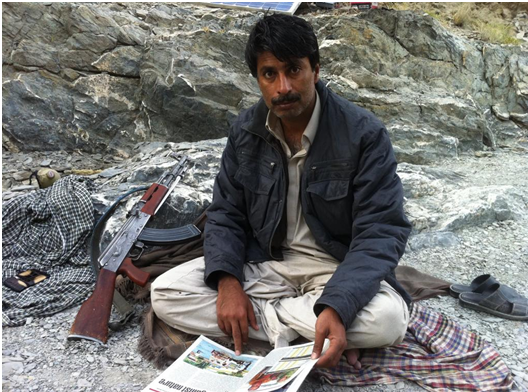
Islamic Movement of Britain was formed on May 12 this year at a meeting at Hyderkheil village (North Waziristan). Qari Hussain assembled about 200 militants from Punjab province, who mostly were dual nationality holders. Movement’s aim is to carry out strikes in Europe, particularly in UK, France and Germany
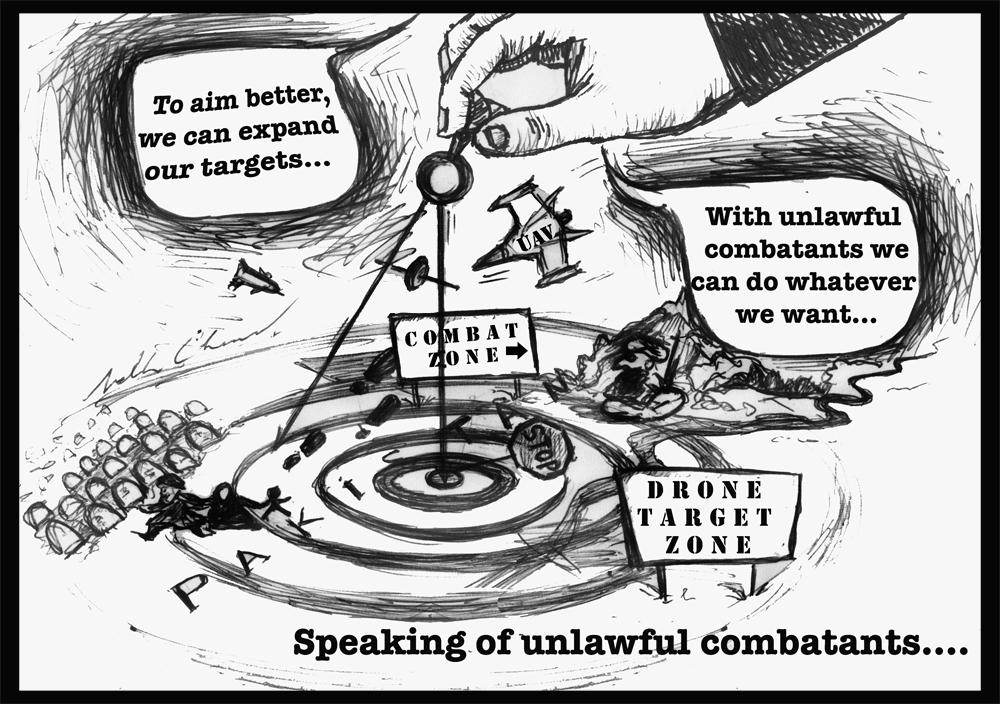 Two British nationals were reportedly among the four people killed in a US drone attack, on December 10, in Dattakhel area of North Waziristan. The incident was reported in Pakistani press on December 16. They were killed when a Hellfire missile struck the car they were riding.
Reportedly, two other people travelling with the British nationals in the car hit by the drone on December 10, were also killed. The other two were tribal militants. All four of them died on the spot.
The British Foreign Office is investigating these reports. The Brits, aged 48 and 25, were known by their pseudonyms Abu Bakr and Mansoor Ahmed.
According to a press report, the British nationals reportedly killed in the missile strikes were identified as Stephen and Darry Smith. Both had converted a few years back. After converting to Islam, the 48-year-old Stephen became Abu Bakar while Darry Smith (25) was renamed as Mansoor Ahmad.
Both came to North Waziristan in November 2009 and reportedly joined al-Qaeda.One of the local tribal militants killed with them was identified as Salim Wazir, son of Bakht Gul. Identity of the second tribal militant killed in the drone strike could not be ascertained.
The two British nationals were secretly laid to rest at a graveyard reserved for foreign fighters in Dattakhel town near the border with Afghanistan.
Body of the local militant was handed over to his family and was buried in his ancestral graveyard.
Tehreek-i-Islami Britania (Islamic Movement of Britain):
Over a month ago, in early November, another Briton, Abdul Jabbar, reported to be linked to Times Square bomber Faisal Shahzad, was killed in a drone strike in Miranshah, North Waziristan.
He was top leader of a British militant group in the lawless tribal region which subsequently forced other members of the newly formed Jihadi outfit to hide in different mountainous parts of North Wazirstan.
The US has recently increased drone strikes in the Pakistani tribal regions close to Afghanistan killing several senior al-Qaeda operatives and other important militants in the last three months including Abdullah al-Salabi, the son-in-law of Osama bin Laden, Abdul Jabbar, head of the British militants group and its mentor Qari Hussain Mehsud, says a senior official.
Requesting anonymity as he is not authorized to talk to the media, the official responsible for monitoring militants’ activities in the lawless tribal regions, told Viewpoint that the deaths of British national of Pakistani origin Abdul Jabbar and Qari Hussain Mehsud, who was known as father of suicide bombers, dented the British militants group capability to carry out terrorist attack in United Kingdon - at least in near future.
Since the killing of Abdul Jabbar in the CIA-operated drone strike on September 8 at Darga Madi area near Miranshah, his younger brother and active member of the British Jihadi group, Azmeir, has vanished from North Waziristan, the official says.
Jabbar and Azmeir, like many others of Pakistani origion with dual nationality, came from European countries to get training in militancy.
“These dual nationality holders started coming to Waziristan in 2004 and they are definitely potential threat to the European countries,” says Brig (retired) Asad Munir, who remained in-charge of Inter-Services Intelligence (ISI) and Military Intelligence (MI) in Waziristan.
The British militants group was formed on May 12 this year with a purpose to carry out strikes in Europe, particularly in UK, France and Germany. The CIA in November claimed to have foiled a terror plot in these three countries, which was at 'embryonic' stage.
At a meeting at Hyderkheil village near Mirali town of North Waziristan, Qari Hussain had assembled nearly 200 militants from Punjab province, who mostly were dual nationality holders and laid the foundation of Tehreek-i-Islami Britania (Islamic Movement of Britain), local sources in the area say. Despite majority of the militants at the meeting agreed to this name, however these sources say, the name of this new outfit has not been finalised.
During that meeting, Abdul Jabbar hailing from Deena town of Jhelum district of central Punjab province, was appointed as the top leader of the small group.
Sources say that Jabbar had also fought against the US and Nato forces in Afghanistan on the platform of Jaish-e-Mohammad.
In the meeting, the group declared that Hyderkheil village in Mirali wouldl be their headquarters, while the group would have small offices in Hasukheil, Dattakheil and Danday Darpakheil villages of North Waziristan and these offices would be used for Jihad in Afghanistan, the local sources close to the militant group say.
In the meeting, three small units of the British militants group were also formed. One Abdullah, the UK nationality holder belonging originally to Faisalabad, was given responsibility to select and recruit fighters for Jihad in Afghanistan.
Responsibility of coordinating with other militant organisations and invite their members to join the new group was given to Mujahid Ahmed, these tribal sources say and add that Abdur Rehman was given the task to arrange funds for the British militant group.
Germans droned in October:
Another drone strike in October had killed eight German al Qaeda men who had allegedly been training in Pakistan’s tribal regions.
A few Arabs have also been killed in drone attacks. Abu Abdur Rehman Najdi, the Saudi national and senior al-Qaeda operative, was also killed in the strike in late September. The official says Abu Sahl al-Masri and Abu Hafs al-Masri, the two other senior al-Qaeda members who were recently released from a prison in Iraq, have also been killed in the drone strike. While another al-Qaeda linked Iraqi militant Abdullah Ukashah alias Rasool, was killed along with his local facilitator Rab Nawaz near Wana, the headquarters of South Waziristan.
According to an earlier report in The Express Tribune, data gathered primarily from local and international news sources reveals that the number of attacks from 2008 to 2009 increased by approximately 50 per cent and from 2009 to 2010 they have more than doubled in number.
|
Shafiq Ahmad has been working in electronic as well as print media for the last 16 years. Currently, he is associated with Times Now TV channel as a special correspondent based in Islamabad. He has also served Geo English as correspondent at its Peshawar. He has recently produced a documentary on Pashto music and films, which is under threat from Taliban. Shafiq has also worked as freelance producer with several international TV channels, particularly RTL of Germany and Channel 4 of UK. Besides, Shafiq worked for monthly Herald and daily Dawn. Besides, he has contributed several feature stories to Swiss newspaper Neue Zürcher Zeitung (NZZ), Geographical Magazine of London, Cutting Edge magazine of Lahore and The News on Sunday. |