It was Awami National Party, led by Wali Khan, that declared Urdu as an official language in Baluchistan and Khyber Pakhtunkhwa. Even the Punjab has never formally made such a move
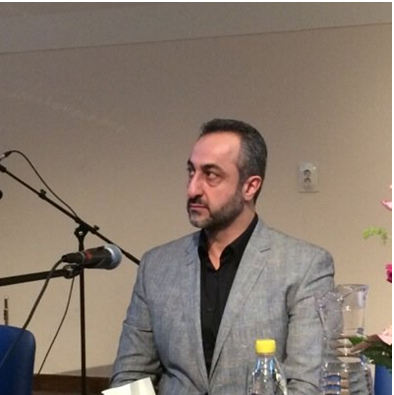
‘It is absolutely baseless assertion that national unity is harmed by language diversity… As a matter of fact, imposition of one language is very harmful for the national unity,’ says Dr. Manzur Ejaz. He is a Washington based writer, literary critic and well-known Pakistani columnist. He hails from Sahiwal. After a teaching stint at Punjab University (1972-77), he did his PhD in Economics from Howard University, Washington DC. He briefly taught economics at Pennsylvania University (1987-1989). His books include Epistemology of Development Economics, Nazman (collection of poems), Ranjhan yar (Stage play), Waris Nama (Explaining Waris Shah), My People My Thoughts (Collection of columns). In an interview with the Viewpoint, he talks about the issue of national languages and mother tongues in Pakistan. Excerpts:
Has there been a ‘language imperialism’ in Pakistan? Did the domination of Urdu fuel the separatist movement in East Pakistan?
Linguistic imperialism started when the British annexed the Punjab to the empire and imposed Urdu in the Punjab and the Frontier Province. Probably this was the only region with such a large population where the British, owing to political reasons, did not develop the indigenous languages. On the contrary they developed Sindhi and implemented it on all levels. In general, the languages ignored by the British were never developed even after the independence. The linguistic imperialist legacy continued even after 1947.
After the creation of Pakistan, the Urdu-speaking elite (or Urduized elite) and Punjabi military groomed under the linguistic imperialism, constructed the ‘ideology of Pakistan.’ Besides religion, Urdu was the most important element in the ‘ideology of Pakistan’. The bias was so strong that even Mohammad Ali Jinnah, who could hardly speak Urdu, preached Bengali Muslims to accept Urdu as the national language. Linguistic riots erupted and the basis for a separate homeland for Bengali Muslims was laid. The rest of the story is well known.
Is it a question of rights or ethnic identity when we talk about promotion and protection of any mother tongue? Was Sindhi-Muhajir conflict of 1971-72 the result of a fear of losing identity?
Mother tongue is a right of every human being, recognized as such by the UNO. It is also a question of identity: that is why Punjabis are called Punjabis and Sindhis are called Sindhis. The Urdu-speaking dominant population, which migrated to Sindhi cities, imposed its language at the expense of Sindhi language which was in use at all levels –from education to government institution—since 1852-54. When Bhutto recognized the right of Sindhi people for their mother tongue, the Muhajirs felt threatened and issued statements like “Urdu ka janaza he zara dhoom se nikle.” Muhajirs were threatened by the rise of Sindhis not only in linguistic field but in other spheres as well. It was a common complaint among Muhajirs that Sindhis were even showing up at Clifton Karachi. Despite recognition of mother tongue, Sindhis did not demand a ban on Urdu in Sindh. Therefore, for Muhajirs it was not a question of losing identity; it was fear of others gaining identity.
Having said that, now both communities are living in Sindh and some adjustments are needed. MQM has coined the term “New Sindhis” for themselves but it does not go very far because they still perceive themselves as Muhajirs. Sindhis are still those whose mother tongue is Sindhi or who have adopted Sindhi as their primary tongue.
Are the current nationalist moments in smaller provinces somehow fuelled by language rights as was the case in former East Pakistan?
Unfortunately, language rights are not given much importance by nationalists other than Sindhis. Pushtun and Baluch are not very cognizant of linguistic right. This is one of the reasons that Khyber-Pakhtoonkhwa and Baluchistan have not as many linguist activists as in Punjab even though Punjabis have been negligent of this right in general. We should not forget that it was Awami National Party, led by Wali Khan, that declared Urdu as an official language in both these provinces. Even the Punjab has never formally made such a move. Therefore, one can say that at the present stage the nationalist are not actively demanding linguistic rights. Their demands are economic and political. They vaguely speak of cultures but that is not asking for the linguistic rights the way East Bengalis or Sindhis demanded.
Why is primary education and communication in mother-tongue important?
It has been established by thousands of researches that the mother tongue is the best medium for learning. Probably, some Pakistani provinces are the only one in the world where children are not taught in their mother tongue. On the contrary, the countries that have developed, from Europe to China and Japan, children are taught in their mother tongue. However, it is very hard to find societies which have developed significantly by making alien languages a medium of instruction. Of course, teaching in mother tongue is not the only condition for development but it is a necessary condition. Furthermore, significant gains in mass literacy cannot be made unless mother tongue is used as medium of instruction early on. This is what even a British officer, Major Wilson, DC of Shahpur (Sargodha), had argued against implementing Urdu in the Punjab. In his view, the literacy became common only when Latin and French was replaced with Celtic dialect of English. His thesis has proven true in the last 150 years.
A foreign language only fulfills the need of exchanging formal information. However, for cultural needs, for the development of an individual personality development, for nation-building, an alien langue does not help indeed. The Punjabi Muslims look up to Arabs and Turks because they have lost their cultural roots by abandoning their mother tongue.
According to UNESCO, many indigenous languages in Pakistan are on the verge of extinction. Is it a natural process or if there are political reasons behind?
Of course, there are political reasons. If speakers of a tongue dwindle, that language can vanish. But in Pakistan where speakers of Punjabi, Pushtu and Balochi outnumber populations of many countries in the world, the death of languages is a result of destructive politics. Such a suicidal political discourse is not merely killing the languages but it is destroying many other basic human values. In fact, the degradation of native languages is part of general political degeneration. If the political discourse takes the course it took in the early 1970s, the linguistic rights can be secured. During Bhutto period, Sindhi was rehabilitated and Punjabi was introduced at the college level at least. In an interview, Sheikh Ayaz, legendary Sindhi poet, told me that Bhutto was sympathetic to the member of Sindhi Linguistic Committee including himself (to resolve linguistic conflict in Sindh). According tom Sheikh Ayaz, Bhutto wanted to explore the posdsibilities of declaring Punjabi as one of the national languages. But Malik Meraj Khalid, the most cultured Punjabi in Bhutto cabinet, told the committee that Punjabis would not accept it.
Establishment and ruling classes in Pakistan, it seems, don't intend to declare popular mother-tongues as official or national languages. Fate of language bill presented recently in the National Assembly is yet another indication. Why is it so?
As said earlier, dominant Punjabi-Urdu speaking elite is wedded to the imperialist linguistic policy. They feel that their interests are better served in a united Pakistan and Pakistan’s unity can be maintained only through the ‘ideology of Pakistan’ of which Urdu is an essential element. They are also intellectually immature because they don’t see that Indian unity is well maintained despite all the language diversity and their official status. In Indian states, education from elementary level is in the mother tongue.
Opposition to national languages of Pakistan is due to an obsession with an unrealistic monolithic concept of one Ummah as well. The jihadi forces, within the state or elsewhere, are the biggest hurdle in adopting a rational and pragmatic approach. Therefore, one should not be surprised if the National Assembly ignores the bill to recognize national languages.
Can we conclude then that the state policies have favored Urdu and English at the expense of other national languages?
Obviously. Urdu is the medium of education and English is taught as a compulsory language from grade six. Punjabi is not even part of schooling and is only taught as an elective subject in limited number of colleges. Most of the official business is conducted in English and some in Urdu. The state of
Does that mean deliberately disowning the languages of working class?
Of course the imposition of Urdu and English was meant to prove the superiority of the elite. It was also meant to oppress the working classes by denying them access to necessary information. A worker who cannot read Urdu or English does not know what is written about him or against. A big chunk of the peasantry cannot understand its own revenue recordings. The peasants are always on the mercy of revenue and other officials. Most of the time, the working class is blackmailed because of concocted information. Consequently, Urdu and English have become a tool of oppression in large parts of Pakistan.
Urdu is mother tongue for merely 7.57% of the population in Pakistan. But most of the literature produced by left-wing groups and parties, especially in the Punjab, is either in Urdu or English. Your Comments?
I feel that the left movement in Punjab has gone nowhere, partly, because of ignoring the mother tongue of the people. The Punjabi left has never understood that language is not only a source of information but is a source of inspiration as well. Progressive Urdu literature could only inspire (if it did) a very limited section of the elite. Even a reasonably schooled person cannot understand Faiz Ahmad Faiz’s “Soey maikhana safeeran-i-haram aatey hain.” They could understand Bulleh Shah and Waris Shah but we ignored that. The Punjabi left did not divorce itself from linguistic imperialism and that is why it is what it is. Unfortunately, largely Punjabi left has not broken that spell yet and is still absorbed in the decadent Urdu tradition which has progressive overtones sometime. Like the rest of the elite they still believe that Waris Shah is poet of illiterate uncultured masses while Faiz is their own.
What are the likely consequences if we continue prioritizing Urdu and English?
In my opinion, if we don’t change the linguistic policy and keep giving priority to Urdu and English, we are going to remain culturally hollow and economically impoverished. The road to development cannot be constructed without bricks of national languages.
Furthermore, the extremist politics of the religious right cannot be combated without induction of literature and tradition of national languages. By the parameters of the ‘ideology of Pakistan’, the country is always going to look outwards, sometime to Arab deserts and sometimes to Turkish caliphate.
Keeping in view the current phenomenon of so-called globalization, is additive bilingualism a solution?
Yes. But the question is which language is used as medium of instruction from the elementary level. A child can learn more than one language and so can the adults but after they have learnt basic skills in their mother tongue. Research has shown that children who are well skilled in their mother tongue can learn other languages better than those who start early education in alien languages. Therefore, even if bilingualism or multilingualism is the solution, the elementary schooling has to start with child’s mother tongue.
Does language diversity conflicts with the national homogeneity as is propagated by certain circles?
It is absolutely baseless assertion that national unity is harmed by language diversity. Many European countries, besides India, are good examples where many languages are used and it helps the cause of national unity. As a matter of fact, imposition of one language is very harmful for the national unity. If one language or religion could forge unity in Pakistan, one would not be seeing colossal national conflicts wrecking the country. On the contrary, India with many languages is not facing kind of conflicts we are facing. At least they are not worse off than us in any respect of nationalism.
 |
Riaz ul Hassan has been actively involved in Social Media studies since 2006. He has held diverse editorial positions in different literary magazines including Ravi and Patras. Currently studying in Sweden and plans to pursue his PhD in the field of Social Media. Riaz graduated from Government College Lahore and has worked at the same institute for about one year as lecturer. He has keen interest and involvement in arts, theater and Social Media studies. |