ITANAGAR, July 14 (Agencies): It was a first-ever conference for men in uniform in the country to spread awareness about AIDS where members of the Arunachal Police were shown a film on the dreaded disease.
The conference, held on July one, featured a short film entitled ' sabdhan' which was produced jointly by BSF and UNAIDS.
The film depicts how a BSF doctor brought back hope to a brave jawan who unknowingly acquired HIV infection during his long stay away from home.
The jawan, who learnt about his infection dring a test just before he was about to donate blood to a colleague injured seriously in a daring ambush by a group of armed militants, got worried about his expecting wife in village home.
However, he became happy on learning from a BSF doctor that everything was not lost for him.
There are medicines available now which when taken during pregnancy by the wife and the child after delivery could save his child.
Along with workshops, press advertisements and other forms of publicity to spread AIDS control messages, the Union Home Ministry is organising such conferences at regional and national levels to reach out to 26 lakh policemen in every part of the country.
Dwivedi said at the conference that efforts were on to make the policemen a medium for propagation of the country's new strategy to fight HIV/AIDS with more focus on behaviourial change along with creating awareness about little steps which could prevent spread of dreaded disease and save lives through timely intervention as the BSF jawan in the film did.
The policemen are particularly vulnerable because of the nature of their job as they deal with sex workers and accident victims.
Their help is often sought by NGOs working among sex workers and others and unless they themselves are sensitised, they cannot be of any help to the NGOs.
Dwivedi said the UNAIDS had suggested to the Union Home Ministry that maintaing Personal Health Record of personnel with a holistic approach could improve the individual health status by 70 per cent at almost no extra cost.
The PHR model developed by the Army Medical College at Pune would also take care of diseases like Malaria and TB which take a huge toll on the police and other forces.
Militant groups in Manipur recruiting kids IMPHAL, July 14 (Agencies): In what is seen as a move to recruit kids into their ranks, militant outfits in Manipur have been kidnapping school going boys claiming that they had joined their outfits willingly, official sources said here today.
In the second such incident within a week, two schoolboys reported missing from Thoubal Kiyam Siphai area in Thoubal district, were kidnapped by a militant group on July 8.
The boys A K Ajoy and A K Bipin both aged 13 were studying in Class VIII, sources said.
Parents of both the boys told local media last evening that a thorough search for the kids had not yielded results.
Medha, mother of Bipin, said she received a telephone call on July 9 night from a spokesman of the banned People's Revolutionary Party of Kangleipak (Prepak), General Secretary group, informing her that the boys were in custody of Prepak.
She said the caller had told her that the boys had joined the outfit 'willingly' but said that her son had gone to a nearby canal for fishing.
Both the parents said they had received calls from Prepak General Secretary group telling them not to approach police or media but said they had informed the Thoubal police.
They were also told that the boys would be 'released' soon.
They said due to threats from the outfit they did not contact the media immediately and appealed to the Prepak General Secretary group to free the boys without harm.
Last week, two other boys, Y.Naobi (13) and Lan Ngamba (11), were kidnapped from Iroisemba in Imphal West district.
Later a spoksman of the militant outfit Prepak Cobra Task Force group told the parents that the boys had 'willingly' joined the Prepak Cobra Task Force group.
Following public protest, Naobi and Ngamba were handed over to Iroisemba Youth Development Club by the militants on July 12, sources said.
US may push agri, defence agenda after N-deal: Scientist BANGALORE, July 14 (Agencies): An eminent scientist has expressed fear that after the Indo-US civilian nuclear deal, Washington may try to push its agricultural agenda and defence sales to New Delhi.
Past president of Indian Nuclear Society and former Director of Indira Gandhi Centre for Atomic Research Dr Placid Rodriguez said the deal comes under the whole gamut of strategic alliance covering defence, space, nuclear and agriculture.
"My greatest reservation is that the strategic alliance between India and the US is going into agriculture because in the other three sectors (defence, space and nuclear) we are strong and we can go independently and we will go," Rodriguez told PTI here.
"Our agricultural universities, state universities, Indian Council of Agricultural Research laboratories they will be completely overwhelmed by giants like Monsanto whose resources are plenty and whose motivation is only monopoly," he said.
Cotton, now genetically modified brinjal is going to be brought in, Rodriguez said, adding, "we don't know what's next".
"Even European Commission has not accepted genetically modified food and we are not examining all the consequences".
The former President and Honorary Secretary of Indian National Academy of Engineering said another "lubricant" (for the US to sign the deal with India) behind the 123 agreement is the "large possibility of defence sales (in India}".
"We are in the market for 125 fighters.
In fact, we will not buy any reactor from the US for 20 years.
We will be buying reactors from Russia and France.
What the US wants is a monopoly in agriculture sector", Rodriguez said.
While Russia, France and to some extent Israel are India's collaborators in defence equipment, the US wants greater pie of the Indian defence market, he said.
Rodriguez expressed the view that the deal is actually an international civil nuclear cooperation agreement - a deal between India and international community - and has been given "wrong connotation" that it's an Indo-US deal, attracting opposition from the left parties.
Ardent supporters of the deal, including Prime Minister, "played too much" about the deal, he said.
"After all, IAEA is a 145-member body in which US is also a member.
NSG is a group of 45 nations.
So, it's actually an agreement between two groups and the US is the strongest and most powerful member of the groups," he said.
While stating that the deal is "acceptable", he said there are certainly question marks.
"What if the US President says that the decisions are governed by the Hyde Act which is ultimate," he asked.
He said India has agreed to a clause in the 123 agreement that the agreement would be subject to the national laws of the two nations.
But it would have been better to say it would be subject to existing international laws, Rodriguez said.
"It has been suggested that we must also pass a national act which says we are not bound by Hyde Act because it's our national law.
That's only way of getting over it," Rodriguez said.
He also disagreed with the view that the agreement with the US is the full civil nuclear cooperation deal, saying reprocessing, heavywater technology and enrichment have been kept out of its purview.
On the issue of reprocessing, there are conditions, he said.
"We have to build new plant exclusively from the imported fuel materials and thereafter we have to give result of reprocessing and they will come back to us with decision after one year; it does not say that a favourable decision will be taken," he said.
Bardhan alleges going rate of MPs is Rs 25 cr NEW DELHI, July 14 (Agencies): With political parties bracing themselves for the trust vote, CPI general secretary A B Bardhan today accused the Congress-led UPA of horsetrading and alleged that the going rate of an MP was Rs 25 crore.
"No one has principles anymore.
It is not a question of few crores but Rs 25 crore for horsetrading," Bardhan said addressing a meeting here to launch Left parties' nationwide campaign against the Government.
"I have never seen Rs 25 crore in my lifetime.
I am sure that none of you (audience) have seen it either," the top CPI leader said.
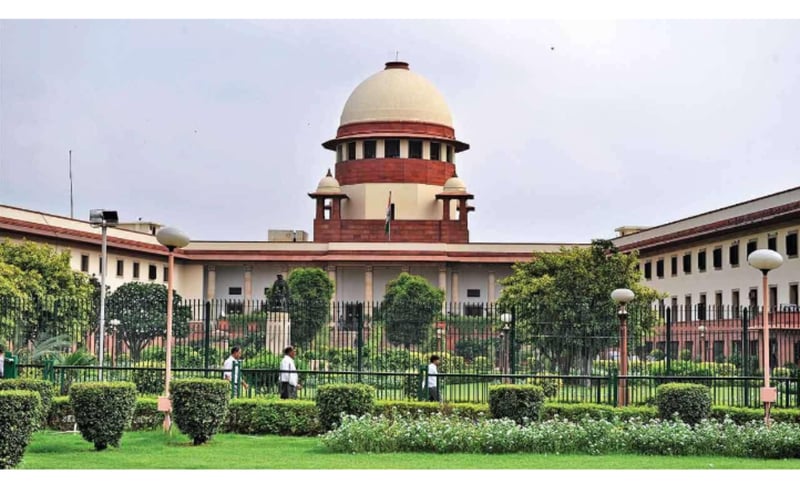
SC posts petition on foreign origin issue for final disposal NEW DELHI, July 14 (Agencies): A petition on whether a person of foreign origin can hold public office was today posted by the Supreme Court for final hearing after eight weeks.
The order came on the petition filed by Rashtriya Mukti Morcha (RMM), a socio-political organisation, taking exception to Congress chief Sonia Gandhi being invited to form government at the Centre by the then President in 1999 after NDA lost a no-confidence motion in Parliament.
The apex court had in April last year issued notices to the Centre and the Election Commission on the issue.
However, the Centre did not file any affidavit and asked a bench headed by Chief Justice K G Balakrishnan to post the matter for final hearing.
The Election Commission said that its stand will be the same as that of the Centre.
The Court posted the matter for hearing after eight weeks.
SC refuses to pass direction on appointment of CAG NEW DELHI, July 14 (Agencies): The Supreme Court today refused to entertain a petition seeking laying down of guidelines for the appointment of Comptroller and Auditor General (CAG) of India.
"Guidelines have to come through some legislation in accordance with the Constitution," a Bench headed by Chief Justice K G Balakrishnan said.
"We will not give any direction for the laying down of guidelines for the appointment.
You have to find the guidelines in the Constitution," the Bench, also comprising Justice P Sathasivam, observed.
The Court declined to go into the petitioner's plea that the issue was needed to be discussed to keep at bay the appointment of "blue-eyed boys of the government" to the post, which has a tenure of six years.
The PIL filed by NGO Public Cause Research Foundation contended that a proper procedure has to be laid down for the appointment of CAG since the power assigned to the post was equivalent to that of an apex court judge.
When advocate Kamini Jaiswal, appearing for the NGO, said that during the pendency of the petition, the Centre has appointed Vinod Rai as the CAG, the Bench said "you are confining your argument to a particular person".
She said in the absence of any guidelines or procedure, retiring bureaucrats with no experience of accounts and audit were getting appointed as CAG.
In case, a Secretary of a particular department or ministry, like Defence or Petroleum, takes up the post there would be a conflict of interest as he or she might have to inquire into deals that they themselves executed during their tenure, she said.
However, her arguments did not impress the Bench, which said "These are senior IAS and IRS officials who are appointed".
The Bench said it was not passing any direction as the petition has not challenged any procedure relating to the appointment for the post of CAG.
At the outset, Solicitor General G E Vahanvati said the issue was discussed during the framing of the Constitution but no restriction had been imposed on appointment of CAG.
He said even if some change was required in the policy there was sufficient scope in the Constitution to pave the way for accommodating it.
The NGO had emphasised the need for having guidelines and procedures similar to those for the appointment of Chief Vigilance Commissioner (CVC) or Chief Information Commissioner.
When the Bench declined to pass any direction, the NGO's counsel preferred to withdraw the PIL.
Former CJI Chandrachud passes away MUMBAI, July 14 (Agencies): Former Chief Justice of India Yeshwant Vishnu Chandrachud, who was in the majority bench that decided in favour of the Indira Gandhi government in a landmark Habeas Corpus case during Emergency, died today due to prolonged illness at a city hospital here.
Chandrachud (88), who is the country's longest-serving Chief Justice having served in that office betwween 1978 and 1985, breathed his last at the Bombay Hospital, Additional Solicitor General Rajendra Raghuvanshi said.
In one of the most notable cases in Indian Constitutional history, Chandrachud was in the Bench comprising five most senior judges that heard the famous Habeas Corpus case during the Emergency.
The case related to whether the right to Habeas Corpus could be suspended during periods of national Emergency after petitions were moved by scores of MISA detenues.
Despite widespread high court support for Habeas Corpus, Justice Chandrachud went along with Justices A N Ray, P N Bhagawati and M H Beg in a 4-1 verdict to reject the petitions on April 28,1976.
The Judges held that no person has any locus to move any writ petition under Article 226 before a High Court for habeas corpus or any other writ to challenge the legality of an order of detention.
The only dissenting opinion was from Justice H R Khanna, who has been widely acclaimed for the act.
Chandrachud, one of the most respected jurists with an outstanding track record, is a diehard cricket fan who has been known to go out of his way to find time to follow the fortunes of the Indian side for decades.
Chandrachud was also appointed by the Indian Cricket Board to probe allegations of betting and match-fixing in Indian cricket that had rocked the sport in the nineties.
"We have lost a great stalwart whose contribution to the Bombay High Court and the Supreme Court is enormous," said Raghuvanshi.
Born in Pune on July 12, 1920, he came to Mumbai for his graduation after completing his education in Nutan Marathi Vidyalaya at Pune.
He graduated from the Elphinstone College here, majoring in History and Economics and later passed out from the Law College at Pune in 1942.
He also won scholarships and awards from the University of Mumbai such as the Sir Nathubhai Mangaldas Legal Scholarship, the Judge Spencer Prize and the Gussie K Kanga Scholarship.
Chandrachud started practising at the Bombay High Court, in 1943.
He was also teaching at the Government Law College here as a part-time professor from 1949 to 1952.
From 1952 to 1958, Chandrachud served as a government pleader and was appointed as a Judge of the Bombay High Court on March 19, 1961.
He was heading the one-member Pay Commission for fixing pay-scale of Bombay Municipal Corporation Officers and was arbitrator in the dispute between the BEST and its Employees' Union.
Chandrachud was later elevated to the Supreme Court on August 28, 1972.
He became the Chief Justice of India on February 22, 1978 and retired seven years later on July 11, 1985.