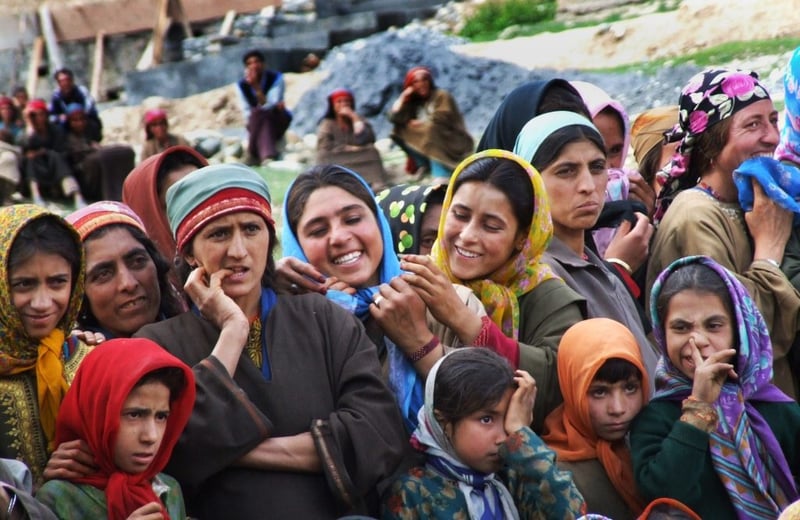
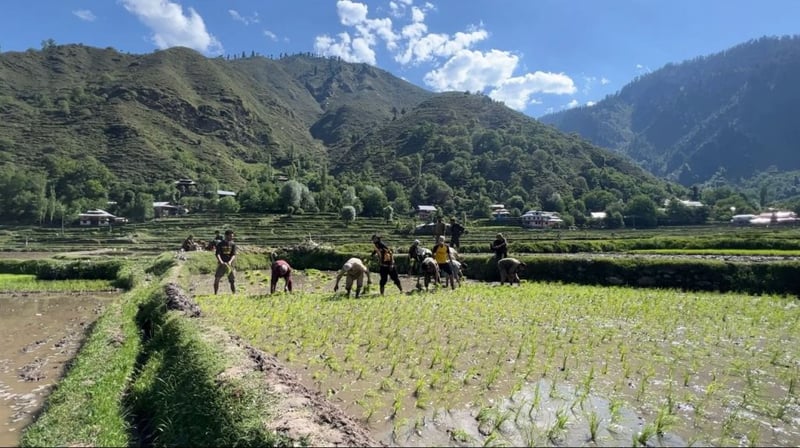
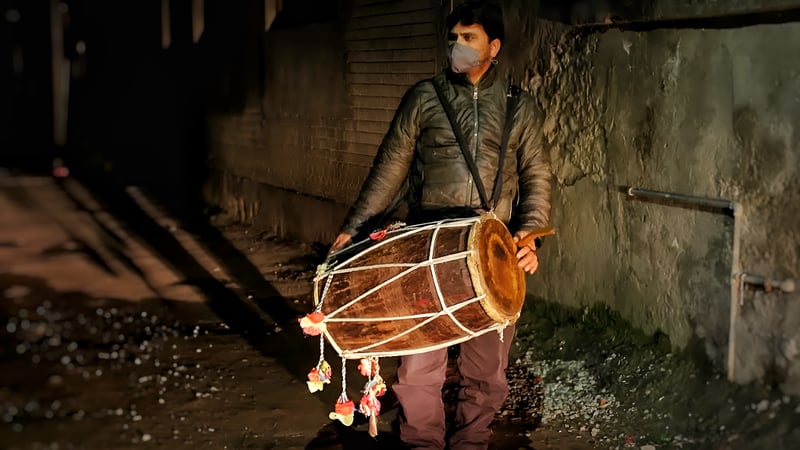
By K.D Maini Southern and south-western slopes of Peer Panchal range is the belt that has more than 60% Pahari speaking population.
This belt starts from the southern edge of Banihal Pass and moves towards Budhal, Kalakote, Sunderbani, Nowshera, Rajouri, Dharal, Thanamandi, Surankote, Mendhar, Poonch, Uri, Keran and Karnah.
On the other hand there are hundreds of Pahari speaking colonies in Kashmir Valley, RS Pura, Bakshi Nagar, Rehari and Simble Camp Jammu.
The renowned writer Fedric Drew wrote in his book "The northern Barrier of India' that Paharis are strong, handsome, stout and powerful race of tribe.
No doubt that the word Pahari has infinite meaning but in J&K it is confined to those peoples whose mother tongue is Pear language and who are living in a particular belt.
They are Hindus, Muslims, and Sikhs whose cultural affinity, secular outlook, similar lifestyle, hobbies, dresses, diet and common language is the binding factor among them.
As discussd above the main concentration of Paharis is on the southern and south-western slopes of Peer Panchal range while the shrines of saints of Kashmir like Alamdar-e-Kashmir, Sheikh Noor-ud-din Noorani and Baba Reshi are located in the northern slopes of Peer Panchal range of mountains which fall in Kashmir Valley.
The Pahari who are inhabiting the southern slopes of Peer Panchal range from centuries together frequently visit these shrines.
The Pahari saints, Peers, Darvaishs and 'Walalies still get influenced from the teachings of saints of Kashmir.
The Sufi cult has deep roots in Kashmir as well as Pahari speaking belt.
The Naqash Bandis, Qadris, Soravardhi and Chisti sects of sufi priest visit Kashmir and Pahari belt from time to time.
Syed Bulbul Shah of Soravardhi sect of Turkastan, Syed Jalal-ud-Din of Bukhara and Mir Syed Hamdani Naqash Bandi had came to Kashmir with his seven hundred followers for preaching of Islam.
Some of the followers of Mir Syed Himdani had moved towards Pahari belt and established their 'Astans' for the betterment of the people of this area.
Most of them were Syeds who were popularly known as 'Peer' in Pahari belt.
These Peers alongwith 'Darveshs' and 'Wallis' had laid foundation of Sufism in Pahari belt.
They were also impressed by the sufism in Kashmir.
Therefore apart from teachings of Islamic thoughts they started preaching true love for Almighty which was the main principle of Sufism.
These spiritual personalities were neither religiously rigid nor were they communal.
Therefore their teaching of love and respect for all religions became popular among the Pahari masses and the Paharies started coming close to these priests without consideration of cast, creed and religion.
Among Paharis, majority of the population has faith in Peers, Sufis and Darveshs.
These spiritual saints and intellectuals were basically impressed from the teachings of saints in Kashmir.
Therefore they also adopted their thoughts for their expressions.
The Pahari Sufiana Kalam starts with the beginning of 20th century when in 1897 AD Hazarat Main Mohd Sahib of Khari Sharief had written Saif-ul Malook in this language.
Mian Sahib died in 1907 AD and had written number of books in Pahari including Se-Harfies and Baits.
By this way he had laid the foundation of Sufiana Kalam in Pahari.
Later on Hazarat Baba Ji Sahib Larvi, a Gujjar saint and prominent sufi poet, had written hundreds of Si-Harfies and Baits in Pahari and carried on the traditions of Sufiana Kalam.
Upto 1947 all the Pahari poets followed Hazarat Mian Mohd Sahib and Baba Sahib Larvi and tried to express their sufiana views on the patterns and parameters of Saif-ul-Malook and Si-Harfies and baits written by Baba Sahib and Mian Sahib.
They include Sain Qadar Baksh, Sain Faqar Din, Rahim Ullaha, Khuda Baskh Zaar, Chan Zaman, Fateh Mohd Dharvali and Hazarat Mian Nazam Ud-Din Larvi etc.
Most of these poets were not much educated and except religious teachings they were not familiar with any other literature.
But their compositions are the best literary pieces of Pahari literature.
These sufi poets taught true love for Almighty, brotherhood respect for all religions, communal harmony, tolerance, and described relation of man and God in a very attractive manner.
They have also tried to preserve the life of Pahari peoples in a very poetic Sufiana style.
Love is the main theme of Pahari sufis and they prefer expressing true love for almighty than religious customs.
They say that the true love for God brings man nearer to the Supreme power.
An arabic sufi gumble said that true love, devotion and submission before God is a great religion.
Molana Roomi said that love is the unique and distinct religion in itself.
Mostly the Pahari sufis had chosen poetry as the medium of expression of their thoughts.
Their verses were in Pahari language therefore these verses were understantable for the common man.
By this way the Pahari Sufiana Kalam could reach even illiterate persons in the remote areas.
Most the of Pahari Sufiana Kalam is written on the ideas of true love for Almighty, tolerance, communal harmony, respect of all religion.
The Pahari Sufiana Kalam is written in three forms i.e in the form of Si-Harfies, Baits and Bara Massias.
The Pahari sufies composed their ideas in these forms of poetry and started displaying these poems before the devotees.
Because these poems were written in the mother tongue of Paharies therefore these were liked by Paharis.
Paharis still remember these poems.
By this way the Kalams of sufies, Peers, and Darvaishs started popularising among Pahari masses.
The Pahari sufiana Kalam is very thrilling, melodious and heart touching.
Such a sweet language has been used in these songs that even the illiterate Pahari easily understands the thoughts expressed in these versus.
In the Pahari villages, majority of the people orally sing these melodious Si-Harfies, Baits, Baramassias and poems.
These songs are sung mostly in Majlis, at the time of Urs, marriages, Latries fairs, etc.
No musical instrument is used along with them.
Whenever the villagers assemble under a tree, near the Ghrat, (water mill) in the premises of saints', Asthans, in marriages and fairs they start singing these sufiana Kalams.
Normally one villager sits on his feet, covers his both ears with his hands and then start singing sufiana Kalam while the audience listens this poetry with great devotion and respect.
Besides getting pleasure and enjoyment from these songs they understand the sufi thoughts also which are explained in them.
This style of performing sufiana Kalam is popular in the whole Pahari belt that starts from Budhal, Rajouri, Poonch upto Uri and Karnah.
Save The Children