PaJK Crisis: Kashmir's Selective Bleeding Hearts and Pakistan's Blind Spots
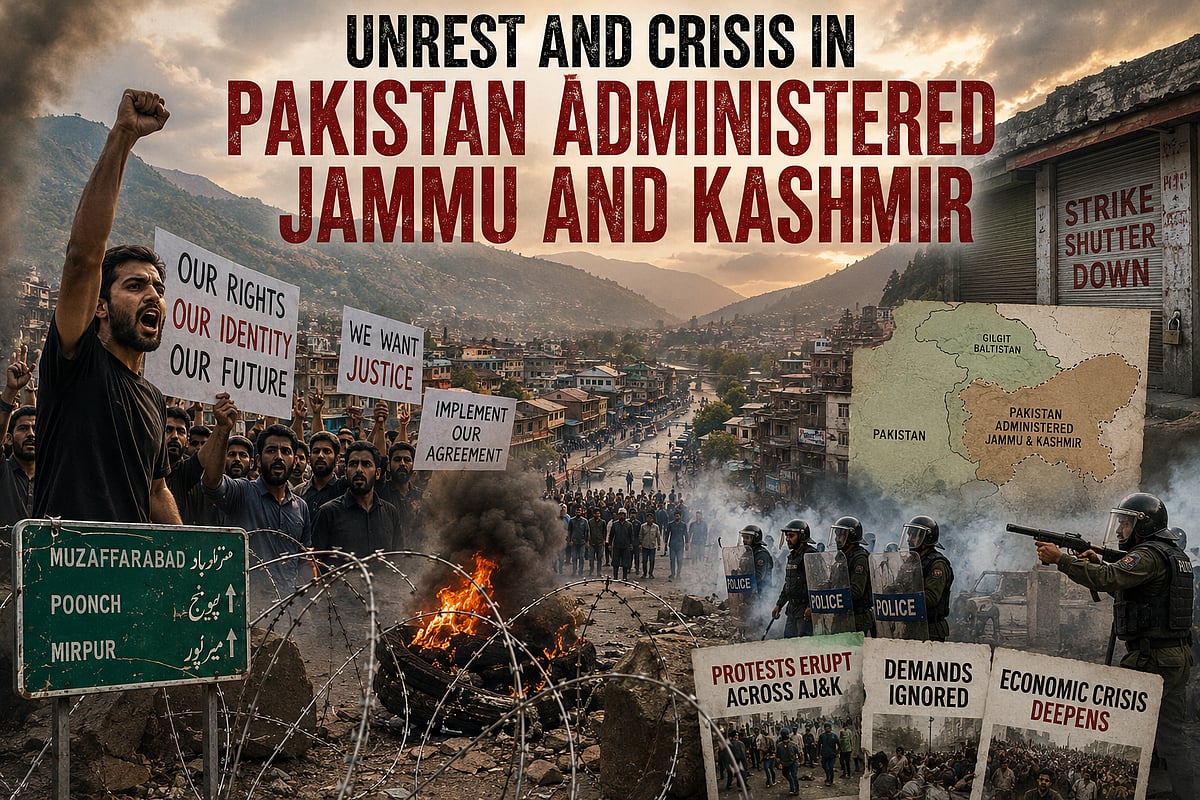
Nothing exposes hypocrisy more starkly than the ongoing crisis in Pakistan-administered Jammu and Kashmir, where a democratic movement for basic rights is being crushed under military jackboots. Security forces have killed at least twenty civilians, arbitrarily detained hundreds, imposed a communications blackout, withheld bodies from grieving families unless they sign statements branding their dead as terrorists, and blockaded food and medicine to an estimated 350,000 people.
The usual Kashmir heart-bleeders in Pakistan now manage little more than muted blabber about "security concerns." Across the border, the mirror image is equally telling: those in India who suffer from acute myopia when civil liberties on their side are crushed have suddenly discovered their empathy.
The historical trajectory of manipulations is telling. Over seven decades, regional parties have been steadily eased out while Pakistan's national parties have made deeper inroads. Central to this contestation are the non-territorial seats, a glaring democratic distortion.
PaJK's history carries lessons that Islamabad has never learned. Poonch, the present epicentre of unrest, was the epicentre of another revolt in 1947. The present generation has inherited that memory and that resolve. A powerful state believes that enough force, enough silence, enough darkness will make a people forget who they are. History is instructive that such calculations are wrong.
Source: Kashmir Times