NEW DELHI, July 10 (UNI) Buoyed by its phenomenal strides in both freight and passenger segments, Railways registered earnings of Rs.
16535.97 crore during first three months of the current fiscal as compared to Rs.
14930.26 crore during the same period last year, notching an increase of 10.75 per cent.
The total goods earnings increased from Rs.
10028.11 crore during April-June 2006 to Rs.
11025.44 crore during the same period this year, an increase of 9.95 per cent.
The passenger revenue earnings were pegged at Rs.
4857.52 crore as compared to Rs.
4350.67 crore during the same period last year, registering an increase of 11.65 per cent.
The revenue earnings from other coaching amounted to Rs.
472.44 crore as against Rs.
401.18 crore during the same period last year, an increase of 17.76 per cent.
The total sundry earnings went up from Rs.
150.30 crore during April-June 2006 to Rs.
180.57 crore during the corresponding period this year, an increase of 20.14 per cent.
The approximate number of passengers booked during April-June this year were 1648.34 million as compared to 1576.08 million during the same period last year, showing an increase of 4.58 per cent.
In the suburban and non-suburban sectors, the number of passengers booked were 883.46 million and 764.88 million compared to 850.16 million and 725.92 million during the same period last year, an increase of 3.92 per cent and 5.37 per cent respectively.
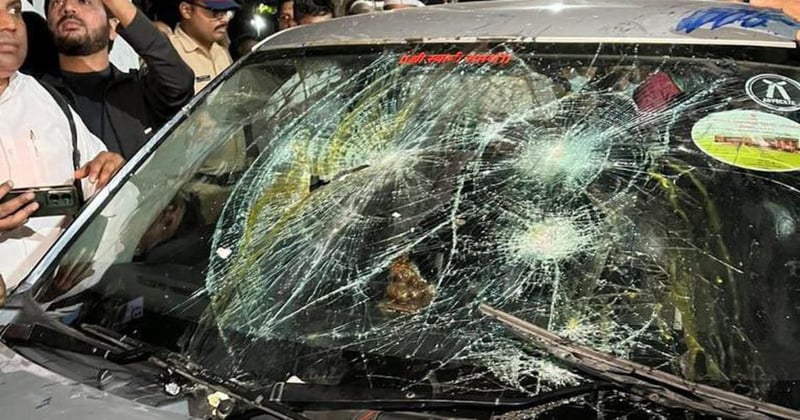
Withdrawal of communal riot cases by new govts dangerous:Commiss NEW DELHI, July 10 (UNI): The increasing tendency of new governments to withdraw en masse cases of communal riots instituted during the tenure of previous governments has come under sharp attack by the Second Administrative Reforms Commission.
"Such political opportunism and short sightedness have seriously contributed to erosion of public order," the Commission said in its latest Report submitted to the Prime Minister.
It said that once riots were controlled, cases against the guilty were not pursued with required degree of urgency and tenacity.
"Even more reprehensibly, often as a compromise following communal riots, serious cases against the accused are sought to be withdrawn from courts on extraneous considerations," it said.
It also expressed concern over the delay in the report of commissions of inquiry formed after comunal riots.
The delay itself was bad and even the delayed recommendations were not implemented, which has led to perpetuation of the causes of public disorder, said the Report.
The Commission stressed that while all attention should be paid to controlling riots, removing the causes of communal violence was equally important.
"It has been observed that while the administration swings into action to suppress riots, sufficient and timely attention is not paid to address the causes leading to such riots." The panel quoting reports of various other commissions said conflict resoluion mechanism were largely ineffective and intelligence gathered was not accurate, timely and actionable.
It has also attacked the 'bad personnel policies' of the government-the poor choice of officials and short tenures because of which there is an inadequate grasp of local conditions.
Noting other administrative shortcomings, it has observed that the administration and the police fail to anticipate and read indicators which precipitated violence earlier.
And even after the appearance of first signals, they are slow to react.
The administration and the police at times act in a partisan manner and at times there is failure of leadership, even total abdication on their part.
The Commission has also taken note of post-riot management deficiencies.
It said that rehabilitation was often neglected, breeding resentment and anger.
Moreover, officials are not held to account for their failures, thus perpetuating slackness and incompetence.
It has cited the anti-Sikh riots of 1984 and Gujarat riots of 2002 as the classic cases of gross dereliction of duty by the administration and their partisan attitude.
The commission said though success has been achieved in dealing with public order problems in several cases since independence, like those of linguistic agitations, naxalite violence in West Bengal and Kerala and terrorism in Punjab, many of them have become chronic in nature because the root causes of violence-peristenece misgovernance and failure to ensure a fair deal have not been addressed adequately.