"I don’t see any conflict in the thought that beautifying society is greatest of all art forms. Art evolved as a social activity, would be greatly enhanced in a society where it would become ownership of all. I strongly believe that art needs to develop its own methods to heal and educate. It needs to have its own concepts of class, basis, value – art, for sure, is in need of its own Das Capital!"
 The current situation of Pakistani film industry is as disturbing as that of country’s itself. The political crisis is also taxing the field of arts. As compared to our neighboring countries like Iran and India, Pakistan since ‘Teri Yaad’ – the first Pakistani film – to ‘Ramchand Pakistani’ – the self-acclaimed revival of Pakistani cinema – has only seen the decline of cinematic medium. The scenario gets worse when it comes to documentaries in Pakistan.
Expecting little from the pretentious breed of young filmmakers, I entered auditorium of an arts college to watch a film. ‘Hashtnagar – a song of another world’ was the documentary by an up-and-coming filmmaker Ammar Aziz. The film began with long shots of mountains and a donkey cart slowly moving alongside a lake. The cart had a fluttering red flag and an old Soviet poster was hung at its rear side. A young girl rode the cart along with a group of children wearing red caps. The scene changed as a huge poster of Communist leaders appeared on the screen.
No, I am not talking about any Russian film from Soviet-era. That’s a scene from a Pakistani film!
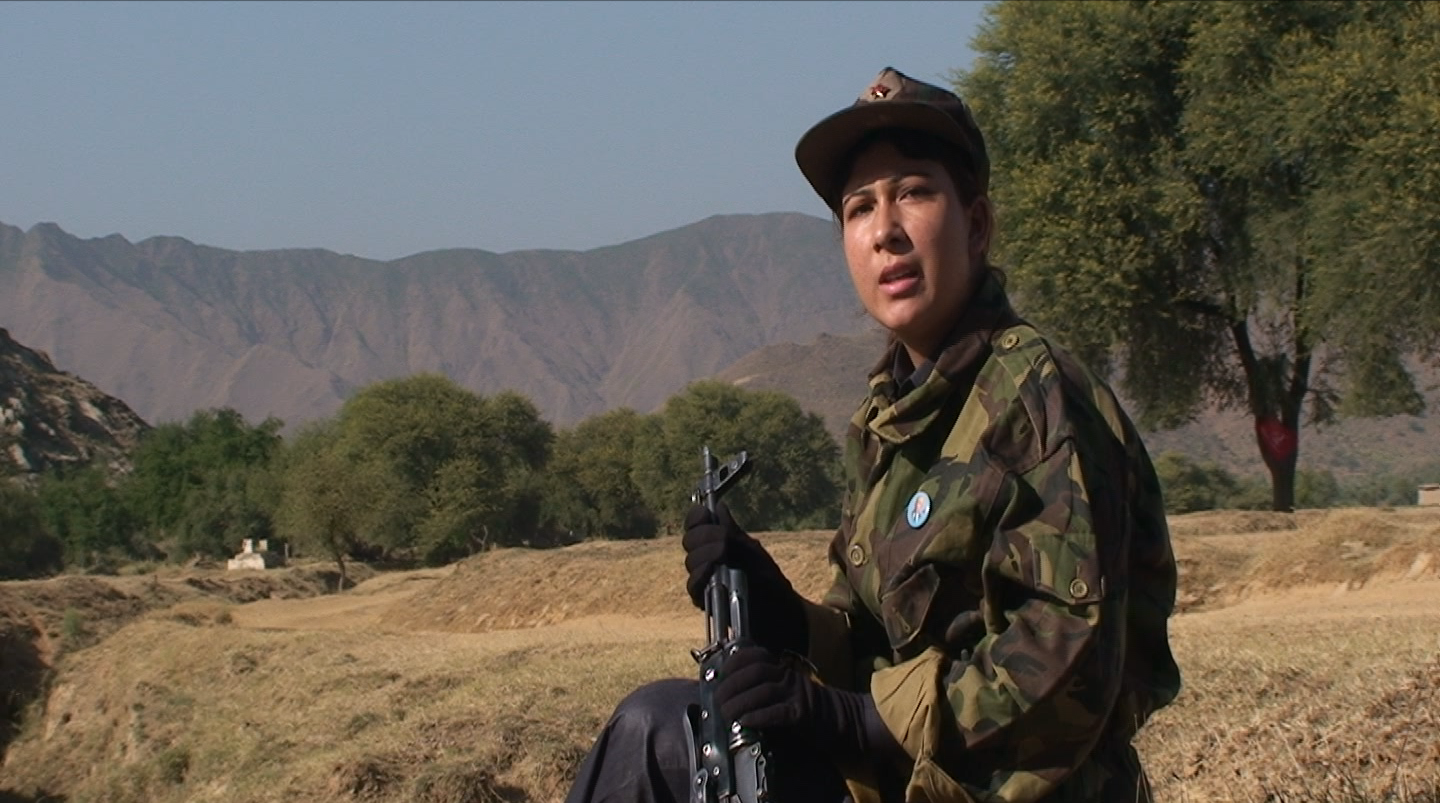
The camera showed many real life characters; a woman guerrilla fighter Zarshin, protecting the people of her village, a roaming theater group that performed street theater for peasants and workers of the area, a musician who sang songs of another possible world. These apparently surreal yet realistic scenes constitute perhaps the first ever documentary on a historically significant subject.
Hashtnagar portrays workers in a light that glorifies them and their labor. The pace of this documentary builds to the climax where audience unconsciously becomes part of the Socialist celebration. The film is based on the narrative of multiple real characters instead of any one central character. It explores the cultural consequences of peasants’ struggle in shape of different art forms that already exist in the area.
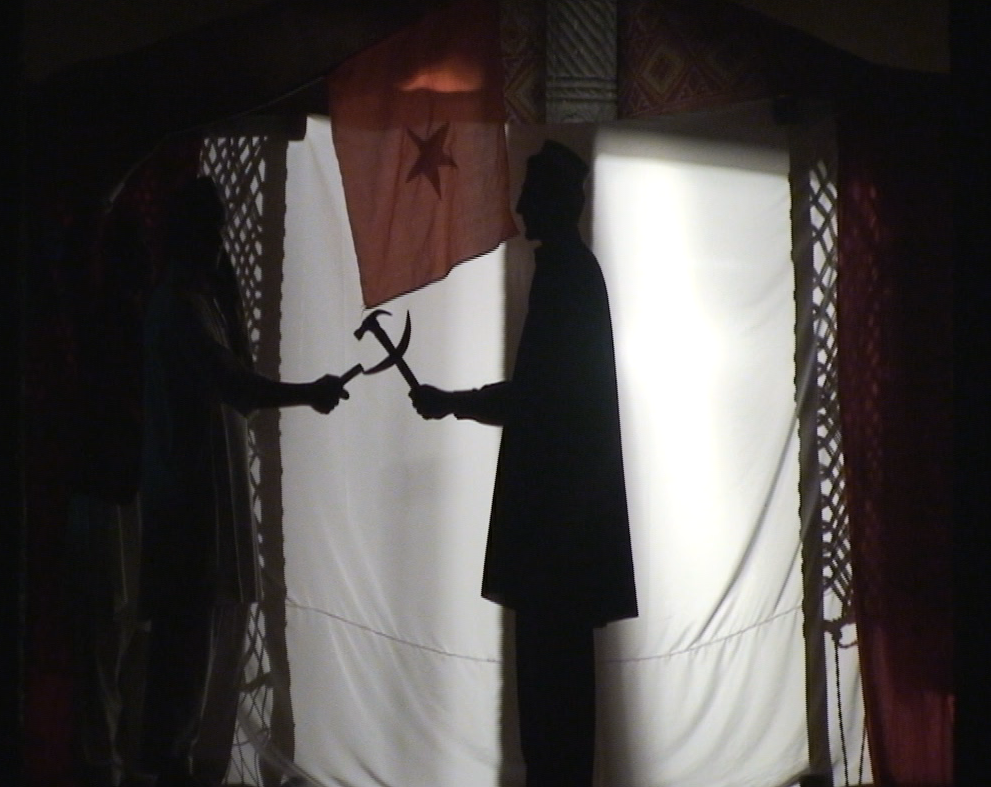 But why would I write about it? It is informative, aesthetically pleasing and entertaining but is this all enough for an intelligent film? There’s something more to this film that makes it a part of this discussion. It is based on theoretical premises that at least, I have not witnessed in any Pakistani documentary before. More precisely, the film continues the legacy of Socialist realism in all the cinematic elements and narrative. Socialist realism is different from social realism, as it romanticizes the role of working class, in a way that motivates them to struggle for Socialism.
This, however, can be seen as the only basis of criticism as well. Is glorification of any ideology a correct act by any filmmaker?
"I believe that art needs to play its historical role in the struggle for the complete liberation of mankind. Only then can art be liberated as well," said the 23-year-old director and activist. He expressed his thoughts by saying, "How can you create superficial fantasies in the presence of so many miseries? You have to give realism a chance."
Ammar was asked how should a socially aware artist create a balance between his activism and creativity, he said, "I don’t see any conflict in the thought that beautifying society is the greatest of all art forms. Art evolved as a social activity would be greatly enhanced in a society where it would become ownership of all. I strongly believe that art needs to develop its own methods to heal and educate. It needs to have its own concepts of class, basis, value – art, for sure, is in need of its own Das Capital!"
As a reader one doesn’t necessarily have to agree with his thesis to make a difference, but one must think rationally and intellectually before claiming the "revival of cinema in Pakistan!"
| Shiraz Hassan is a journalist at Daily Waqt Lahore. He has a deep interest in culture, heritage and cinema. He writes about the new trends of world cinema and culture. |