Before BB's agreement with notorious IPPs, electricity was mainly generated through hydel power plants and was not as costly. But after these agreements, the share of hydel power started to decline. Between1996 - 2001 it decreased from 47 % to 29 % and with that the electricity tariff increased by almost 60 %
 Neo-liberal economics and any economic system that revolves around the rule of profit maximization is basically a system of lying and cheating. With the demise of the USSR in the early 1990s, the capitalist system, wherein money is the only value, soon prevailed all over the globe with the exception of Cuba. Everything is now under the decisive control of ‘the markets’ – a euphemism for financial capital. The power of money is now omnipotent as well as omnipresent.
In its neo-liberal and other forms, the capitalist system is based on following phenomena or facts:
i) An endless or continuous production cycle under which things are constantly being produced without any reasonable or rational demand or justification (it may be noted that ‘necessity is the mother of invention’ seems a wrong coinage when seen in this context).
ii) in order to sell recklessly and abundantly produced goods it is necessary to create an artificial demand by creating false problems in connivance with so-called policy makers/bureaucrats and media. To understand this, one just has to turn the conventional economic rule of supply and demand, invented by western scholars, upside down.
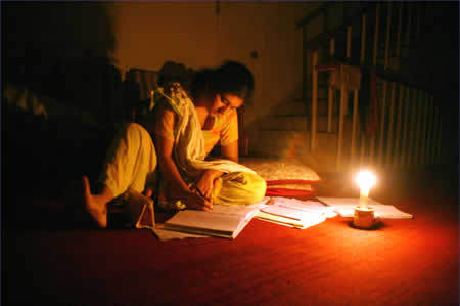
An example is the problem of power outages in Pakistan, created to sell alternate technologies and products. Hence the sale of U.P.S., batteries, generators, chargeable electric appliances and so called energy saving products is roaring. Following recent agreements with China by the incumbent Prime Minister Nawaz Sharif, solar panels and other products will also throng the market.
Propaganda, cheating, lying, misguidance and confusion are the main ingredients of capitalism. Smoke screens are created to hide the real motives of vested interest groups.
The problem of electricity and gas loadshedding in Pakistan is part of a larger picture. This problem has roots in the exotic architecture and phenomenal pace of senseless urbanization. The permeation of western culture and a capitalist mindset are the chief contributing factors that make the problem worse.
Before the 1960s, the concept of electrical power in Pakistan was non existent or extremely limited in the Sub-Continent. Homes and other buildings were designed and constructed to accommodate the local climate which was mainly hot and humid. Indigenous materials and techniques were used to keep the buildings cool and airy. During the peak summer season, tree shade, hand fans, and indigenous drinks like Sattoo, Lassi, Sardai, and Shikanjabeen provided relief from the heat.
Liaqat Ali Khan's overtures to Uncle Sam, which ignored Russia, led to imperial military/political alliances such as, SEATO and CENTO and had wide social, political and economic repercussions. As American aid began to pour in, a corrupt class of nouveau riche began to emerge as a natural consequence. Large numbers of people (the progeny of the corrupt nouveau riche) started going to America and Europe for education, jobs and recreation. This proved to be a disastrous trend for the society which had yet to recover from the shocking influence and atrocities of the British Raj. Western culture, especially architecture, had a great influence on them. On return they began to blindly ape a western life-style, now part and parcel of our daily lives.
This process gained momentum during Ayub Khan's stint (1959-69) , when only 22 families, including his own, controlled the emerging industrial empires and Pakistan was among the best clients of the World Bank in Asia. In fact even Korea envied our status with the World Bank, inviting our beloved Mahbub-ul-Haque or beloved of Zia ul Haque to help replicate this economic model there. New buildings in the style of Western architecture suitable for western climes were constructed in big cities like Lahore, Karachi, and Rawalpindi.
Concepts like drawing rooms, living rooms, lounges, American Kitchens and attached bathrooms, along with Pepsi, burgers, jeans, pop music and drawing room intellectuals and policy makers (munshis of Uncle Sam) became the order of the day. Most buildings, especially those in the so called posh areas (where thieves posing as civilized and cultured bourgeoisie were making their homes, sweet homes), were constructed using concrete and exotic building materials like glass, marble and high quality wood.
Because they required artificial cooling and heating equipment such as air-conditioners, heaters, geysers etc., these new buildings were energy devouring monsters. Although electricity was necessary to power newly emerging industries, the rapid and senseless urbanization of cities put undue pressure on the demand. This eventually led to electricity shortages, high prices and theft. This affected industries as the rising price of electricity reduced profit margins, impeding further industrial development. Societies like Gulberg, P.E.C.H.S. and G.O.R. etc. became standardized models to be replicated all over the country. Electricity reached big cities by the end of 1950s when the dictator Ayub Khan took over the reins. Here began the ridiculous saga of so called industrial and urban development.
Demand for electricity rose as a corollary of this imported development model, and theft of electrical power became the norm. Industrialists of Faisalabad (earlier called Lyllpur), often correctly called the Manchester of Pakistan, were at the forefront of this stealing spree. As the theft of electricity increased, industry began to thrive. That is why during Ayub Khan's regime, the shine of industrial revolution dazzled the eyes of our Asian neighbours. Our head master, the World Bank, was very impressed with this stunning performance. You cannot be a favourite student without first becoming the best cheater in connivance with the head master.
Industrialists shared their bounty with their patrons in the electricity department – WAPDA. As a result even the meter readers of Faisalabad became so rich that in the 1980s their sumptuous lifestyles left people in awe. We were told they even owned cars, rare possessions in those days. It is understandable that meter readers and industrialists/traders in other cities followed their role models in Faisalabad.
As mentioned above senseless rapid urbanization and industrialization resulted in an increased demand for electricity. This led to an increase in the theft of electrical power. Increased theft, called “line losses” by the WAPDA, resulted in larger tariffs. It became a vicious cycle. Increased power tariffs, up to ten paisa per unit in early 1980s increased tenfold in just one decade, eventually reaching Rs. 01 per unit at the start of 1990s. Although, the situation demanded that production be increased, policy makers or munshis of the World Bank instead adapted ad hoc measures, such as load shedding and invented hollow energy conservation slogans like "bijli bachaeay, apney leay - qaum key leay".
The overall situation remained under control until the second Benazir Government (1993-1996) when many agreements were made with independent power producers (IPPs) to generate electricity using costly and imported furnace oil. Actually BB promised the electorate during her pre-election campaign that on achieving power she would electrify most of the villages. With that, state run T.V began showing ads like "meray gaon mei'n bijli ayee hey". But it was not merely a political slogan, but part of bigger game plan involving the international oil lobby. The World Bank, always giving loans to poor countries in the name of economic reforms, actually has a hidden agenda i.e. benefiting certain powerful international business lobbies. They had already advised us to initiate reforms in the power sector designed to benefit the oil lobby rather than the poor consumer, as you will see below.
Before BB's agreement with notorious IPPs, electricity was mainly generated through hydel power plants and was not as costly. But after these agreements, the share of hydel power started to decline. Between1996 - 2001 it decreased from 47 % to 29 % and with that the electricity tariff increased by almost 60 % as reported by Mr. Abdul Wajid Rana, in daily The News. According to him, currently 41 % of electricity is produced by thermal power plants using oil to run the plants. Thirty-two percent is produced by hydel/nuclear power. The World Bank, again reported by Mr. Rana, is the lead development partner supporting investment and reform in the power sector since the early 1990s. A Strategic Plan for the power sector involving 150 million dollars was adapted as part of the World Bank Private Sector Energy Development Project in June 1988. This was followed by another $ 250 million in November 1994. This included unbundling the power wing of WAPDA into separate generation, transmission, dispatch and distribution companies and the gradual privatization of these companies. It also allowed the private sector to construct and operate new thermal generation plants and provide for the creation of a vehicle to provide long term private sector investment (1).
These facts prove that the electricity crisis is not a natural phenomenon, but one created by design to benefit the powerful oil mafia. Most of the IPPs were to use imported furnace oil and not other indigenous resources such as natural gas etc. Neither did our head master, the World Bank, advise or consult us regarding alternate power production sources (using indigenous and abundantly available natural energy), such as wind power, which would be very effective, especially on coastal lines along Arabian sea, or bio gas power plants or solar power etc. Consequently the bulk of our energy would be produced from plants running on imported furnace oil. This oil is based on international market prices resulting in expensive electricity production and dwindling foreign exchange reserves. But this is not the end of the story.
Just as if the situation was not already unbearable, along came 9/11. Pakistan was showered with billions of dollars in return for its help fighting the so called war on terror. As a result of Uncle Sam's hypocritical generosity, (reportedly 10 billion dollars were given to Pakistan, in addition to writing off and re-scheduling of some debts), banks became flush with excess liquidity and interest rates dropped. Lower interest rates prompted banks to offer consumer finance schemes. Luxurious items like air conditioners, cars etc. were offered to the low income strata of the population on installment plans. Every day dreamer thought his/her dreams had become a reality.
Sales of air conditioning and cars as well as other luxury items surged to new heights and along with this energy consumption soared. As the new consumers were mainly from the so called middle and lower middle classes, they could not afford to consume costly fuel like petrol for their cars or for generators to run their air conditioners and other gadgets after paying installments. At the same time electricity became a rare commodity with the excessive use of air conditioners. Therefore demand from domestic and industrial consumers for gas to fuel AC generators, industrial machinery and cars rose as well. This led to gas shortages and resulting theft. The theft of gas and at the same time non-provision of gas to power plants complicated the situation further. Now even those power plants that ran on gas had to use furnace oil.
A sharp rise in the number of cars with CNG cylinders (according to some estimates nearly 5000 cars/day were coming out of factories during the later part of the first decade of this century) led to the opening of more CNG stations. This meant increased competition. CNG pumps began to steal gas to sell at cheaper rates. It was a continuous chain of cause and effect. Expensive electricity led to theft, increased tariffs and more theft.
Shortage of electricity led to excessive gas consumption. In time gas became a short commodity and its theft became a norm. Due to a shortage and theft of gas, CNG prices continued to rise. The unavailability of gas to some power plants (those not running on furnace oil) worsened the power crisis. The use of air conditioners and cars increased every day. If you could not afford to buy gas and electricity you stole it. Everyone was running after the illusion called comforts as Milkha Singh runs in "Bhag Milkha Bagh".
While the poor masses chased their ever illusive dream of a comfortable life, Uncle Sam laughed. The dollars he threw at us during 2001-2008 flew back to him. It should be mentioned though that the Higher Education Commission managed to retain some of the bounty as their share. This was utilized to send more researchers to Europe and the U.S.A to learn innovative skills, further complicating problems in the name of solving them.
These dollars thrown by Uncle Sam in the name of loans, aid, grants or bounties work like bait. Together they are like a small snow ball, that once thrown from the top of the capitalist mountain into any economy, based on the rules of free market, keeps getting bigger as it rolls down the mountain. When it hits ground it is a huge ball that bounces back into Uncle Sam’s court.
So when the Pervaiz Musharraf era came to an end, we were again back to square one. When the PPP government came into power, the IMF welcomed it with a big grin and offered an $11.5 billion loan package to replenish the dwindling foreign exchange reserve.
Now the story becomes even more interesting.
According to some experts, the surge in electricity prices was not only the result of IPP’s use of costly imported furnace oil but also the inability of the government to set generation standards for the plants or conduct technical audits. Nearly all governments were unable to do that because of the influence of power sector mafias. Generally the efficiency of a power plant anywhere in the world is around 50 - 60 percent. In Pakistan it is only 20 - 30 percent. Elsewhere in the world power plants can produce 100 units of electricity by consuming 14 to 15 Kg of crude oil. Our plants consume up to 40 kg of crude oil for the same production. According to research, Pakistan lost more than 25 billion dollars in the power sector as "incompetency cost" during last few decades (2) .
When this inefficiency factor is added to the already high cost of energy produced by thermal power plants, what we get in the end is current average price of Rs. 14 per unit. Government only charges Rs. 10/unit (how merciful is the government, while we are always ungrateful, the remaining amount is a so called subsidy. This mess ultimately led to the creation of another monster called Circular Debt. Circular debt (approximately Rs. 500 billion) is actually a hodgepodge of receivables and payables. In simple terms, as electricity became expensive, most individuals/organizations resorted to creative solutions, such as power theft or non-payment of bills. Consequently, IPPs could not pay the imported furnace oil supplier i.e. P.S.O, which in turn was unable to pay the National Refinery. Ultimately the National Refinery was unable to pay for imported oil. Therefore Rs. 322 [and according to latest news Rs. 480 billions (The News, July 23, 2013)] paid by the government to IPPs are actually going into the pockets of the international oil mafia.
Hence our energy woes continued to increase in spite of the tall claims of Raja Pervaiz Ashraf (widely known as Raja Rental) to eliminate the crisis. All of his deadlines were missed and the energy crisis went from bad to worse. As the situation worsened, USAID [an American agency whom Shah Mahmood Qureshi, the former Foreign Minister called one of the biggest mafias (3)], also made a foray to cash in on the situation in the name of "Roshan Pakistan". The real purpose was to mint millions of dollars in the garb of extending technical help i.e. by offering consultancy services and then selling American technology to reduce line losses, improve monitoring systems and sell so called energy efficient appliances. One such example is an ad by USAID that appeared on the back of our electricity bills in 2011-12 advising consumers to replace their old pumps with new quality pumps which, according to their claim would reduce monthly electricity consumption by 20 %. These efforts on the part of USAID did not bear fruit for the poor masses, only for itself . Roshan Pakistan is nowhere in sight. Instead, darkness and the misery of the people increased.
Finally the PPP government's term expired in May 2013. Here begins the climax and most interesting part of the story. The results of the 2013 elections were un-expected. The business lobby's most wanted politician Mian Nawaz Sharif was back in the saddle after a gap of nearly 14 years. The Karachi Stock Exchange (KSE) was already reaching new heights. After the coming into power of Mian Sahib, it reached new records and crossed the 23000 points barrier within few weeks. Within a two month period before and after the elections, KSE gained nearly 4000 points (On April 12, 2013, index was hovering around 18700 and on June 13 it reached 22700 points).
The local business community was jubilant. Our neighbouring business lobbies, especially in China, the face of New Capitalism, were also having fits of joy at the prospect of new money minting opportunities in the name of joint ventures in the field of energy. It is important to note that during the last two decades China has become a face of new capitalism. The country has more than 3000 billion dollars in foreign exchange reserves chiefly invested in American bonds. Many American companies have also invested in China.
Before coming into power Mian Sahib's PML (N) promised to end the energy crisis within a short span of time. But soon after coming into power, the minister for Water and Power changed the stance and informed us that the crisis will persist for three years and would not resolve before that period. In another dramatic development, the Executive Committee of National Economic Council (ECNEC), in a meeting on July 04, 2013, under the chairmanship of Finance Minister Ishaq Dar, approved 3511 MW projects worth Rs. 1.3 trillion or 1030 billions(4). Most of the projects such as, Nandipur (generation capacity 425 MW at the revised cost of 57. 380 billion), Neelum Jhelum hydro power project (generation capacity 969 MW at the cost of 274 billion) etc are to be completed with the cooperation of China. It should be noted that earlier, these projects were to be completed with a cost of Rs 32 billion ($329 million) and 84 billion respectively. Hence, there is a huge cost overrun of billions of rupees. It is clear who will benefit from this cost.
At the same time these projects were approved, P.M. Sharif left for a historic five day visit to China to ink eight pacts or MoUs of cooperation in various areas of the economy. During this visit it was agreed that a third meeting of the China-Pakistan Joint Energy Working Group would be held at an early date to deepen cooperation in conventional energy, renewable energy and other sources of energy. In addition, the P.M. also met with financial corporate chiefs and invited their participation in energy and infrastructure development. He also inked other pacts, such as an ambitious long term project of the Pak-China Economic Corridor worth $ 18 billion including 200 km long tunnels. Medium to long term coal power projects worth billions of dollars are also expected to be initiated soon in cooperation with our all weather friend.
The most astonishing aspect of this visit was the signing of a MoU for cooperation between the Pakistan Muslim League (N) and the ruling Communist Party of China (5). This pact may be seen in the context of following extracts taken from the column of renowned analyst Dr. Farrukh Saleem:
In order to understand China, the first thing one must understand, is that the Communist Party of China (CPC) stands above the law. According to Red Flag magazine - the CPC's bi-weekly “constitutionalism” belongs to Capitalism and bourgeois dictatorships not to China's people's democracy", adding that a "constitutional government is not suitable for socialist countries".
Dr. Saleem further opines that the next paradigm one must understand is the CPC's current priorities. In 2011, for the first time ever, the CPC allocated $ 95 billion for internal security; $ 04 billion more than what was allocated for People's Liberation Army (PLA)(6).
P.S. At the end of the Zardari led PPP tenure (2013), we are again back to square one and IMF is also back with a new grin and the lash of $ 5.3 (or perhaps 7.3) billion loan to again make us run like famous Milkha Singh.
References:
1) Rana A Wajid, Solving Pakistan's power dilemma, The News, July 01, 2103. P. i (Money Matters)
2) Noorani A., Experts want concrete steps to check power theft, corruption, The News, July 09, 2013. (p-?)
3) Farmers fleeced in urea sale: Qureshi, The News report by its Lahore correspondent, February 15, 2012.
4)Ecnec approves 3,511 MW projects worth Rs. 1.3 trillion, report by Khalid Mustafa, The News, July 05, 2103.
5) Pakistan, China ink 8 pacts, MoUs. , The News, July 06, 2013. (Front page story)
6) Saleem F (2013), Understanding China, The News, July, 14, 2013. (P-8).
|
Aizaz Baqir is a freelance journalist and professional translator based in Multan, Pakistan. He can be contacted via email : |