The judges of higher judiciary received double raise in their salaries in 2010 by the present ‘corrupt regime’. After two hikes in a single year the salary of chief justice increased to Rs 389,757 from Rs199,838. The judicial allowance also raised to Rs170,625, as against Rs87,500 per month. 100 judges of high and Supreme courts received plots. LHC CJ Khwaja Sharif accepted a plot in Islamabad although he was serving in Lahore. Justice Ramday accepted two plots
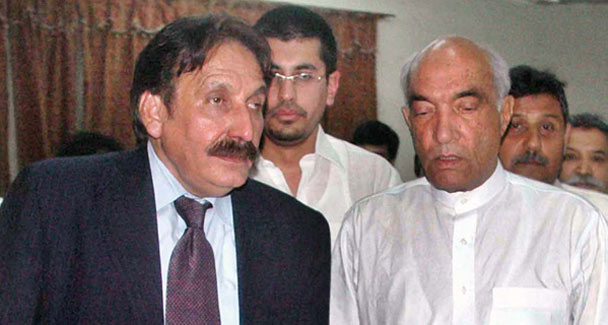 The judges of higher court and especially the chief justice of Supreme Court (SC) of Pakistan earned huge following and respect during the movement for independence of judiciary [2007-08]. The judicial activism of SC after restoration of Iftikhar Chauhdry as Chief Justice has also been taken in good sense by a majority in Pakistan. It has helped promoting merit-based policies in different public sector departments by questioning the performance of the administration of those departments. The SC has sacked many high officials inducted by the present government bypassing rules and regulations and reverted promotion of many bureaucrats. But, many critics of the SC say it does not apply same rule to its own performance.
The judges of higher judiciary received double raise in their salaries and allowances only in year 2010 by the present ‘corrupt regime’. First they got a 30 percent raise in March 2010 according to a presidential order while second time they got 50 percent raise in their salaries in December same year. After these two hikes in a single year the salary of the chief justice of Supreme Court increased to Rs 389,757 from Rs199,838 per month while the salary of the SC judges raised to Rs368,186 from Rs188,813 per month. The judicial allowance of the chief justice of Pakistan and other judges of the SC also raised to Rs170,625, as against Rs87,500 per month during the same period of time.
Interestingly, in March 2010 the increase in salary and allowances of the judges came into force with retrospective effect from July 1, 2009 while in December 2010 it came into force with retrospective effect from July 1, 2010. So, they also received hundreds of thousands as arrears both times.
Under the provisions of the Fifth Schedule of the Constitution, the president fixes the salary and allowances of the judges of the Supreme Court and High courts through presidential orders.
The SC judges also enjoy many more perks and privileges along with a government maintained house the rent of which is deducted from their salaries, chauffeur-driven cars, police security, house-keepers and free medical facilities.
The judges of superios courts have also received plots during their service and after retirement. According to official documents, the Ministry of Housing allotted sixteen judges of the Supreme Court of Pakistan residential plots worth millions of rupees each in Islamabad’s expensive sectors during 2008 to 2010 on the direct orders of the PM’s secretariat. The beneficiaries included the then ad hoc judge of SC Khalilur Rehman Ramday as well [he got two plots]. According to official documents, about 100 judges of provincial High courts and Supreme Court received plots. The then Lahore High Court Chief Justice Khwaja Sharif also accepted a plot in Islamabad although he was serving in Lahore.
The critics of SC judges, however, believe that performance of these judges is not exemplary since the restoration of independent judiciary. Asma Jahangir, human rights activist and ex-chairperson of Supreme Court Bar Association, is among the leading critics of the performance of present judiciary. She has been expressing her reservations on different decisions of the SC. On April 26, 2012 when the SC convicted PM Gilani of contempt of court she said that she saluted court on its decision but would salute it thrice if it would be able to punish some ex-dictator. “I have never seen a military dictator is being punished by our courts,” she said.
The number of pending cases in front of the SC has also been swelling. “The Supreme Court is so busy in taking suo motu actions and handling politically driven cases that it has become almost impossible to get a date of regular cases”, Fawad Chauhdry, a leading lawyer and Special Assistant to PM on Political Affairs said. “The number of pending cases in the Supreme Court has reached around 25000. It was around 20000 one year back. The judges are not interested in clearing the backlog while love sitting on high profile cases and deciding them in days not months while the common people of the country are suffering”, he said.
Ather Minallah, a leading lawyer of the country who served as spokesperson of CJ during restoration of judges movement, said there was no doubt that Supreme Court of Pakistan had been acting independently for the first time in 65 years of our history. “For the first time the institutions and individuals who were considered out of realm of the court have submitted to it. Sugar price fixing case was not taken by the Supreme Court but the Lahore High Court. In fact, opponents of independent courts only highlight those cases which have political color while other very significant cases like giving identity to eunuchs of country as citizens are not even discussed. It is also because of the CJ that there is no chance of military take-over in the country”. He termed him true son of soil. “He is from a very humble background and got education from institutions of masses but rose to a position that Harvard Law School awarded him Medal of Freedom”.
Abdul Shakoor’s three brother Abdul Saboor, Abdul Basit and Abdul Majid were among the 11 alleged terrorists picked by the ISI on May 29, 2010 from Adiala jail Rawalpindi the day they were supposed to be released after court acquitted them from all terrorists cases because of unavailability of sufficient evidence against them. The case of disappearance of his brothers is being heard in the Supreme Court that had become symbol of hope for most of people like him since the restoration of Iftikhar Chauhdry as Chief Justice. “I was wrong. One of my brothers, Abdul Saboor, has been killed and his body handed over to us on January 14, 2012 but so far nobody has been even held responsible by the Supreme Court. I say without hesitation that the judiciary has killed him. Chief Justice Iftikhar Mohammad Chaudhry did it. He knew well the detainees are not in safe hands; nevertheless, he let them be held there. Our elderly mother has also died two weeks back, two days after my two brothers were produced in front of Supreme Court", he said. “If CJ is committed to justice and rule of law, he should have convicted at least some top officials of the agencies who picked up my brothers and other people unlawfully but it seems he has been taking such cases only to a certain level and chasing them not to their logical ends. It helps him showing his independence while it does not break status quo as well”, he said.
Usman Ahmed, 22, resident of Rawalpindi and student of masters at a local university says Chief Justice has been doing a great job. “He is a great hope for people of Pakistan. He has been fighting corrupt politicians of Pakistan. I will not care even if he has been doing so to support opposition or military”, he said.
But his friend and class Muhammad Awais did not agree with him. “I think he has detracted after getting restored. It may be part of a deal with military establishment as he has not been taking establishment related cases seriously. He has not been playing role to curtail extremism in the country. He has different standers for different people. He can take a case if an actress (Atiqa Odho) had wine with her but at the same time he spare those lawyers who garlanded murderer of Salman Taseer in the court”. Awais thinks even the leaders of lawyers movement are disillusioned. “People like Asma Jahangir, Aitzaz Ahsan, Ali Ahmed Kurd and Justice (retired) Tariq Mehmood who were at the front lines during lawyers’ movement have showed their displeasure on so many decisions of SC”, he said.