There is a complete blackout on the effects of uranium mining in Dera Ghazi Khan in south Punjab. Researchers too were defeated by the powerful nuclear establishment that keeps even health information as a national secret
Sadly, absolutely nothing is known about disposal of nuclear waste in Pakistan. Are the authorities dumping low-level wastes in the sea or river? Where and how do they plan to bury the high-level wastes that will be lethal for thousands of years to come? Also, there is a complete blackout on the effects of uranium mining in Dera Ghazi Khan in south Punjab. About 10 years ago, mine workers and other affected villagers had banded together after large numbers fell sick from lung disease and cancer. To the dismay of the Pakistan Atomic Energy Commission, they managed to produce a petition for the Lahore High Court. But, as invariably happens, the powers that be forced them to withdraw their case and some token compensation was given. Researchers too were defeated by the powerful nuclear establishment that keeps even health information as a national secret.
There are, however, other aspects of Pakistan’s nuclear programme that I have focused upon earlier and bring up yet again:
Pakistan got nothing from The Bomb
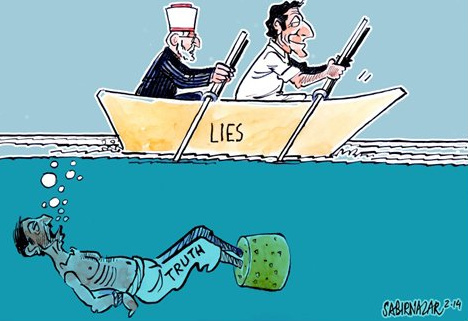
About twelve years ago a million Pakistanis danced in the streets after six nuclear weapons had been successfully tested. They had been told that making nuclear bombs was the biggest thing a country could do. Burma is said to be trying to make a bomb and may succeed too, but surely the North Korean nuclear test gave rock-solid proof that we Pakistanis have been fed a diet of lies.
North Korea is a country that no one admires. It is unknown for scientific achievement, has little electricity or fuel, food and medicine are scarce, corruption is ubiquitous, and its people live in terribly humiliating conditions under a vicious, dynastic dictatorship. In a famine some years ago, North Korea lost nearly 800,000 people. And it has an enormous prison population of 200,000 that is subjected to systematic torture and abuse.Why does a miserable, starving country continue spending its last penny on the Bomb? On developing and testing a fleet of missiles whose range increases from time to time? The answer is clear: North Korea’s nuclear weapons and missiles are instruments of blackmail rather than means of defence. Brandished threateningly, and manipulated from time to time, these bombs are designed to keep the flow of international aid going.
Surely the people of North Korea gained nothing from their country’s nuclearisation. But they cannot challenge their oppressors. But, Pakistanis — who are far freer — must ask: what have we gained from the bomb?
Some had imagined that nuclear weapons would make Pakistan an object of awe and respect internationally. They were told that Pakistan would acquire the mantle of leadership of the Islamic world. Indeed, in the aftermath of the 1998 tests, Pakistan’s stock had shot up in some Muslim countries before it crashed. But today, with a large swathe of its territory lost to insurgents and daily suicide bombings, one has to defend Pakistan against allegations of being a failed state. In terms of governance, economy, education or any reasonable quality of life indicators, Pakistan is not a successful state that is envied by anyone.
Contrary to claims made in 1998, the bomb did not transform Pakistan into a technologically and scientifically advanced country. Again, the facts are stark. Apart from relatively minor exports of computer software and light armaments, science and technology remain irrelevant in the process of production. Pakistan’s current exports are principally textiles, cotton, leather, footballs, fish and fruit. This is just as it was before Pakistan embarked on its quest for the bomb. The value-added component of Pakistani manufacturing somewhat exceeds that of Bangladesh and Sudan, but is far below that of India, Turkey and Indonesia. Nor is the quality of science taught in our educational institutions even remotely satisfactory. But then, given that making a bomb these days requires only narrow technical skills rather than scientific ones, this is scarcely surprising.
What became of the claim that the pride in the bomb would miraculously weld together the disparate peoples who constitute Pakistan? While many in Punjab still want the bomb, angry Sindhis want water and jobs — and they blame Punjab for taking these away. Pakhtun refugees from Swat and Waziristan, hapless victims of a war between the Taliban and the Pakistani Army, were tragically turned away by ethnic groups from entering Sindh. This rejection strikes deeply against the concept of a single nation united in adversity.
As for the Baloch, they deeply resent that the two nuclear test sites — now radioactive and out of bounds — are on their soil. Angry at being governed from Islamabad, many have taken up arms. They demand that Punjab’s army get off their backs and dismantle the cantonments. Many schools in Balochistan refuse to fly the Pakistani flag, the national anthem is not sung, and black flags celebrate Pakistan’s independence day. Balochistan University teems with the icons of Baloch separatism: posters of Akbar Bugti, Balaach Marri, Brahamdagh Bugti, and ‘General Sheroff’ are everywhere. The bomb was no glue.
Did the bomb help Pakistan liberate Kashmir from Indian rule? It is a sad fact that India’s grip on Kashmir — against the will of Kashmiris — is tighter today than it has been for a long time. As the late Eqbal Ahmed often remarked, Pakistan’s abysmally poor politics helped snatch defeat from the jaws of victory. Its strategy for confronting India — secret jihad by Islamic fighters protected by Pakistan’s nuclear weapons — backfired terribly in the arena of international opinion. More importantly, it created the hydra-headed militancy now haunting Pakistan. Some Mujahideen, who felt betrayed by Pakistan’s army and politicians, ultimately took revenge by turning their guns against their sponsors and trainers. The bomb helped us lose Kashmir.
Some might ask, didn’t the bomb stop India from swallowing up Pakistan? First, an upward-mobile India has no reason to want an additional 170 million Muslims. Second, even if India wanted to, territorial conquest is impossible. Conventional weapons, used by Pakistan in a defensive mode, are sufficient protection. If the mighty American python could not digest Iraq, there can never be a chance for a middling power like India to occupy Pakistan, a country four times larger than Iraq.
It is, of course, true that Pakistan’s nuclear weapons deterred India from launching punitive attacks at least thrice since the 1998 tests. Pakistan’s secret incursion in Kargil during 1999, the Dec 13 attack on the Indian parliament the same year (initially claimed by Jaish-i-Muhammad), and the Mumbai attack in 2008 by Lashkar-i-Taiba, did create sentiment in India for ferreting out Pakistan-based militant groups. So should we keep the bomb to protect militant groups? Surely it is time to realise that this method of conducting foreign policy is plain suicide.
It was a lie that the bomb could protect Pakistan, its people or its armed forces. Rather, it has helped bring us to this grievously troubled situation and offers no way out. The threat to Pakistan is internal. The bomb cannot help us recover the territory seized by the fascistic militants, nor bring Waziristan back to Pakistan. More nuclear warheads, test-launching more missiles, or buying yet more American F-16s and French submarines, will not help by an iota.
Pakistan’s security problems cannot be solved by better weapons. Instead, the way forward lies in building a sustainable and active democracy, an economy for peace rather than war, a federation in which provincial grievances can be effectively resolved, elimination of the feudal order and creating a tolerant society that respects the rule of law.
It is time for Pakistan to become part of the current global move against nuclear weapons. India — which had thrust nuclearisation upon an initially unwilling Pakistan — is morally obliged to lead. Both must announce that they will not produce more fissile material to make yet more bombs. Both must drop insane plans to expand their nuclear arsenals.
Eleven years ago a few Pakistanis and Indians had argued that the bomb would bring no security, no peace. They were condemned as traitors and sellouts by their fellow citizens. But each passing year shows just how right we were.
Is nuclear electricity the answer?
It seems odd at first sight to understand why Pakistan, a country that can make nuclear weapons and ballistic missiles, and has an Atomic Energy Commission that employs over 30,000 people, has electricity blackouts. Pakistani authorities blame Western countries for denying it nuclear energy because it will not sign the nuclear non-proliferation treaty (NPT). The NPT expressly forbids transfer of any kind of nuclear technology, including that for power generation, to non-signatories.
But the fact is that despite a 50-year long nuclear history, and vast spending, Pakistan has proven unable to build for itself even a single electricity-producing nuclear reactor. These are technologically far more complex than nuclear bombs. Pakistan relies on a forty year old Canadian reactor (in Karachi) and a ten year old Chinese reactor at Chashma, which together constitute 2% of total electricity capacity. A second Chinese reactor has been under construction at Chashma since 2005 and is expected to be completed next year.
In February 2010, China agreed to Pakistan’s request to build two additional civilian nuclear reactors in Pakistan, each of 330 MW (about one-third the size of most modern nuclear power plants). To make this affordable China has offered to provide over 80 percent of the total $1.9 billion cost as a 20-year loan. An apparent stumbling block was that in 2004 China joined the 46 nation Nuclear Suppliers Group (NSG), whose rules prohibit supply of nuclear materials to non-NPT states.
China has not yet formally notified the NSG of its intention to supply the new reactors. It had earlier explained away the supply of the Chashma-II reactor under a so-called “grand-fathering clause”, arguing that an agreement had existed prior to its joining the NSG. The argument will not work for the proposed two new reactors. The issue was to come to head in the NSG meeting held last week in Christchurch, New Zealand. But China did not bring up the issue. Significantly, the US deliberately stayed mum.
So far the US has registered only a muted objection to the Chinese sale. This is quite understandable. In 2008 it had arm-twisted the NSG into agreeing upon special exemption from its rules for India. Thus it has no credible counter-argument to protest a similar deal initiated by China. Moreover, serious efforts to block the sale would deeply irritate Pakistan, upon which the US relies for helping it fight the Afghan war. The cold reality of geo-politics and economic interests has quietly put to death earlier restrictions, suggested by the US, upon global nuclear trade.
China’s interest in pushing the deal with Pakistan is fairly clear. The sale of two rather small-sized reactors to Pakistan is but a step in a larger plan to become a major producer and exporter of nuclear power plants. China is negotiating with western companies to acquire their technology under license for critical components that would enable it to make reactors of 1000MW and 1400MW. Pakistan is simply a test bed and a disposal ground for its small and unwanted reactors.
The impact of the Chinese reactors upon Pakistan’s energy crisis will be marginal. Nor will they contribute to its bomb-making capacity because they are under full-scope IAEA safeguards. It will take 6-8 years after the contracts are formally signed before the electricity reaches the grid, if all goes to plan. Even then, the new reactors will contribute barely a drop in the ocean. Moreover, the cost per kilowatt will be considerably higher than from other means. The gratitude we owe to our Chinese friends, including the long-term loan, should be tempered by these considerations.
Pakistan’s problem is not primarily that of installed capacity. If all current sources are included, this amounts to a respectable 19,000 MW. In principle this should be more than adequate for Pakistan’s power demand, which stands at around 14,500MW. The problem is that a mere 10,200 MW is actually generated. About 30% of current capacity is not used. Government incompetence and mismanagement are to blame.
One manifestation is “circular debt” – meaning the non-payment of electricity bills by the military and various government departments to other government departments. This has had the effect of electricity producers being unable to import fuel oil. Thus, expensive imported plants stand idle.
An inefficient distribution system wastes over 10% of the electricity as it travels along transmission lines, through transformers, and in bad connections. This is compounded by an electricity grid that is unable to effectively distribute electricity from power plants to consumers.
Electricity theft, by rich and poor alike, is another critical factor. For a small bribe, electric company employees create unmonitored bypasses called “kundas” or tamper with meters. Electricity producers and distributors lose revenue. The solution may lie in installing “smart meters” that are tamper-proof and remotely read. Stopping power theft would save far more megawatts than will be generated by Chashma’s four nuclear reactors, whenever they come on line.
Finally, Pakistani factories, offices and homes use machinery and appliances that are tremendously wasteful of energy. They do much less work with the electricity that is available. A serious energy efficiency and conservation program would be quick to implement and could avoid the need to build many additional power plants.
Nuclear electricity is not the answer. So what could be? For new electricity generation capacity, Pakistan should use the vast deposits of Thar coal using appropriate technology to minimize the negative environmental consequences. Or it can build gas-fired power plants and fuel them using natural gas imported from Iran. The only thing standing in the way is the United States’ determination to impose sanctions on Iran’s oil and gas industry. The US will have to decide for itself which is important: confronting Iran or having an international system of controls over nuclear trade. Irrespective of what the US wants, Pakistan must look to its energy interests first.
 |
The author teaches at Quaid-e-Azam University, Islamabad . |