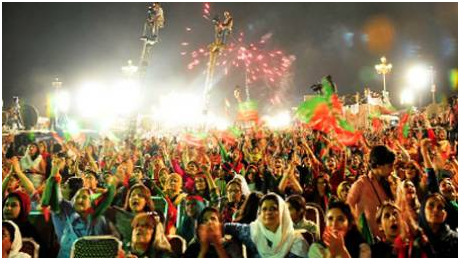
A number of Tablighi office holders have been active in the ranks of the Muslim League (Nawaz). The biggest example is the former President Rafiq Ahmed Tarar. Gen Javaid Nasser became the ISI chief because of his closeness to Nawaz Sharif
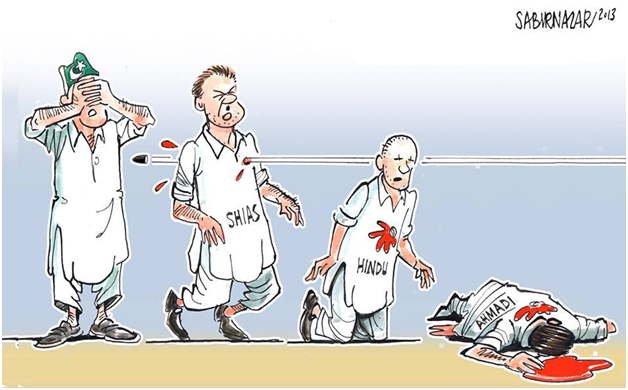
The Tablighi Jamaat is rarely mentioned in Pakistan’s religious politics. It is much better known for holding its very large annual meeting at Raiwind. But the role of this organization cannot be ignored in the politics and terrorism undertaken in the name of religion and religious denominations in Pakistan. From the tradition of the government functionaries participating in the annual gathering of the organization, started by the former dictator Zia ul Haq, to the massacre of a hundred innocent Ahmedis, perpetrated by the Deobandi organization Lashkar-e-Jhangvi, the role of the Tableeghi Jamaat figures prominently in the ways it affects us.
It should be noted that the terrorists involved in attacking Ahmadi mosque last year were holed up in the central mosque in Raiwind and the whole planning of the attack was undertaken there. When the law enforcement agencies wanted access to this mosque to apprehend the accused and their accomplices, they were stopped by the Chief Minister of the Punjab, Shehbaz Sharif.
Although Zia ul Haq had many mental derangements, one of his pet projects was to give preferential treatment to the 1947 immigrants to Pakistan over the local residents. Therefore there are innumerable characters in Pakistan’s politics, journalism, business, army and in the religious and sectarian parties who benefited from this obsession of Zia ul Haq’s. Once in position of power, they changed Pakistan’s social, political and religious outlook. The biggest example is the upper hand that the Jullundhries enjoy in the powerful institutions of Pakistan. Among these pious immigrants, those belonging to the Tablighi Jamaat had the pride of place. An additional factor was the penchant that Zia ul Haq had for sectarianism and Deobandism. There came a time when the Tablighi Jamaat played host to the highest leadership of the Taliban. A former ISI chief ended up in the key administrative posts of the Tablighi Jammaat.
The general impression about the Tablighi Jamaat is that it does its work throughout the world with the help of voluntary preachers and does not hold any political affiliations. Certainly, the key people in the Tablighi Jamaat have never given the impression that they have political associations. It is however, difficult to claim that the Tablighi Jamaat has never supported a political party in the past. A number of Tablighi office holders have been active in the ranks of the Muslim League (Nawaz). The biggest example is the former president of Pakistan, Rafiq Ahmed Tarar, whose religious and political affiliations are no secret; who used his Tablighi influence to the hilt to gain political advantage and who ended up occupying the highest office of the government.
The head of the ISI, General Javaid Nasser had a similar background. He became the chief of the ISI because of his closeness to Nawaz Sharif. Later on, he was made the chairman of the Evacuee Property Board, because of the support of the Nawaz Sharif government. He faced charges of corruption as well as supporting the Sikhs associated with the Khalistan movement. When the Sharif governemnt was deposed, General Javaid Nasser returned to the Raiwind Mosque.
The members of the Tablighi Jamaat are called ‘Deobandi Mamati’ (death lovers), because of their religious and sectarian beliefs. ‘Deobandi Hayati’ (life lovers) and ‘Deobandi Mamati’ are two opposed schools of thought who have a mutually adversarial relationship, so far confined to writings and speeches, it has not degenerated into violence. However, these two groups have a greater distance from the other Hanafi group called Barelvi and their mutual conflict has led to violence demonstrated by violent clashes between the Sunni Tehreek, Sipah-e-Sahab and Lashkar-e-Jhangvi in Karachi.
The biggest beneficiary of the permissive attitude of the Tablighi Jamaat is the terrorist Deobandi organization, Lashkar-e-Jhangvi. Many researchers are pointing out that the Tableeghi Jamaat not only has special relations with the Lashkar-e-Jhangvi but also this nexus extends to Alqaida. Both have similar religious beliefs.
The Sipah-e-Sahaba has also been shoulder to shoulder with the Tablighi Jamaat and all of its leadership has taken part in the Raiwind congregations as well as other missionary endeavours. The commonality of beliefs among themselves has meant that they have never drifted apart. On the other hand, many of the former and current functionaries of the Pakistan Army are closely associated with the Tablighi centre of Raiwind and the Army gives them special permission to undertake tableeghi missions. Similarly, the federal and the provincial state institutions dare not stop their office holders from taking part in the missionary activities. There are numerous examples that dozens of high-level state functionaries undertake tablighi tours and participate in other tablighi events.
To date, there is no evidence that any declared member of the Tablighi Jamaat has been involved in any religious or sectarian act of terror. However, there are innumerable examples where groups and organizations closely associated with the Tablighi Jamaat have taken up terrorist activities and these continue to the present day. The Tableeghi Jamaat has never condemned any of the terrorist acts or disowned the militants involved in these actions.
 |
The writer is an investigative journalist, his recent book Punjabi Taliban has been published in urdu and soon being published in English language. he can be contacted at |