You begin to see episodes and reminders of violence as normal components of the environment. You see those protective barriers, checkpoints and armed guards just as you see the trees and the birds around you
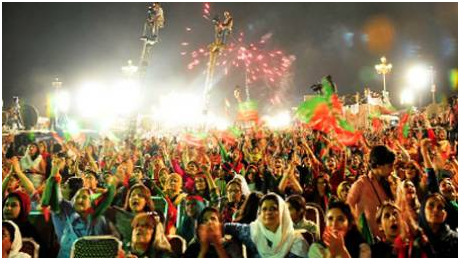
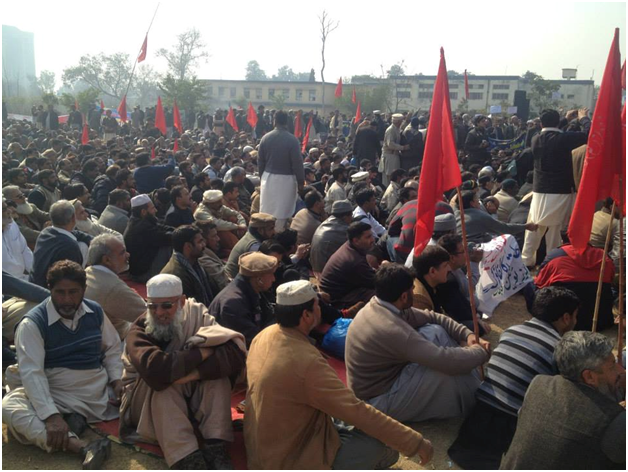
As old age renders long journeys from Canada to Pakistan ever more difficult the country of my younger days also keeps getting less and less comprehensible. One thing which was strongly noticeable on this visit to Pakistan in February was the unprecedented violence and threat of violence that stalks the country. Reminders of this violence can come up everywhere while scanning the front page headlines of daily newspapers, passing through the traffic barriers and check points, taking a sudden detour to bypass the oncoming protest march, the sight of armed guards posted at the entrances of residential and commercial buildings, and finally that conversations about the recent killings of Shia doctors and massacres of Hazaras.
But human beings have the capacity to adapt to a great variety of situations, even the very threatening ones, and the people of Pakistan are no exception. Creating and sustaining illusions is one way to cope with the menace of violence and retain a sense of normalcy in the face of threatening reality. After a few days in Pakistan, you are simply inclined to close your cognitive receptors to bad news. It happens to “others, not to me,” you say to yourself like everybody else does, and take the existing situation for grated. You begin to see all those episodes and reminders of violence as normal components of the environment. You see those protective barriers, checkpoints and armed guards just as you see the trees and the birds around you.
Yet, this type of adaptation, helpful as it may be in retaining one’s sanity in a threatening environment, does little to change anything. In fact by itself as a sole means of adaptation to ongoing violence and terror it amounts to a prescription for status quo, surrender to the perpetrators and forces of violence. If Pakistan is ever going to be free from its current brutality of violence and threat of violence, one must move ahead and actively reach out for a solution to the problem. This involves, as a fist step, a meaningful understanding of what makes Pakistan such a violent society, the epicentre of terrorism as they say, and how did we get ourselves into this mess?
It is not that there are no reliable answers to these questions. It has been convincingly established that violence in Pakistan, basically religious in nature as it is, has its historical roots in attempts by the Muslin League leaders to inject Islamic constructions into the political structure of Pakistan right from the formative years of the state. This process, known as the “Islamisation of Pakistan” started with the passing of the Objectives Resolution in 1949 and continued to escalate with a great leap forward during the rule of the military dictator, Gen. Zia-ul-Haq (1978–1988).
Zia-ul-Haq perished in the mysterious explosion of his plane in 1988, but the Islamic innovations introduced by him remain hanging like the proverbial albatross around the collective neck of Pakistanis. No subsequent government, civil or military, had the political vision and self confidence to do away with his assortment of punitive Shari’a laws, his amendments to the blasphemy law making it a deadly instrument of persecuting religious minorities, and his orientation of jihad as holy war against all kinds of infidels. As a matter of fact it is his specific Islamisation scheme, laced with the Salafi creed of the Saudi kingdom that constitute the militant Islam of a whole spectrum of Islamist groups rampaging freely in Pakistan today.
These groups are quite well known in the country. Their names --- al-Qaeda, Tahrik-e-Taliban Pakistan, Lashkar-e-Taeba, Lashar-e-Jhangvi, Jaish-e-Muhammad, Harkat ul Ansar --- appear almost daily in newspaper headlines. These groups have no problem getting their political statements, interviews, and offers of negotiations and terms of negotiations printed and broadcasted through the mainstream media. They also openly claim responsibility for killing people and launching suicide attacks to murder and destroy places such as shopping malls, bazaars, mosques of minority sects, Sufi shrines, police stations and army installations.
What the people of Pakistan find baffling is that despite the relative openness and visibility with which these groups operate in society they remain unreachable for prosecution of their crimes and their brutal acts. The state security apparatuses are paralysed to deal with their menace. For example shortly before I left for Pakistan the Shia Hazara community of Quetta city was hit with multiple explosives on January 10, killing some 115 people and wounding 270. The lashkaar-e-Jhangvi (LeJ) promptly claimed responsibility but remained immune to any arrests or prosecution. By the time I reached Pakistan LeJ again claimed responsibility for the brutal strike of February 16 killing 78 and wounding 180 of the same people.
On February 17 a Shia doctor, well known to some of my circle of family and friends, was shot dead along with his son, whom he was driving to school in Lahore. These murders were followed on March 3 by yet another explosion which took 45 lives in a Karachi Shia neighbourhood wounding over 150.
The killings, one after another, of men women and children of a significant Muslim minority sect of Pakistan with impunity have produced much public comment, but what I found most pertinent in all this was a simple question raised by a Pakistani student of the University of Maryland. “When those who are killed and killers are both in front of you, then what is it that keeps you from providing succour to the oppressed?,” she asked.
This is the central question that has to be addressed in order to drive the Islamic terrorist groups out of business and free Pakistan from the curse of violence. The answer to the question is quite clear. What keeps getting Pakistanis killed is the result of mixing religion with politics. So long as the country’s civil and military leaders insist on transforming Pakistan into an Islamic nation some other more fanatically oriented or self proclaimed purist group or individual will continue to put forward claims of doing a better job of it, be it al-Qaeda or Lashker-e-Jhangvi or a Mumtaz Qadri.
Well, that is the major, though grim, reality of current Pakistan that every visitor to the country, expatriate or just a tourist, must confront. To close on a lighter note, let me make a brief observation about the Valentine day. Yes, Valentine day seems to be catching on in Talibanizing Pakistan. The first time I noticed this was a couple of years ago on my last visit to Islamabad which also happened to be in the month of February. While being driven to a lecture by a young man one morning I suddenly noticed a stretch of beautifully decorated stalls selling flowers. “Look at that,” I tried to draw the attention of my companion to the fantastic view. He took one look in the direction I was pointing and simply said, “The Valentine Day.” But as I persisted to voice my surprised admiration for that display of flowers I was informed by my companion of the “customary practice” of buying those flowers on and around Valentine Day as gifts for people one liked and loved.
On this visit the subject of Valentine Day came up in more of a personal context in Multan. On February 14 as I sat down with my sister to have a cup of tea, she stared the conversation by saying, “today is the Valentine Day.”
“O’yes isn’t it” I said.
Then after a brief pause she started to speak again in her soft Siraiki, “I hear where you live people celebrate Valentine day by giving chocolates and sweets and flowers and cards to ones they love,” as if I was being negligent in love and care for her.
In any case, before leaving the country I made it a point to ask my brother if it had become customary to observe Valentine Day in Pakistan. Instead of giving me a direct reply, this is what he had to say: “you see, we had our own festival of Basant when gifts were exchanged and friendships revived. It was banned by the government under pressure by the Mullahs. … The skies used to be dotted with colourful kites. … It was so beautiful.”
| Hassan Gardezi is Professor Emeritus of sociology, a previous chair of sociology department, Punjab University, Lahore, now living in Canada. He writes regularly on Pakistan and South Asian affairs. |